
Currently Empty: $0.00
A patient loses consciousness. A coworker calls for help. Someone reaches for the crash cart while another starts compressions. In those first moments, there is no time to look up a protocol or second-guess the next step. That is exactly why people ask, what is basic life support BLS for healthcare providers, and why the answer matters in real clinical settings.
Basic Life Support, or BLS, is a certification-based emergency response course designed for healthcare professionals and other trained responders who may need to act during cardiac arrest, respiratory arrest, or airway obstruction. It teaches high-quality CPR, effective ventilation, AED use, and team-based response skills for adults, children, and infants. More than that, it builds the confidence to respond quickly, communicate clearly, and work within a coordinated care environment when seconds count.
What is basic life support BLS for healthcare providers?
At its core, BLS for healthcare providers is a formal resuscitation training program built for people who are expected to respond as part of their job. That includes nurses, physicians, paramedics, medical assistants, dental professionals, allied health staff, and many others working in clinical or care-based environments. It can also apply to students entering healthcare fields and workers in settings where provider-level CPR credentials are required.
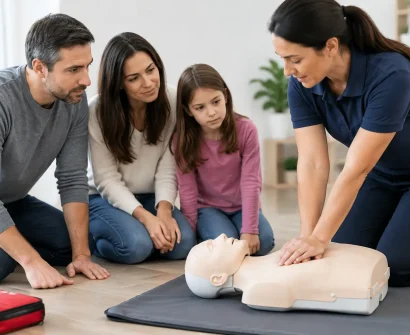
This is not the same as a general public CPR class. A community CPR course may focus on single-rescuer response, basic AED awareness, and simple emergency actions for bystanders. BLS goes further. It covers provider-level CPR techniques, bag-mask ventilation, team dynamics, and the sequence of care expected in professional settings.
The goal is practical readiness. A healthcare provider may need to respond in a hospital room, clinic, long-term care facility, ambulance, dental office, or outpatient center. BLS training prepares learners to recognize life-threatening emergencies and begin effective care until advanced interventions are available or the resuscitation team takes over.
What BLS training usually covers
A strong BLS course is built around the skills healthcare providers use most in early resuscitation. That starts with recognizing when a patient is in distress, when normal breathing is absent or abnormal, and when immediate CPR is needed.
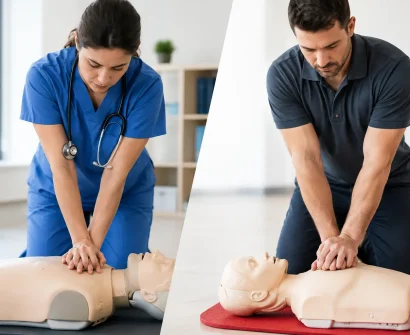
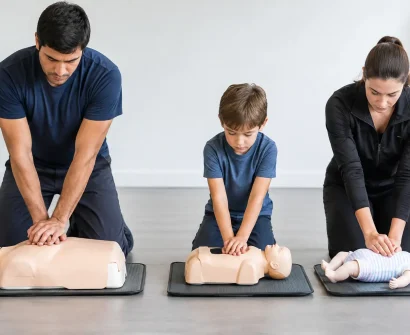
Learners are trained in high-quality chest compressions for adults, children, and infants. That includes correct rate, depth, recoil, and minimizing interruptions. Those details matter because CPR quality has a direct effect on circulation and patient outcomes.
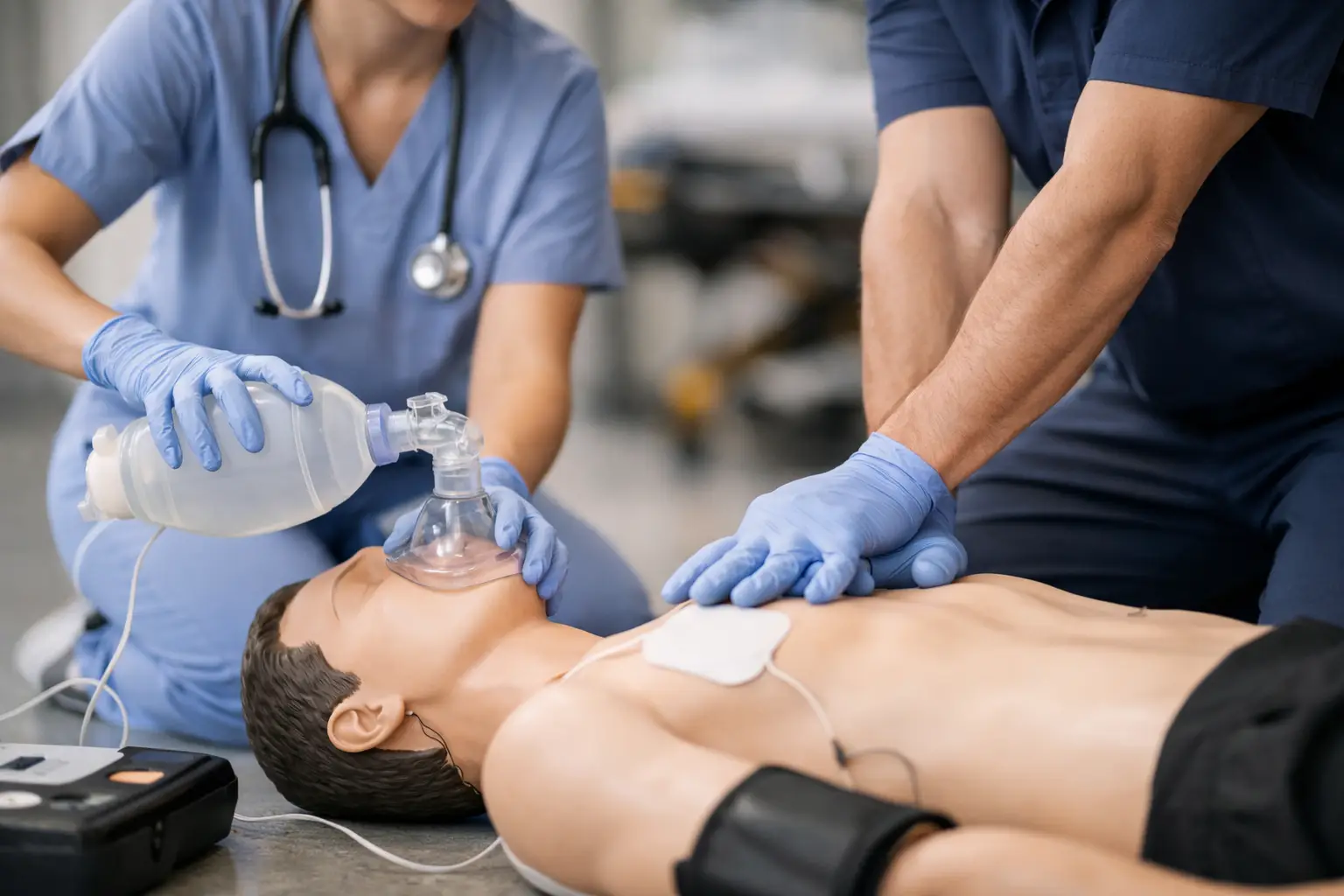
Ventilation is another major part of the course. Healthcare providers may need to deliver rescue breaths with a barrier device or use a bag-mask device as part of a team response. BLS training gives learners hands-on practice so they can develop the coordination needed to manage airway support under pressure.
AED use is also included. While an automated external defibrillator is designed to be user-friendly, speed and confidence matter during cardiac arrest. Providers need to know how to apply pads correctly, follow prompts, clear the patient safely, and resume compressions without delay.
Most provider-level BLS courses also teach relief of choking for responsive and unresponsive adults, children, and infants. In many care settings, airway emergencies happen quickly and without warning. Knowing how to respond in a calm, structured way can prevent a critical event from becoming fatal.
Why BLS for healthcare providers is different from standard CPR
People sometimes assume BLS is just another name for CPR certification. It is closely related, but it is not identical.
The main difference is the setting and expected level of response. Standard CPR courses are often intended for parents, teachers, coaches, and community members. Those courses are valuable and lifesaving, but they are designed for lay rescuers. BLS is intended for professionals who may need to deliver care with more precision, often alongside other responders and within an organized medical environment.
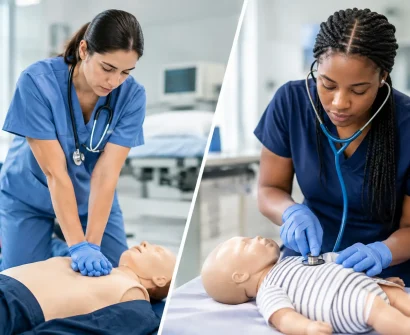
Another difference is team-based performance. In healthcare, resuscitation is rarely a solo event for long. One provider may start compressions, another may manage the airway, and another may prepare the AED or assist with additional equipment. BLS training addresses role assignment, communication, and smooth transitions between rescuers.
There is also a stronger emphasis on assessment and decision-making. Providers are expected to recognize arrest, activate the right response system, begin immediate care, and continue according to current resuscitation standards. That added responsibility is why employers, regulators, and clinical programs often require BLS specifically rather than basic CPR alone.
Who needs BLS certification?
The answer depends on the workplace, licensing body, and role. In many cases, BLS is required for nurses, doctors, dentists, dental hygienists, respiratory therapists, paramedics, physiotherapists, pharmacists in some practice settings, and healthcare students during placement or program entry. It is also commonly required for staff in hospitals, urgent care centers, surgical clinics, medical offices, and long-term care environments.
Some non-clinical roles may need it too. Childcare workers, fitness professionals, occupational health staff, and emergency workplace responders are sometimes asked by employers to hold BLS rather than general CPR certification. That usually comes down to the level of expected response and the populations they serve.
If you are unsure which course you need, the safest approach is to check with your employer, licensing college, school, or placement coordinator. The wrong course can mean lost time and having to retrain.
Why hands-on practice matters
Reading about CPR is not the same as performing it. That gap becomes obvious the first time a learner has to maintain compression depth, seal a mask correctly, or switch roles with another rescuer without stopping care for too long.
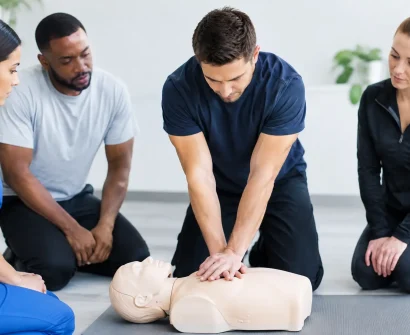
That is why quality BLS training includes hands-on skills practice and realistic scenarios. Learners need to feel what effective compressions require. They need to practice timing, body position, ventilation technique, and team coordination. Those are physical skills, not just facts to memorize.
There is also a confidence factor. Even experienced professionals can feel stress during a real emergency. Hands-on practice helps reduce hesitation because the actions become more familiar. Training does not remove the seriousness of the moment, but it does make it easier to respond with purpose.
What to expect in a BLS course
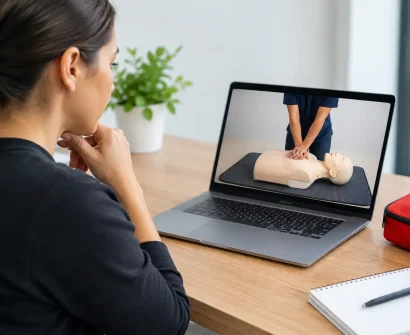
Most BLS courses combine theory with practical skill evaluation. Depending on the format, learners may complete some cognitive material online and attend an in-person session for hands-on practice and testing, or they may complete the full program in person.
During the course, you can expect guided instruction, demonstration of core skills, practice on adult, child, and infant manikins, and evaluation of CPR, ventilation, AED use, and choking response. Team-based scenarios are often included because they reflect how many healthcare providers actually respond in the workplace.
A good course should be clear, efficient, and focused on real-world readiness. It should not leave learners wondering how to apply the material in practice. For many professionals, the best training experience is one that respects their time while still making sure skills are performed correctly.
How often BLS needs to be renewed
BLS certification does not last forever. Most credentials require renewal on a regular schedule, often every two years, though employer policies can vary. Renewal matters because resuscitation standards are updated, skills can fade, and confidence drops when practice is delayed too long.
For busy professionals, renewal can feel like one more requirement on a crowded calendar. But in emergency response, old habits are not always safe habits. Refresher training helps providers stay aligned with current guidelines and maintain the speed and accuracy that high-stakes situations demand.
Choosing the right BLS training
Not every learner needs the same format. Some want a traditional classroom experience from start to finish. Others need blended learning because of shift work, family responsibilities, or travel constraints. The right course is the one that meets your credential requirements and gives you enough hands-on practice to feel prepared.
It is also worth paying attention to who the training is for. A provider-level BLS course should be built around healthcare response, not a simplified public overview. That distinction matters when your certification is tied to employment, placement, or clinical responsibility.
For professionals and aspiring providers, training with a trusted provider like Save a Life can make the path clearer by offering certification options that match both workplace standards and real emergency demands.
BLS is more than a box to check for compliance. It is the training that helps a provider move from uncertainty to action when a life is on the line. If your role puts you in that position, the right course does more than certify you – it prepares you to step in with skill, calm, and purpose.