
Currently Empty: $0.00
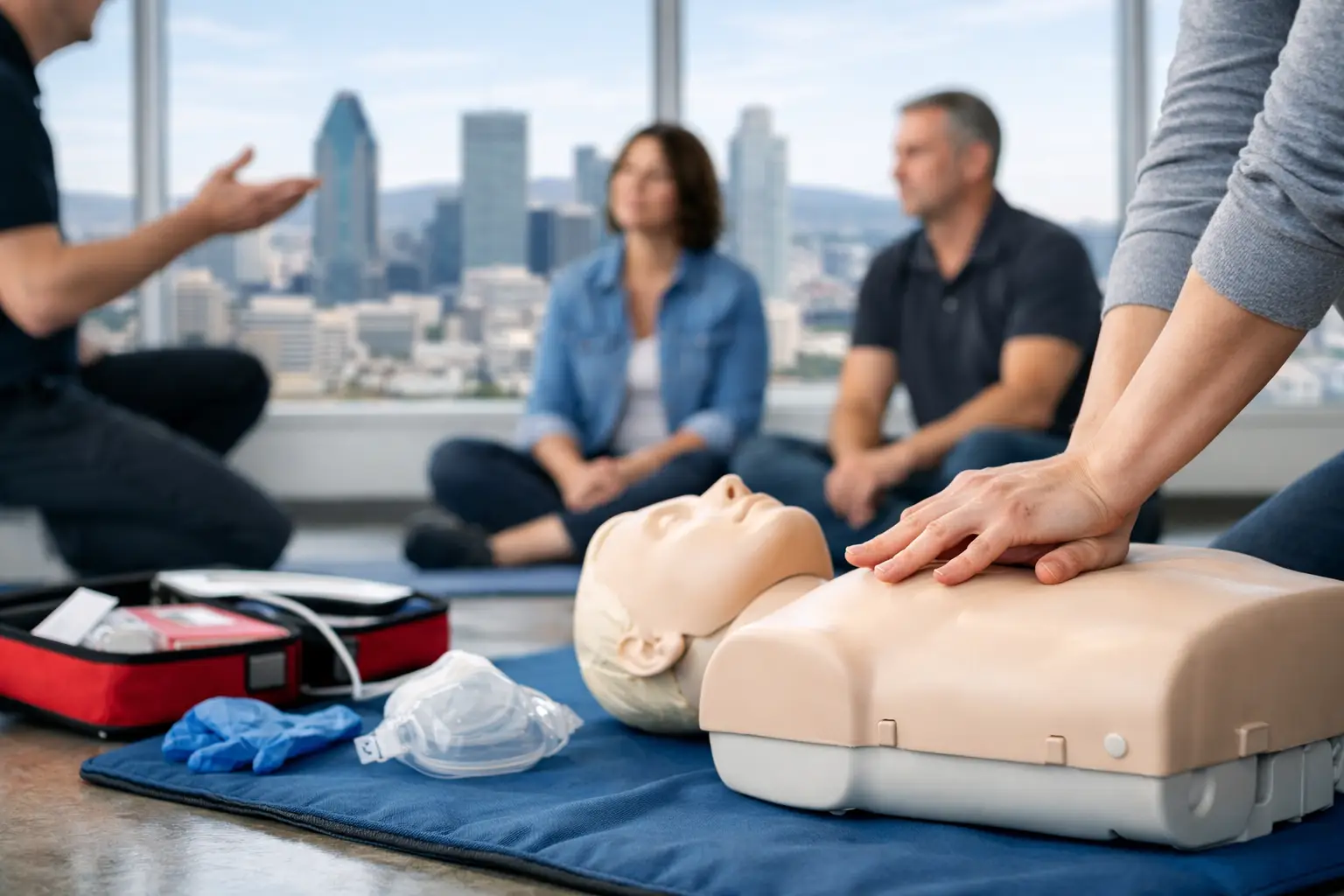
A CPR course should do more than check a box. When someone collapses at work, a child chokes at home, or a patient needs immediate support, your training has to be clear enough to use under pressure. That is why choosing the right CPR training in Montreal matters. The best course is not simply the fastest or cheapest option. It is the one that matches your responsibilities, gives you hands-on practice, and leaves you ready to act.
Montreal learners come to CPR training for different reasons. Some need formal credentials for work in healthcare, childcare, education, or community services. Others want practical skills for family safety, public confidence, or personal preparedness. Those goals overlap, but they are not identical. A nurse renewing Basic Life Support has different training needs than a parent learning CPR and AED use for the first time.
What CPR training in Montreal should actually prepare you for
Good training is built around real response, not just memorization. You should expect to learn how to recognize cardiac arrest, begin high-quality chest compressions, use an AED, and respond to choking in adults, children, or infants when the course includes those age groups. In stronger programs, you also practice the sequence of actions, communication during an emergency, and the judgment required when the scene is stressful or fast-moving.
That practical side matters because emergencies are rarely neat. A bystander may be panicking. Space may be limited. You may be deciding whether to call 911, start compressions, retrieve an AED, or hand off care to someone else. Training that includes guided scenarios and hands-on correction tends to stay with people longer than training that is mostly passive.
For professionals, the standard is higher. Healthcare providers often need a certification pathway that aligns with workplace, regulatory, or licensing requirements. In those cases, course selection is not just about convenience. It has to match the credential your employer or governing body expects.
Choosing the right course for your role
The most common mistake people make is registering for a course that sounds close enough. In CPR education, close enough can create delays, especially if you later find out your school, employer, or professional setting requires a different certification.
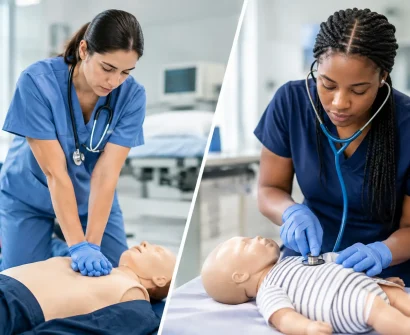
If you work in a hospital, clinic, ambulance service, dental practice, or another direct patient-care setting, Basic Life Support is often the appropriate starting point. BLS training is designed for healthcare professionals and focuses on team response, high-performance resuscitation principles, and clinical readiness. If your role includes advanced emergency care, you may also need ACLS, PALS, or PEARS depending on the patient population and scope of practice.
If you are a teacher, coach, daycare worker, fitness professional, parent, caregiver, or community member, a Heartsaver CPR AED course or a first aid and CPR course may be the better fit. These programs are typically structured for non-clinical responders who need practical skills without the advanced provider framework used in acute care settings.
There are also blended and renewal formats to consider. A blended option can work well if you are comfortable completing the theory portion online and then attending an in-person skills session. A renewal or recertification course may save time if you already hold the proper credential and remain eligible for a shorter update. Still, this depends on the course rules and your certification status. If your card has expired beyond the accepted renewal window, a full course may be required.
Hands-on practice is not optional
CPR is physical. Compression depth, rate, recoil, hand placement, ventilation technique, and AED use all improve with practice. That is true for first-time learners and for experienced providers who have renewed multiple times.
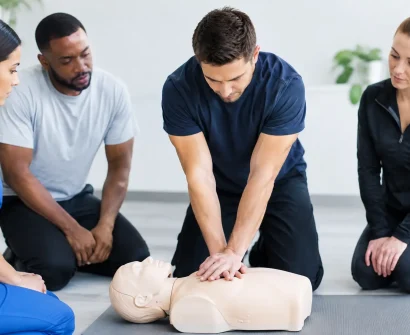
This is where course quality starts to separate itself. A dependable training provider does not treat the in-person portion as a formality. Skills sessions should give you enough time to perform the steps, receive feedback, correct mistakes, and repeat until the sequence feels natural. Confidence comes from doing, not from watching.
This is especially important for people who feel nervous about emergencies. Many learners assume they will panic if they ever have to help. In reality, structured practice reduces hesitation. You may still feel adrenaline in a real event, but training gives you a starting point: assess the scene, call for help, begin compressions, use the AED, continue care.
Course format matters more than most people think
Not everyone learns the same way, and not every schedule allows for a traditional classroom day. That is why format matters.
An in-person course can be ideal if you want a fully guided experience from start to finish, especially if you are new to CPR. You get direct instruction, immediate correction, and a classroom rhythm that helps many learners stay focused.
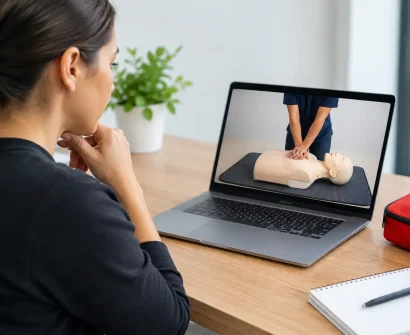
A blended course can be a strong option if your schedule is tight or you prefer to review theory at your own pace before attending a practical session. For busy professionals, this can make recertification more manageable. The trade-off is that blended learning works best when you actually engage with the online material instead of rushing through it.
A renewal course can also be efficient, but only when it truly fits your status and prior training. If your last course was years ago and you do not remember the sequence clearly, a full class may be the smarter choice even if a renewal is technically allowed. Saving a few hours is not always worth weaker retention.
What to look for before you register
The right course should be easy to identify. You should be able to tell what the certification is, who the course is for, how long it takes, whether it is in-person or blended, and whether it is intended for new learners or renewals. Clarity is a sign of a provider that respects your time.
It also helps to look at how the training is positioned. Is it built for recognized certification and real-world response, or does it feel generic? Are healthcare courses clearly separated from community programs, or are very different audiences being pushed into the same offering? Strong providers organize training pathways so learners can choose with confidence.
For Montreal learners, location and scheduling also matter. A course that fits your calendar is more likely to get completed on time, which is especially important if your employment or placement deadline is approaching. That said, convenience should not override course fit. The nearest class is not the best class if it does not meet your needs.
CPR training for professionals and everyday responders
One of the strengths of a provider like Save a Life is the ability to serve both audiences without treating them as interchangeable. Professionals need credentials that align with practice settings and compliance requirements. Everyday responders need instruction that feels approachable, relevant, and practical.
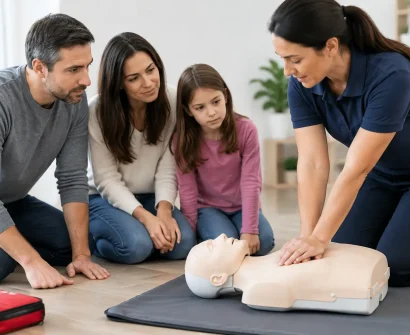
That distinction shapes the classroom experience. A healthcare provider may need to think in terms of team dynamics, patient deterioration, and advanced course progression. A parent or caregiver may be focused on choking response, infant CPR, and what to do before paramedics arrive. Both are learning life-saving skills, but the framing should match the learner.
This is also why good instruction avoids unnecessary complexity. People do not need to be overwhelmed to be well trained. They need clear teaching, realistic practice, and a course structure that respects why they are there.
Why the best CPR training in Montreal builds confidence
Confidence is not about feeling fearless. It is about being able to act when seconds count. That applies in a clinic, a classroom, a sports facility, a workplace, or your own kitchen.
The best CPR training in Montreal gives you more than a certificate. It gives you a usable response pattern, practical muscle memory, and a better chance of stepping forward instead of freezing. For some learners, that means meeting a professional requirement. For others, it means knowing they can protect a child, a partner, a patient, or a stranger.
If you are choosing a course now, think beyond the registration page. Ask what you need this training to do for you after the class ends. The right answer is simple: help you respond when it matters most.