
Currently Empty: $0.00
A child falls hard on the playground. A coworker suddenly becomes pale and confused. A family member suffers a serious cut in the kitchen. First aid training gives you more than facts to remember in a stressful moment. It gives you a practical process for recognizing danger, protecting yourself and others, calling for help, and providing care until emergency responders arrive.
The goal is not to turn every learner into a paramedic. It is to help ordinary people and trained professionals respond within their role, with greater confidence and less hesitation. When minutes matter, calm action can protect a life, reduce the severity of an injury, and help a person feel supported until higher-level care is available.
What first aid training teaches you to do
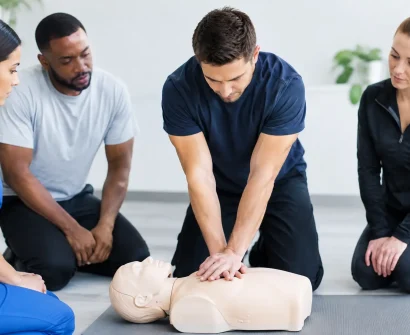
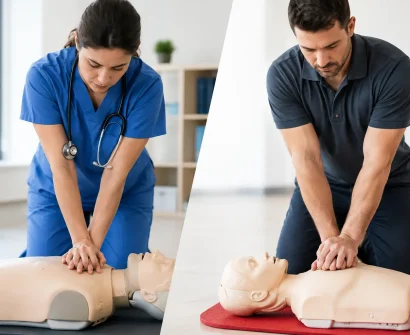
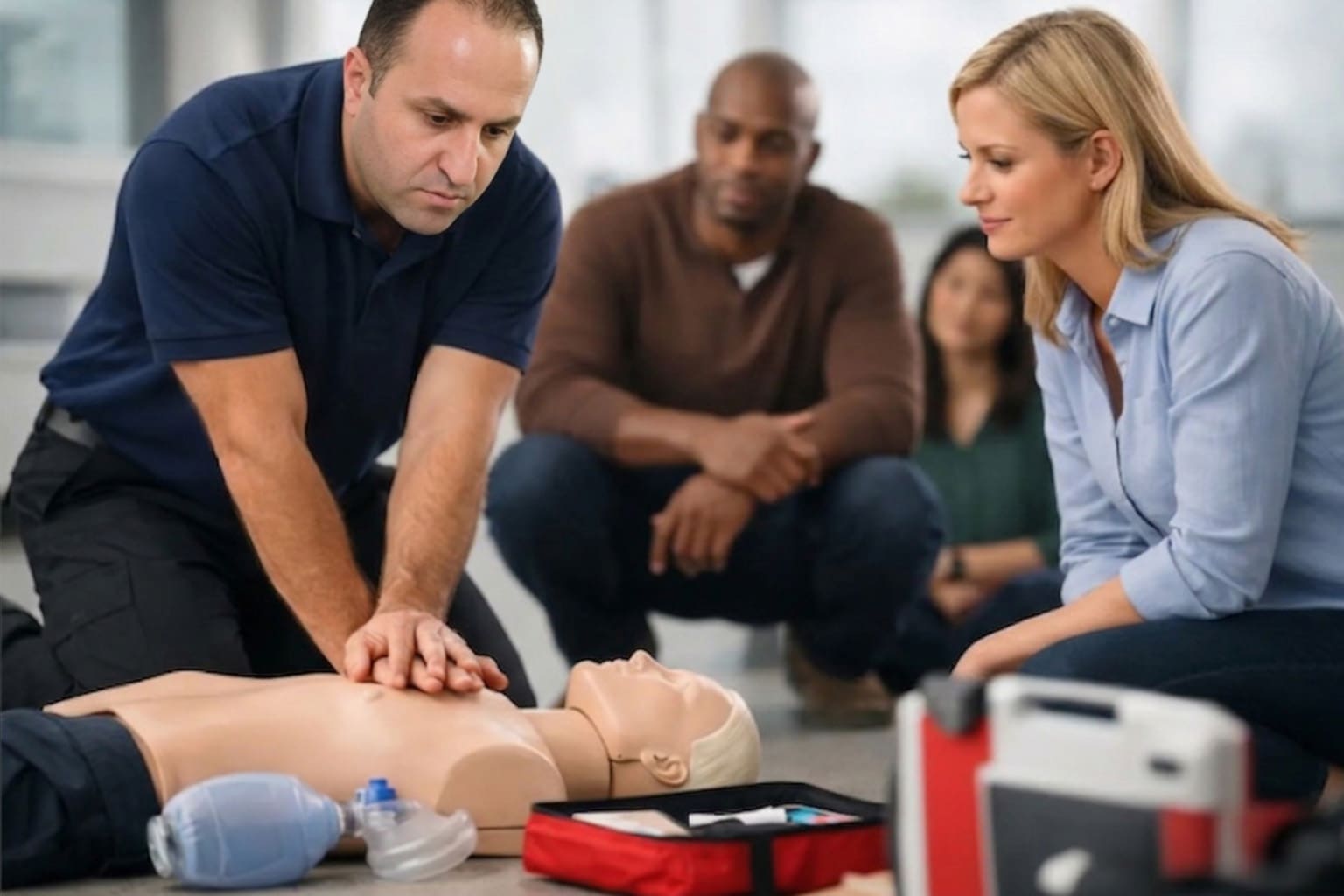
Quality first aid education is hands-on because emergencies are physical, fast-moving situations. Reading about a bandage is different from applying one correctly. Hearing that a person may be in shock is different from assessing someone who is pale, weak, and frightened while waiting for help.
A standard course typically teaches learners how to assess the scene, identify immediate hazards, use personal protective equipment when available, and get emergency medical services involved quickly. From there, participants practice responding to common emergencies such as severe bleeding, burns, fractures, allergic reactions, choking, seizures, fainting, diabetic emergencies, and sudden illness.
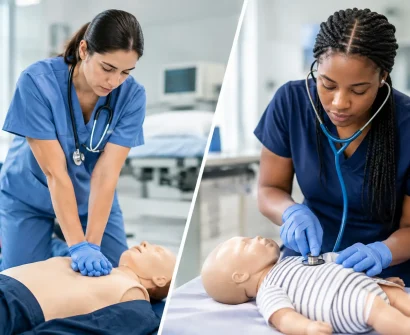
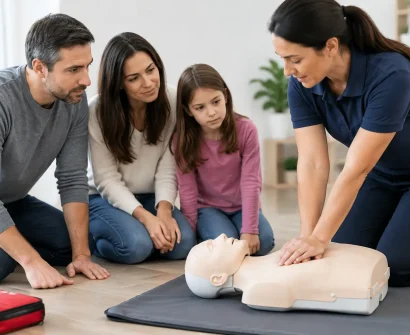
The exact content depends on the course level and certification provider. A workplace course may place added emphasis on employer safety requirements, incident response, and maintaining first aid supplies. A course for parents and caregivers may spend more time on child and infant emergencies. Healthcare professionals may need a credential that connects first aid fundamentals with Basic Life Support, cardiac emergencies, or pediatric response protocols.
The most useful programs do not treat emergencies as a checklist alone. They teach priorities. Is the area safe? Is the person responsive? Are they breathing normally? Is there life-threatening bleeding? Who is calling 911? These decisions create the structure that helps a responder act without becoming overwhelmed.
First aid training builds confidence through practice
People often assume they will know what to do when an emergency happens. Stress changes that. Even simple tasks can feel difficult when someone is injured, a crowd is watching, or a loved one is scared.
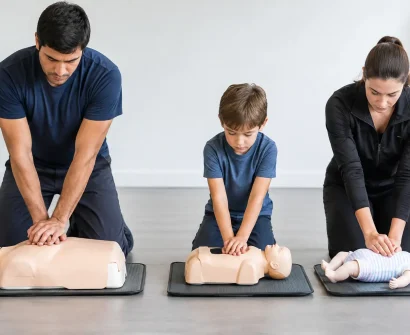
Practice helps close the gap between intention and action. During instructor-led training, learners can ask questions, make mistakes in a safe setting, and repeat skills until the sequence feels more familiar. They can learn how firmly to apply direct pressure to serious bleeding, how to position an injured person safely when appropriate, and how to communicate clearly with emergency dispatchers and bystanders.
Confidence does not mean assuming you can handle every situation alone. A prepared responder knows when to call 911, when to seek urgent medical care, and when not to move a person because a head, neck, back, or major bone injury may be possible. Good judgment includes recognizing your limits.
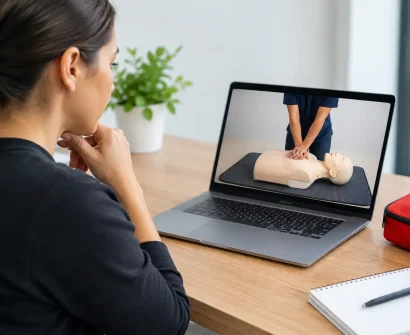
This is why blended learning can be a practical option for many learners. Online coursework can cover foundational concepts at a flexible pace, while an in-person skills session allows participants to demonstrate techniques, receive feedback, and complete the hands-on portion of their certification. For learners with busy schedules, that combination can make training more accessible without losing the practice that matters most.
Choosing the right first aid course
The right course depends on why you need it, who you may be called on to help, and whether a workplace, school, licensing body, or employer requires a specific certification. Before registering, confirm the credential requirements rather than assuming every first aid card is interchangeable.
For many community members, parents, teachers, coaches, and workplace employees, Emergency First Aid or Standard First Aid can provide a strong foundation. Emergency First Aid generally focuses on immediate response skills and is often suited to people who need a shorter introductory course. Standard First Aid usually covers a broader range of medical emergencies and may include more comprehensive practical training.
CPR and AED instruction is an essential companion to first aid education. Sudden cardiac arrest requires a different response than a cut, burn, or sprain. CPR helps keep blood moving when a person is unresponsive and not breathing normally, while an automated external defibrillator, or AED, can analyze the heart rhythm and provide a shock when appropriate. AEDs are designed to guide users with clear prompts, but training helps people recognize the emergency and use the device without unnecessary delay.
Healthcare personnel and others working in clinical settings may need more advanced pathways. BLS is commonly required for providers who may respond to cardiac and respiratory emergencies in professional roles. ACLS, PALS, and PEARS serve distinct clinical and pediatric learning needs. These courses are not simply more difficult versions of a general first aid class. They address different responsibilities, team-based response expectations, and certification requirements.
When comparing options, look at the course duration, delivery format, expiration or renewal requirements, and the credential your organization accepts. A first-time learner may benefit from a full course with ample instructor support. Someone renewing a credential may be eligible for a renewal or recertification format, provided they meet the required prerequisites.
Skills that matter at home, work, and in public
First aid is often associated with dramatic emergencies, but many real situations begin quietly. Someone complains of chest discomfort. A child develops hives and trouble breathing after eating. A colleague becomes dizzy in a hot work area. A person slips, falls, and says their wrist hurts badly.
Training helps responders avoid two common mistakes: doing too little because they are uncertain, or doing too much because they are trying to solve the entire problem. In many cases, the best first step is to stay with the person, monitor changes, provide basic care within your training, and bring in professional help promptly.
For example, a small cut may only need cleaning and a bandage. Bleeding that is heavy, continuous, or spurting needs immediate direct pressure and emergency help. A minor burn may be cooled with cool running water, while a large, deep, electrical, chemical, or facial burn needs urgent medical evaluation. The circumstances matter, and first aid training teaches responders to look beyond the obvious injury.
Communication is another overlooked skill. A trained bystander can ask someone to retrieve an AED, direct another person to meet emergency responders, and share useful observations with 911. Simple, specific instructions are more effective than shouting for help generally. Saying, “You in the blue shirt, call 911 and put your phone on speaker,” creates action quickly.
Keeping your skills current
Certification is a meaningful milestone, but readiness should not end when class ends. Skills fade when they are not used. Refreshing your knowledge, reviewing the contents of a first aid kit, and knowing where the nearest AED is located can make a real difference months or years later.
It is also wise to check the emergency supplies where you live and work. Replace expired items, restock gloves and bandages, and make sure household members know where the kit is stored. Equipment alone is not a plan, but it is far more useful when paired with trained people who know how and when to use it.
Recertification matters because guidelines, workplace expectations, and individual skills can change over time. For professional learners, maintaining a current credential may be necessary for employment, licensing, or placement requirements. For parents, caregivers, and community members, renewal is an opportunity to practice again and rebuild confidence.
Save a Life offers training paths for first-time learners, renewing professionals, and community members who want practical emergency response education. The best course is the one that matches your responsibilities and gives you the chance to practice the skills you may one day need.
No one can predict when an emergency will happen. Choosing to train means that when someone needs help, you are more likely to pause, assess, call, and act with purpose.