
Currently Empty: $0.00
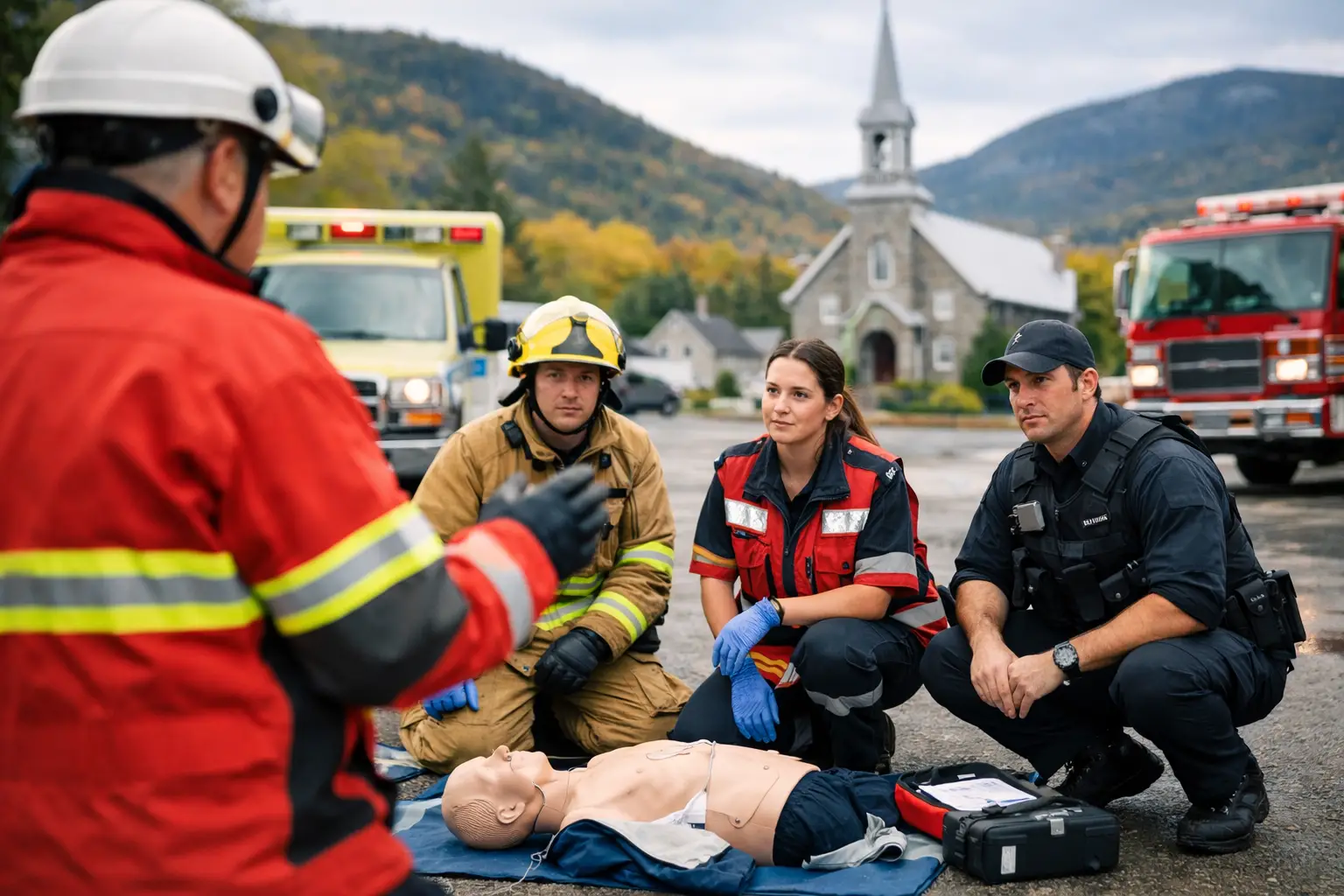
A child begins choking at a daycare lunch table. A colleague collapses during a shift. An older neighbor falls and cannot get up. These situations are frightening precisely because they do not arrive with a warning. The growing importance of emergency response training in Quebec communities comes down to a simple reality: before professional help arrives, the people already nearby may have the first and best opportunity to protect a life.
Emergency response training does not turn parents, teachers, coworkers, or coaches into paramedics. It gives them a clear, practiced way to recognize an emergency, call for help, provide appropriate care, and avoid losing valuable minutes to uncertainty. For communities across Quebec, that practical confidence is becoming an essential part of everyday safety.
Why Emergency Response Training Matters in Quebec Communities
Quebec communities are connected through schools, workplaces, sports programs, senior residences, daycares, apartment buildings, and family gatherings. Medical emergencies can happen in each of these settings, often in places where an ambulance may take time to reach the person who needs help. A trained bystander can begin CPR, use an automated external defibrillator (AED), control severe bleeding, help someone who is choking, or place an unconscious breathing person in a safer position while emergency services are on the way.
The difference is not only technical knowledge. It is the ability to act under pressure. People without training may recognize that something is wrong but hesitate because they are afraid of doing the wrong thing. Hands-on practice helps replace that hesitation with a sequence of practical decisions: check the scene, assess responsiveness, call 911, bring an AED if one is available, and begin care within the scope of training.
This matters especially in cardiac arrest. Early CPR and early AED use can make a critical difference before advanced medical care arrives. Yet emergency response training has value well beyond cardiac events. It prepares people for allergic reactions, diabetic emergencies, seizures, burns, injuries, heat illness, and sudden illness in children or adults. The right response depends on the situation, but preparedness gives people a reliable starting point.
Training Builds Stronger Everyday Safety Networks
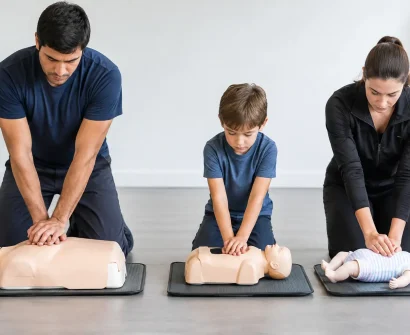
A safer community is not created by one trained person alone. It is built when many people across shared spaces know what to do. A workplace safety team may be prepared for an incident on the job, while teachers and daycare educators are ready to respond to a child in distress. Parents, grandparents, and babysitters can recognize when a fever, fall, or breathing problem requires urgent action. Coaches and volunteers can respond quickly during practices, games, and events.
This shared capability is particularly valuable in busy regions such as Laval, Montreal, Longueuil, Brossard, and surrounding communities, where people move constantly between work, school, transit, recreation, and home. Emergencies do not respect schedules or job titles. A receptionist might be the first person to assist a visitor. A teenager may be the closest person to a grandparent who has collapsed. A coworker may need to direct others, call 911, and retrieve an AED.
Training also encourages better preparation before an emergency occurs. Participants become more likely to notice where first aid kits and AEDs are located, discuss emergency action plans, maintain supplies, and identify risks in their own environments. That awareness can prevent some incidents and improve the response to others.
Practical Skills Need Hands-On Practice
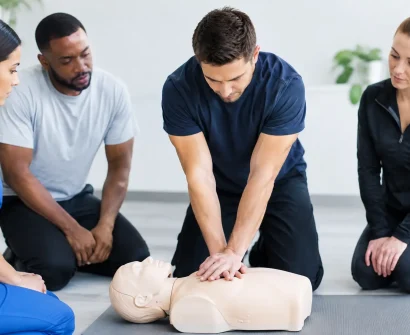
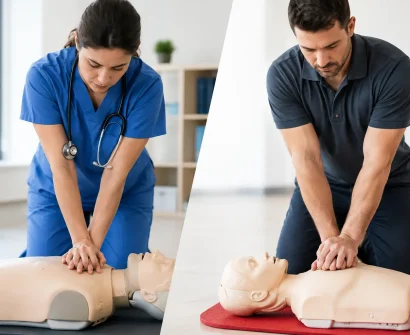
Watching a video or reading a safety poster can introduce the basics, but it cannot fully prepare someone for the physical and emotional reality of an emergency. CPR requires appropriate hand placement, compression depth, rhythm, and endurance. AED training helps people become familiar with a device that can seem intimidating until they have used a trainer in class. First aid scenarios require judgment about when to call 911, how to communicate with the person affected, and how to keep the area safe.
That is why instructor-led training remains so valuable. Learners can ask questions, receive feedback, and practice skills repeatedly in a controlled setting. They also learn that emergency response is rarely perfectly tidy. The person may be in a cramped room, surrounded by concerned family members, or experiencing symptoms that are difficult to interpret. Training cannot recreate every scenario, but realistic practice makes the first real emergency less overwhelming.
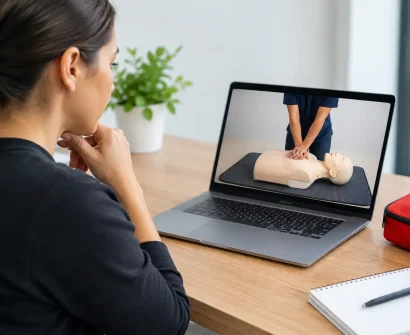
Blended learning can be a good option for busy professionals and families because it allows learners to complete knowledge-based material online before attending a hands-on session. The trade-off is that the practical portion should never be treated as a formality. Skill practice and instructor feedback are where learners develop the confidence to use CPR, an AED, or first aid techniques correctly.
Choosing the Right Level of Emergency Response Training
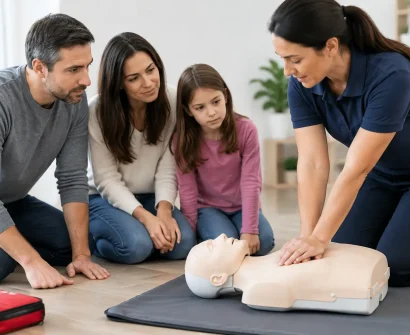
The most useful course depends on where and how a person may need to respond. A parent or community volunteer may benefit from CPR and emergency first aid training that covers common emergencies involving adults, children, and infants. Daycare professionals need training that reflects the risks and responsibilities of caring for young children. Workplace teams may need certification that meets employer policies or occupational safety requirements.
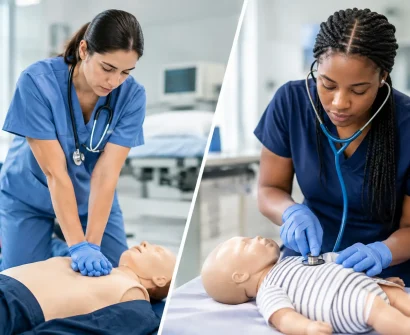
Healthcare professionals have different needs. Basic Life Support (BLS) supports high-quality team-based CPR skills, while ACLS, PALS, and PEARS address more advanced clinical assessment and response in appropriate professional settings. These courses are designed for participants whose roles, licensing requirements, or work environments call for more specialized knowledge.
The key is to choose training that matches real-life exposure rather than selecting a course solely because it sounds comprehensive. More advanced training is not always better for every learner. A well-practiced CPR and AED course can be far more useful to a community member than advanced content they are not expected or equipped to use. Conversely, a healthcare provider should not rely on a basic community course when a professional credential is required.
Certification Is a Starting Point, Not a Finish Line
Skills can fade when they are not used. That is normal, and it is one reason recertification and renewal matter. Returning to class gives participants a chance to correct habits, review updated guidance, practice skills again, and regain the speed that emergencies demand.
Organizations can support retention by making emergency readiness part of their culture. This may include clearly marked AED locations, stocked first aid kits, posted emergency numbers, designated first aid personnel, and simple response plans for staff. Schools, workplaces, and community organizations should also consider how they will communicate during an emergency. Who calls 911? Who meets responders? Who brings the AED? Who stays with other children, students, or visitors?
Equipment matters, but it cannot replace training. An AED in a cabinet is only helpful if someone recognizes the emergency, retrieves it quickly, follows its prompts, and continues CPR as directed. A first aid kit is more useful when the people near it know how and when to use its contents. Preparedness works best when training, equipment, and planning support one another.
Confidence Can Change the First Few Minutes
No course can guarantee a calm response. Emergency situations are emotional, and even experienced responders may feel stress. The goal of training is not to remove that feeling. It is to give people a process they can rely on despite it.
For a person experiencing a medical emergency, a trained bystander offers more than a skill set. They offer immediate attention, reassurance, and a connection to professional care. For families, coworkers, and communities, that readiness reduces the helplessness that can follow a crisis.
Save a Life First Aid & CPR Training helps learners build this readiness through practical, instructor-led courses that make nationally recognized emergency response education approachable for healthcare professionals and community members alike. Whether the need is CPR certification, workplace first aid, or advanced clinical training, the strongest choice is one that fits the setting and is practiced consistently.
The next emergency may happen at a place you know well, surrounded by people who care. Learning how to respond is a concrete way to protect the people who depend on you.