
Currently Empty: $0.00

A BLS course is not something most people take just to check a box. For a nursing student starting clinical placement, a dental assistant meeting an employer requirement, or a parent who wants to be ready for an emergency, the goal is the same: gain practical skills you can use under pressure. Knowing how to enroll in BLS class training starts with choosing a course that matches the credential you need and gives you meaningful hands-on practice.
Basic Life Support, or BLS, teaches healthcare-level CPR skills for adults, children, and infants, along with AED use, rescue breathing, and team response during cardiac emergencies. Enrollment is usually straightforward, but a few decisions made before registering can prevent scheduling problems, an unsuitable course, or a certificate your workplace will not accept.
Start With the Credential Your Role Requires
Before you choose a date, confirm exactly what your employer, school, licensing body, or placement coordinator requires. “CPR certification” is often used as a broad term, but BLS is not always interchangeable with a general first aid or CPR course.
BLS training is commonly required for nurses, physicians, paramedics, respiratory therapists, dental professionals, medical students, personal support workers, and other healthcare providers. It focuses on high-quality CPR, bag-mask ventilation, two-rescuer response, and effective team dynamics. A Heartsaver-style CPR course may be an excellent choice for teachers, coaches, parents, fitness instructors, and workplace teams, but it may not meet a healthcare program’s BLS requirement.
Ask your organization three practical questions: Which training provider or curriculum do you accept? Do you need a full BLS course or a renewal option? What is the deadline for submitting the certificate? Getting these answers first is especially helpful if you are enrolling for clinical placement, a new job, or a professional renewal.
Choose the Right BLS Class Format
The best course format depends on your deadline, experience, and learning needs. Classroom BLS training provides the full learning experience in one scheduled session, with instructor guidance and skills practice. It is often the simplest choice for first-time learners or anyone who prefers to learn with direct feedback.
Blended learning can be a useful alternative when your schedule is tight. Typically, you complete the knowledge portion online before attending an in-person skills session. The in-person component still matters. CPR quality, AED placement, ventilation technique, and team communication cannot be properly evaluated through a screen alone.
Do not assume every online CPR program meets the requirements of your workplace or school. If hands-on skills verification is required, an online-only course may not be accepted. Review the course description carefully and make sure it clearly states what is included, how the skills session works, and what certificate you will receive.
Full Course or Renewal?
If your current BLS certification is valid and your organization permits renewal training, a renewal course may save time while reinforcing the skills you already use. If your certificate has expired, you have limited hands-on experience, or you are unsure whether you qualify for renewal, a full provider course is usually the safer option.
Requirements vary by organization. Some employers have strict policies about expiration dates, while others allow a short grace period. Do not wait until the last week before a deadline to clarify this. A small scheduling delay can affect a shift, placement, or licensing application.
How to Enroll in BLS Class Training Step by Step
Once you know which credential and format you need, registration should be simple. Start by reviewing the available course dates and select a session that gives you enough time before your deadline. If you are booking a blended course, reserve time for both the online portion and the classroom skills evaluation.
During enrollment, enter your name exactly as you need it to appear on your certificate. Use an email address you check regularly, since course instructions, confirmations, and any online learning access are often sent there. Read the cancellation, rescheduling, and late-arrival policies before completing your registration. BLS courses move through skills stations and testing in sequence, so arriving late can mean you are unable to complete the session.
Have the following information ready before you register:
- Your required course type, such as full BLS or BLS renewal
- The deadline set by your employer, school, or professional program
- Your current certification details, if you are taking a renewal course
- A reliable email address and the name needed for your certificate
- Any accessibility needs or scheduling questions you need answered in advance
If you are registering a group, contact the training provider early. Workplace teams, clinics, schools, and daycare organizations may need coordinated dates, participant lists, or onsite training arrangements. Early planning makes it easier to keep every employee compliant without disrupting operations.
Prepare Before Your Training Date
Enrollment is only the first step. Your preparation affects how confident you feel when it is time to perform CPR in front of an instructor and work with a partner.
Review your confirmation email as soon as it arrives. It should tell you the course location, start time, expected duration, what to bring, and whether pre-course work is required. For blended learning, complete all assigned online modules before your hands-on appointment. Bring any required completion record or access code if the provider instructs you to do so.
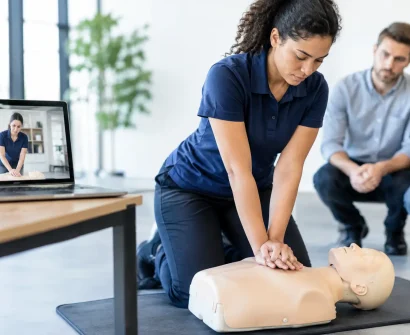
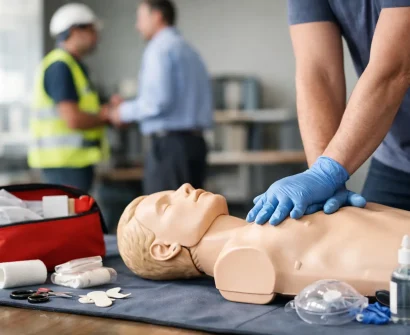
Wear comfortable clothing that allows you to kneel and practice compressions on a manikin. BLS is active training. You may spend time on the floor, practice chest compressions repeatedly, use an AED trainer, and participate in simulated team scenarios. If you have a physical limitation that could affect kneeling, compression practice, or ventilation skills, notify the training center before class rather than on the day of the course. Instructors can explain available options and help you understand the course expectations.
You do not need to memorize every step before arriving. A well-run course is designed to teach, demonstrate, and let you practice. Still, coming rested, on time, and ready to participate makes a real difference. The objective is not merely to pass a skills check. It is to recognize a life-threatening emergency, begin care quickly, and work effectively until more help arrives.
What Happens During a BLS Course?
A BLS class combines instruction with repeated hands-on practice. You will learn how to assess an unresponsive person, activate emergency response, provide high-quality chest compressions, use an AED, and deliver rescue breaths when appropriate. Most provider-level courses also cover one-rescuer and two-rescuer CPR, care for adults, children, and infants, and response to choking.
The most valuable part of the session is often the feedback. An instructor can correct hand placement, compression depth and rate, body position, and timing with a partner. These details matter because effective CPR is physically demanding and highly technique-dependent.
Some participants feel nervous about a written test or skills evaluation. That is normal, particularly if it has been several years since their last certification. Ask questions during practice rather than waiting until the evaluation. Strong instructors want participants to leave capable and prepared, not embarrassed or rushed.
After You Complete the Course
Before leaving, confirm how and when you will receive your certificate. Some programs issue digital credentials shortly after successful completion, while others may have a different processing timeline. Save the certificate in a secure place and send it to your employer or school if required. It is also wise to set a calendar reminder well before the expiration date.
BLS skills can fade when they are not used regularly. Renewing on time helps, but small refreshers between courses are valuable too. Mentally review how you would call for help, locate an AED, and begin compressions in the environments you know best – a clinic, classroom, gym, workplace, or home.
For learners in Laval and the Greater Montreal area, Save a Life First Aid & CPR Training offers instructor-led options that make it easier to build those skills in a supportive setting. Choose the course your role requires, register early, and treat the class as practice for a moment when someone may need you to act. Preparedness starts long before an emergency does.