
Currently Empty: $0.00
A patient suddenly becomes unresponsive. Someone starts chest compressions, another brings an AED, and the team calls for emergency support. Those first minutes depend on strong Basic Life Support. If the setting is a hospital or advanced clinical environment, the response may quickly expand to medications, cardiac rhythm interpretation, airway management, and coordinated team leadership. That is the practical difference at the center of ACLS vs. BLS: understanding the difference.
Both courses prepare people to respond to life-threatening emergencies, but they are designed for different roles, levels of clinical responsibility, and workplace expectations. Choosing the right course is not about taking the most advanced option available. It is about gaining the training you can use confidently when a real emergency occurs.
What Is BLS?
Basic Life Support, commonly called BLS, teaches the essential skills used when a person experiences cardiac arrest, choking, or another emergency that affects breathing and circulation. It is a foundational course for healthcare professionals and is also valuable for many people who work in settings where emergencies may occur.
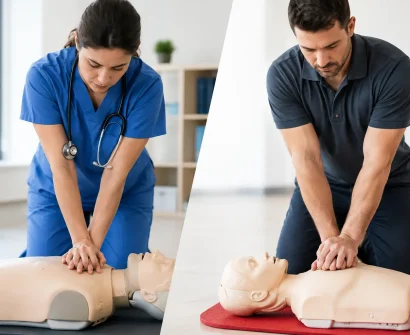
BLS training focuses on rapid recognition and early action. Participants learn how to assess responsiveness, activate emergency response systems, provide high-quality CPR, use an automated external defibrillator (AED), and relieve choking. Healthcare-focused BLS courses also address effective team-based resuscitation, including how rescuers rotate during CPR and communicate clearly during a response.
The goal is simple but critical: keep oxygenated blood moving to the brain and other vital organs until advanced help is available. High-quality CPR and early defibrillation can make a meaningful difference in a person’s chance of survival.
BLS does not require participants to diagnose complex medical conditions or select cardiac medications. Instead, it gives rescuers a clear, repeatable response framework. This makes it appropriate for nurses, medical students, dental professionals, personal support workers, first responders, and many workplace teams. Depending on the course and employer requirement, it may also be the right fit for teachers, coaches, fitness professionals, and caregivers.
What Is ACLS?
Advanced Cardiac Life Support, or ACLS, builds on BLS for healthcare professionals who are expected to participate in the management of complex cardiovascular emergencies. It is most often required for physicians, nurses working in acute-care areas, paramedics, respiratory therapists, and other clinical professionals whose responsibilities include advanced resuscitation.
ACLS addresses the period after the first BLS actions begin. Participants learn to recognize and manage cardiac arrest rhythms, bradycardia, tachycardia, acute coronary syndromes, and stroke-related emergencies. Training commonly includes the use of resuscitation algorithms, rhythm recognition, medication decisions, airway considerations, post-cardiac-arrest care, and team dynamics.
An ACLS provider must be able to work within a coordinated clinical team. One person may lead the code, while others provide compressions, manage the airway, establish access, prepare medications, monitor the rhythm, or document key events. Clear communication matters because delays, unclear directions, and missed steps can affect patient care.
ACLS is not a replacement for BLS. It assumes that the participant already understands and can perform high-quality CPR, effective ventilation, AED or defibrillator use as appropriate, and core team-response skills. Advanced interventions work best when the basics are performed well.
ACLS vs. BLS: Understanding the Difference in Practice
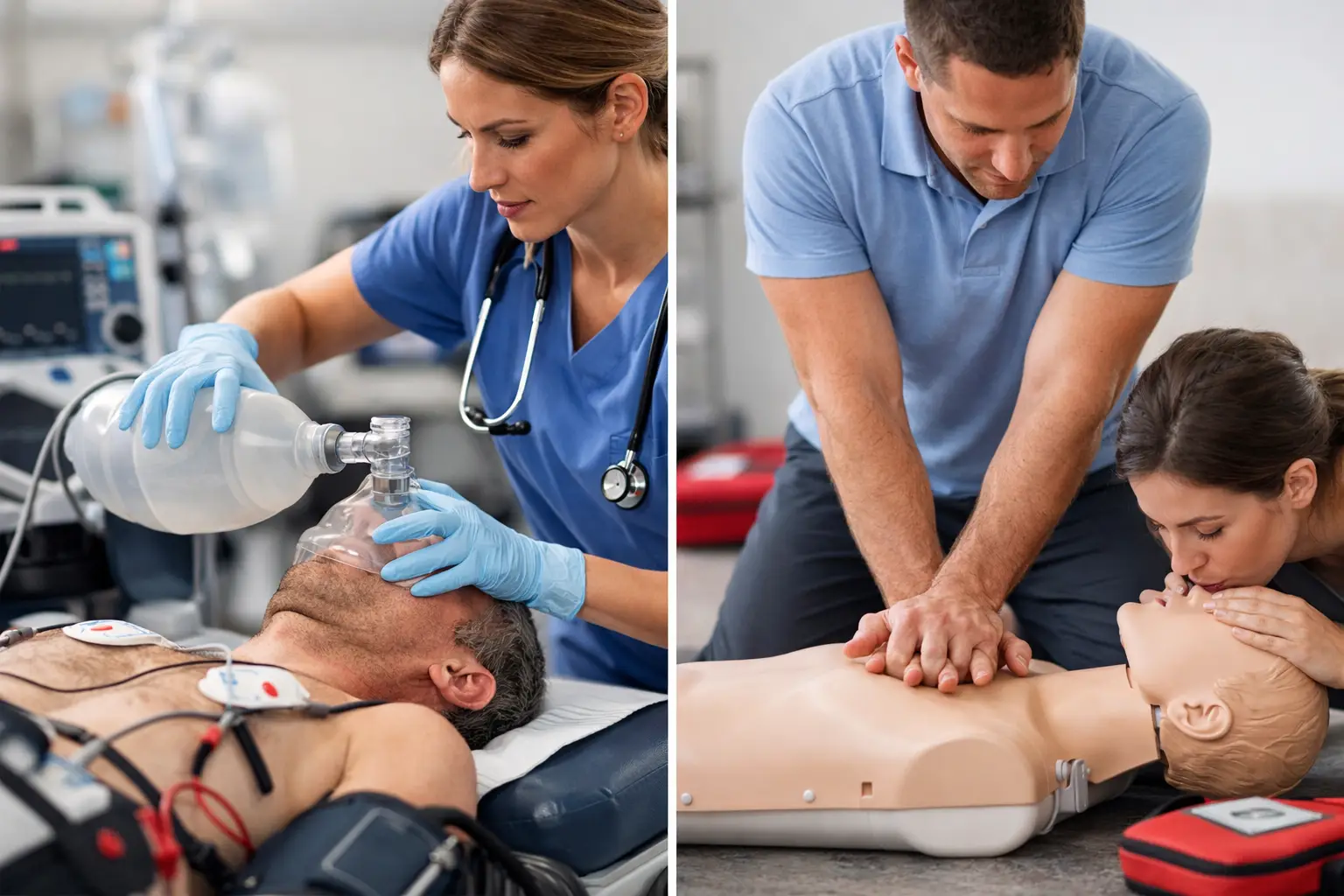
The most useful way to compare ACLS and BLS is to look at what happens during an emergency. BLS starts the rescue. ACLS expands the clinical treatment.
In a community center, daycare, gym, school, dental office, or workplace, a trained responder who identifies cardiac arrest should call for emergency assistance, begin CPR, and use an AED as soon as it is available. Those are BLS priorities. The responder’s role is not to wait for advanced equipment or attempt care outside their training. Fast, confident BLS can bridge the gap until EMS arrives.
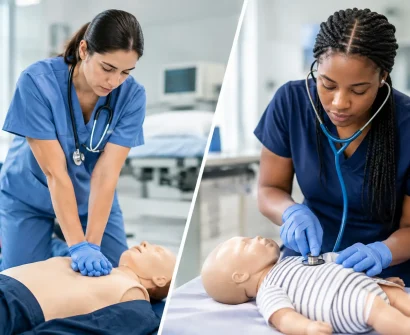
In an emergency department, intensive care unit, ambulance, or other advanced-care setting, clinicians begin with the same priorities: CPR, defibrillation when indicated, ventilation, and organized teamwork. ACLS-trained professionals then use clinical findings and established algorithms to guide advanced treatment. They may interpret the cardiac rhythm, administer appropriate medications under their scope and protocols, manage advanced airways, and address possible causes of the arrest.
The difference is not that ACLS is more valuable than BLS. Both are essential. BLS is the immediate, lifesaving foundation that every resuscitation effort needs. ACLS adds clinical decision-making and advanced interventions for professionals working in environments equipped and authorized to provide them.
Who Should Take BLS?
BLS is often required for healthcare professionals, even if they do not work in high-acuity hospital units. Employers, schools, licensing bodies, and placement programs may specify a particular BLS credential, so it is wise to confirm the exact requirement before registering.
You may need BLS if you are a nursing, medical, dental, pharmacy, or allied-health student; a healthcare worker; a personal support worker; or an employee whose organization has a medical-emergency response plan. It can also be a strong choice for people who want more hands-on CPR training than a general first aid course provides.
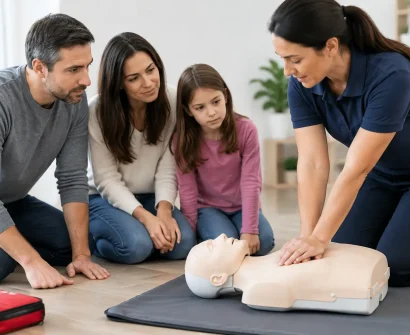
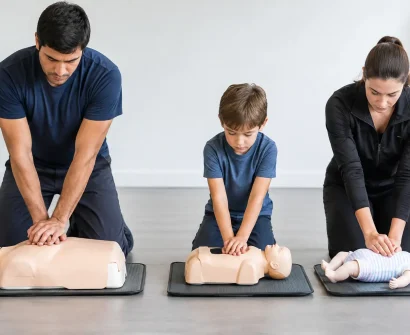
For parents, grandparents, babysitters, teachers, coaches, and community members, a CPR/AED or first aid course may be the more appropriate starting point if a healthcare BLS credential is not required. The best course depends on your responsibilities, the people you support, and the certification your workplace or organization recognizes.
Who Should Take ACLS?
ACLS is intended for healthcare professionals who have a direct role in advanced cardiovascular emergency care or who need the credential for employment, hospital privileges, clinical placement, or professional development. Common participants include emergency, critical care, perioperative, and cardiac-care clinicians, as well as paramedics and respiratory therapists.
Not every nurse, healthcare student, or medical office employee needs ACLS. Requirements vary by job title, department, employer, and regulatory or academic expectations. Taking ACLS without a clinical need can be useful for learning, but it is more intensive than many roles require and may not substitute for the certification specifically requested by an employer.
Before enrolling, confirm whether you need a first-time ACLS course or a renewal or recertification course. Renewal programs are generally designed for people with a current, eligible credential and prior experience with ACLS content. A learner returning after a long gap may benefit from a full course, even when a shorter option appears available.
What to Expect From Each Course
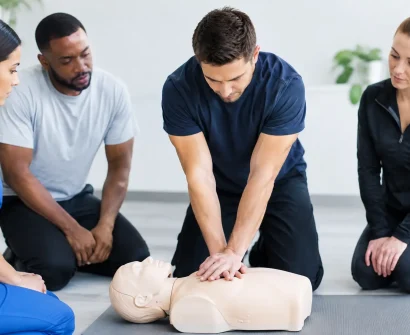
BLS courses are practical and skills-focused. Participants should expect to practice chest compressions, rescue breaths where included, AED use, choking response, and team-based scenarios. Hands-on feedback is especially valuable because CPR quality depends on details such as compression depth, rate, full chest recoil, and limiting interruptions.
ACLS courses require more preparation. Learners are typically expected to arrive comfortable with BLS skills and ready to apply treatment algorithms in simulated clinical scenarios. The course may include rhythm-recognition exercises, medication discussions, airway concepts, megacode-style team scenarios, and written or skills evaluations.
Neither course should be treated as a box to check. Certification matters, but the larger value is being able to recognize an emergency, communicate effectively, and act within your training. Skill retention also fades over time, which is why practice, renewal, and ongoing review are part of responsible preparedness.
How to Choose the Right Certification
Start with the requirement, not the course name. Ask your employer, school, clinical placement coordinator, or professional college which certification is accepted and whether they require BLS, ACLS, CPR/AED, first aid, or a specific renewal format. This can prevent the frustration of completing a course that does not meet your program or workplace standard.
Next, consider where you are most likely to use the training. A hospital clinician who may join a code team needs a different level of preparation than a teacher responding until EMS arrives. A daycare educator may need training that emphasizes pediatric emergencies and regulatory requirements. A workplace safety team may need first aid, CPR, AED skills, and a coordinated emergency plan.
Finally, choose instruction that gives you meaningful hands-on practice. At Save a Life First Aid & CPR Training, practical instructor-led learning helps participants turn course knowledge into actions they can perform under pressure.
Preparedness is not about expecting the worst. It is about knowing that if someone collapses in front of you, you will recognize the emergency, call for help, and take the next right step. Whether that step is high-quality CPR through BLS or advanced intervention through ACLS, the confidence to act can help protect a life.