
Currently Empty: $0.00
A cardiac emergency rarely announces itself in a convenient place. It may happen at work, during a child’s game, in a classroom, or at home with someone you love. This CPR AED certification guide helps you choose training that prepares you to act with skill and composure when every second matters.
CPR and AED training is not just about earning a card. The right course teaches you how to recognize cardiac arrest, call for help, provide effective chest compressions, use an automated external defibrillator, and work with others until emergency responders arrive. Certification adds structure, practice, and a recognized record of your training, but the practical confidence you gain is what can change an outcome.
What CPR AED Certification Teaches
CPR, or cardiopulmonary resuscitation, helps circulate oxygenated blood when a person is unresponsive and not breathing normally. An AED analyzes the heart’s rhythm and, when appropriate, delivers a shock to help restore a shockable rhythm. These skills work together. CPR keeps blood moving while the AED is prepared, and early defibrillation can be critical in sudden cardiac arrest.
A quality CPR AED course should cover more than a sequence to memorize. Participants learn how to assess scene safety, check responsiveness and breathing, activate emergency services, and begin care quickly. Training also addresses choking, recovery position, and the differences between caring for adults, children, and infants when those topics are included in the course level.
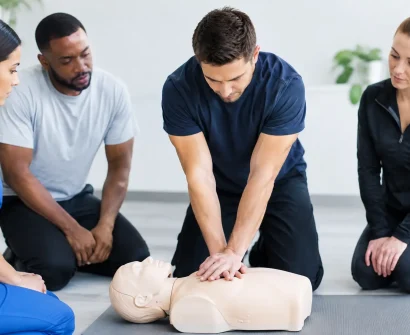
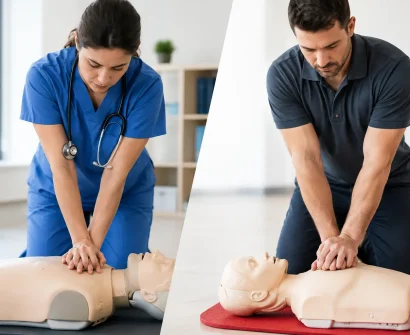
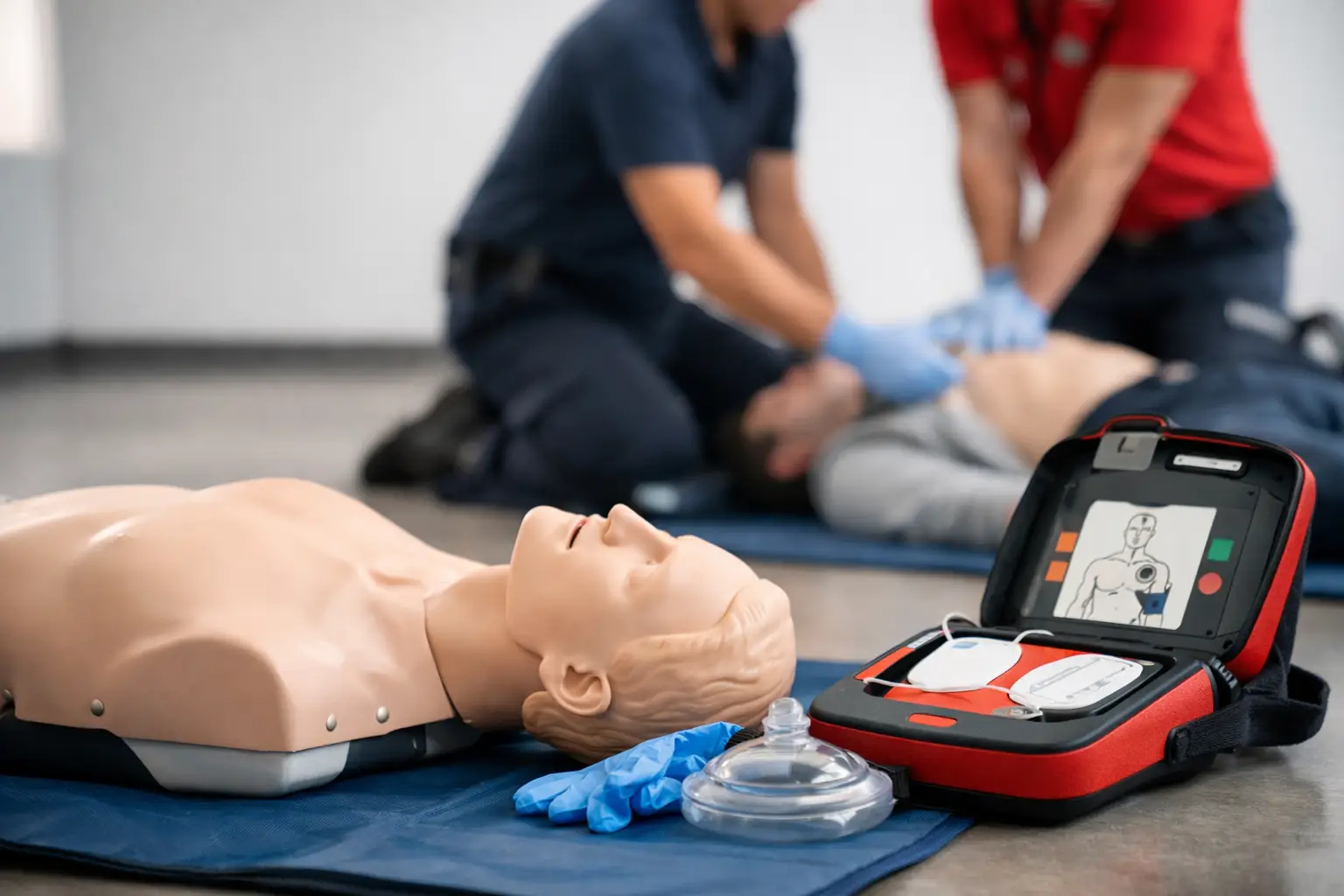
Hands-on practice is essential. Compressing a manikin allows learners to feel the correct rate, depth, recoil, and body position. Practicing with a training AED removes much of the uncertainty people feel around a real device. AEDs are designed to give voice prompts, but familiarity still matters when the situation is stressful.
Choosing the Right CPR AED Certification Course
The best course depends on why you need certification and whom you may be called on to help. A parent, teacher, fitness instructor, or volunteer often needs a different level of training than a nurse, paramedic, or medical student. Start with the requirement from your employer, school, licensing body, or professional association if one applies. Do not assume that any CPR card will meet it.
For community members and workplaces
A general CPR AED or Heartsaver-style course is often a practical fit for non-medical responders. It focuses on prompt recognition, high-quality CPR, AED use, choking response, and emergency action in everyday settings. This option can suit parents, grandparents, coaches, office teams, school personnel, caregivers, and community volunteers.
Workplaces should also consider the hazards their teams face. An office may need CPR AED training paired with basic first aid. A construction team, daycare, recreation facility, or remote worksite may require a broader first aid course because injuries and medical emergencies can take many forms. The right training plan is based on the environment, staffing, and applicable workplace requirements.
For healthcare professionals
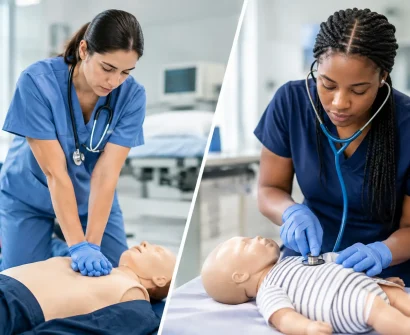
Healthcare providers usually require Basic Life Support, often called BLS. BLS includes CPR and AED skills but is designed for clinical and professional responders who may work as part of a team. It emphasizes rapid assessment, team dynamics, use of barrier devices, and coordinated resuscitation.
Some roles require advanced courses such as ACLS, PALS, or PEARS in addition to BLS. These programs address more complex cardiac, respiratory, and pediatric emergencies. They are not substitutes for BLS. Instead, they build on strong foundational resuscitation skills and are selected according to a professional’s scope of practice and workplace expectations.
For childcare and family settings
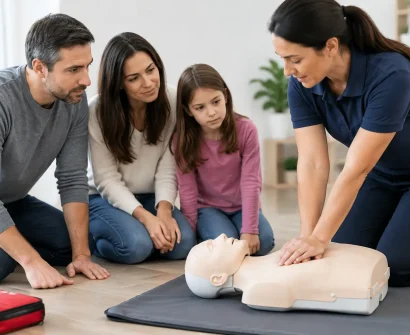
If you care for infants or children, select a course that includes pediatric CPR AED and choking response. Children are not simply smaller adults. Their emergencies may have different causes, and training should give you opportunities to practice the appropriate techniques and response priorities.
Daycare staff should confirm the exact first aid and CPR requirements that apply to their setting. A course can be excellent yet still fail to meet a regulator’s required duration, content, or approval standard. Checking before registration prevents a costly and frustrating mismatch.
Make Sure the Certification Is Recognized
Recognition matters most when certification is required for employment, school enrollment, licensing, or compliance. Before registering, confirm which certifying organization your employer or regulator accepts, whether an in-person skills assessment is required, and how long the credential remains valid.
Course names can sound similar while leading to different certifications. “CPR AED,” “BLS,” “first aid CPR,” and “healthcare provider CPR” may have overlapping content, but they are not automatically interchangeable. Ask for the course title, certifying body, delivery format, and certification details in writing when you have a formal requirement.
Expiration periods also vary by program and provider. Many certifications require renewal every few years, while some employers request earlier refreshers or annual skills reviews. Put the expiration date in your calendar as soon as you receive your card. Renewing before it expires is usually simpler than allowing a required credential to lapse.
In-Person, Blended, or Online Training?
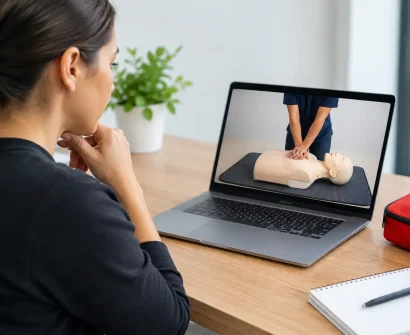
Training format should support both your schedule and the level of competence you need. Fully online courses may be useful for awareness, policy education, or introductory learning, but they may not satisfy a workplace or licensing requirement that calls for hands-on skill evaluation.
Blended learning can be a strong option for busy learners. It typically combines online coursework with an instructor-led classroom session where participants demonstrate CPR and AED skills. The online section lets you review concepts at your own pace; the practical session gives you feedback on technique and decision-making.
A traditional instructor-led course may be the better choice if you are new to CPR, anxious about responding, or part of a team that needs to practice together. You can ask questions in real time, rehearse scenarios, and correct errors before they become habits. For many people, that direct coaching is the difference between knowing the steps and feeling ready to use them.
What to Expect During Class
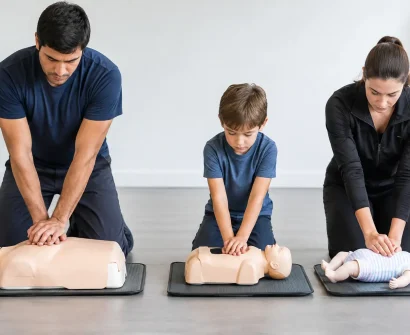
Most CPR AED courses include short lessons, instructor demonstrations, hands-on practice, and a skills evaluation. You will likely practice compressions on adult manikins and, depending on the course, child and infant manikins. You may also place AED pads, follow device prompts, and work through scenarios involving an unresponsive person or choking emergency.
Come prepared to participate physically. CPR practice involves kneeling, bending, and sustained compressions. If you have a mobility limitation, injury, pregnancy-related concern, or another issue that could affect participation, tell the training provider beforehand. Instructors can often discuss reasonable options while ensuring that course requirements are met.
Do not worry if you have never taken a class before. Good instruction is built for beginners as well as renewals. Questions are welcome, and repetition is part of learning. The goal is not to perform perfectly on the first attempt. It is to leave with a reliable response pattern and the ability to begin helping.
How to Keep Your Skills Ready
Certification is a milestone, not the finish line. CPR skills can fade when they are not used, especially because most people hope they never need to use them. A brief review of emergency steps, AED locations, and your organization’s response plan can make a meaningful difference months after class.
At home, identify where you would call emergency services, who might bring an AED if one is nearby, and how family members can assist. At work or school, learn the location of AEDs, first aid kits, emergency exits, and incident reporting procedures. Preparedness is more useful when it is specific to the place where you spend your time.
If your team has an AED, make sure someone checks it regularly according to the manufacturer’s instructions. Pads and batteries have expiration dates, and an AED should be visible, accessible, and not blocked by furniture or storage. Buying equipment without a readiness plan creates a false sense of security.
Your Next Step Is Practical Preparation
Choosing a CPR AED course is a decision to protect the people around you, whether they are patients, coworkers, students, customers, neighbors, or family. Select a recognized program that matches your responsibilities, includes meaningful hands-on practice, and fits the requirements you need to meet.
At Save a Life First Aid & CPR Training, participants can build those skills through practical, instructor-led programs designed for real emergencies. The most valuable time to learn is before anyone needs help – when you can practice, ask questions, and walk away ready to respond.