
Currently Empty: $0.00

A patient who suddenly becomes unresponsive does not give a healthcare team time to search for instructions. The ability to recognize cardiac arrest, call for help, begin high-quality CPR, and use an AED is expected in many care settings. That is how CPR certification helps advance your healthcare career: it builds practical readiness that employers, licensing bodies, colleagues, and patients can rely on when every second matters.
For healthcare professionals and students, certification is more than a line on a resume. It is a current, demonstrated standard of clinical competence. Whether you work in a hospital, dental clinic, pharmacy, long-term care home, medical office, school, or childcare setting, the right course helps you respond with greater speed, clarity, and confidence.
CPR Certification Builds the Skills Employers Expect
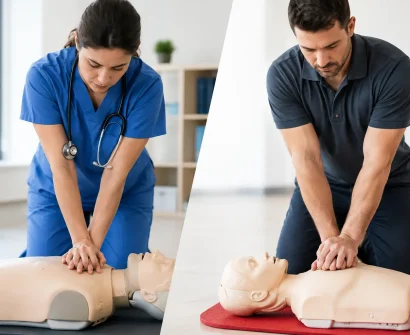
Healthcare employers hire people who can contribute safely from day one. CPR certification shows that you understand the early links in the chain of survival: recognizing an emergency, activating emergency response, delivering effective chest compressions, providing rescue breaths when appropriate, and using an automated external defibrillator.
In a clinical environment, these skills are rarely performed alone. A current Basic Life Support, or BLS, credential helps you work effectively as part of a resuscitation team. You learn to communicate clearly, rotate compressors to protect CPR quality, recognize the importance of rapid defibrillation, and follow an organized response rather than reacting in panic.
This matters across roles. A medical assistant may be the first person to identify a patient in distress in a waiting room. A dental professional may need to respond to a medical emergency during treatment. A personal support worker may be closest to a resident when a crisis begins. Even professionals whose work is not centered on emergency medicine benefit from knowing exactly what to do before additional help arrives.
Employers may list CPR or BLS as a condition of employment, but the value goes beyond meeting a requirement. Current certification signals reliability. It tells a hiring manager that you have practiced a skill that protects patients, coworkers, and visitors.
How CPR Certification Helps Advance Your Healthcare Career at Each Stage
The career benefit of CPR training changes as your responsibilities grow. For students and entry-level applicants, it can help meet placement requirements and make a resume more competitive. For experienced clinicians, it supports continued eligibility for a role, a promotion, or a move into a higher-acuity setting.
Starting a Healthcare Career
Students preparing for nursing, paramedicine, respiratory therapy, medicine, dental care, pharmacy, or allied health programs are often asked to hold a current certification before clinical placements. Completing training early removes one barrier when opportunities arise.
It also gives classroom learning a real-world foundation. Vital signs, airway management, circulation, and patient assessment become more meaningful when you have practiced responding to a person in cardiac arrest. That perspective can make you more prepared during simulations, placements, and early patient interactions.
For applicants seeking work in home care, childcare, fitness, medical administration, or community support, CPR certification can distinguish you from candidates who meet only the minimum qualifications. It does not replace job-specific education or experience, but it shows preparedness and a willingness to take patient safety seriously.
Moving Into Clinical Roles With Greater Responsibility
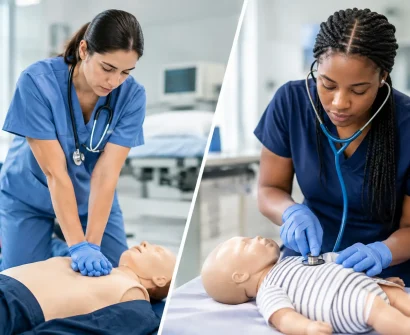
As professionals take on roles with more direct patient care, the level of training may need to change. BLS is commonly required for healthcare providers, while ACLS may be appropriate for professionals working with adult cardiac emergencies in settings such as hospitals, emergency departments, critical care units, or certain transport and procedural environments. PALS and PEARS support professionals who care for infants and children.
The correct choice depends on your role, employer policy, professional college requirements, and the patient population you serve. More advanced training is not automatically better for every career path. A healthcare office employee may need CPR and AED skills, while a nurse entering a critical care role may need BLS plus ACLS. Selecting the credential that matches your actual scope of practice keeps training relevant and credible.
Advanced courses also strengthen clinical judgment under pressure. Participants practice structured assessment, team communication, rhythm recognition, medication-related concepts where applicable, and post-resuscitation priorities. These courses cannot make emergencies routine, but repeated hands-on practice can reduce hesitation when a real event occurs.
Remaining Eligible and Ready to Work
Certification has an expiration date for a reason. CPR guidelines evolve, techniques are refined, and skills fade without practice. Renewing on time helps you avoid a lapse that could affect work schedules, clinical placements, or eligibility for a position.
Recertification is also an opportunity to correct habits. Chest compression depth and rate, full chest recoil, minimizing interruptions, AED pad placement, and role assignment are details that can affect outcomes. A renewal course allows you to receive feedback and refresh those skills in a controlled setting.
For professionals who have been away from direct care, a return to training can be especially valuable. Knowledge may come back quickly, but the physical rhythm of compressions and the sequence of a team response are best reinforced through practice.
Confidence Comes From Hands-On Practice, Not a Certificate Alone
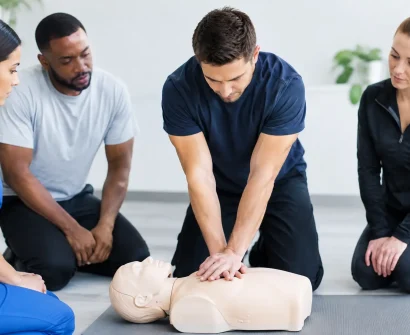
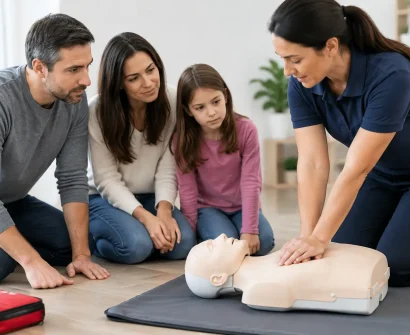
A certificate confirms that you completed a recognized course. Confidence comes from learning with qualified instructors, practicing on realistic equipment, asking questions, and receiving correction while there is time to improve.
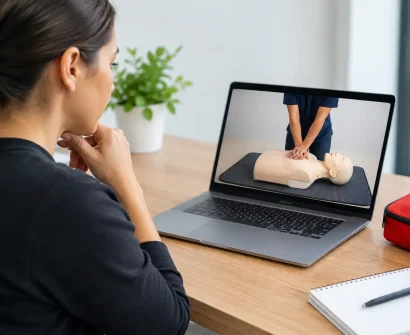
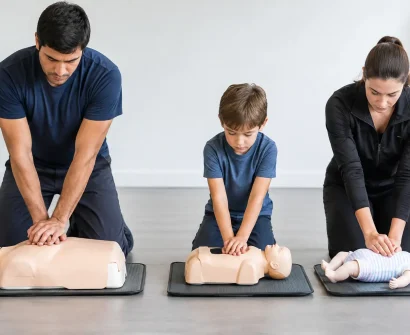
This is why course format matters. Online learning can be useful for completing knowledge-based components at a convenient pace. However, hands-on skills such as compressions, ventilations, AED use, and coordinated team response benefit from instructor-led practice. Blended learning can offer a practical balance, especially for busy healthcare professionals who need scheduling flexibility without losing the classroom skill session.
When comparing training options, check whether the course is accepted by your employer, school, regulatory body, or placement site. Ask which credential is required, whether a recertification option is available, and whether the course includes the hands-on components you need. Choosing a course solely because it is fastest or cheapest can create problems if it does not meet the stated requirement.
Save a Life First Aid & CPR Training provides practical, instructor-led certification options for healthcare professionals and learners across Laval and the Greater Montreal region, including BLS, ACLS, PALS, CPR, and renewal training. For someone balancing shift work, studies, or family responsibilities, accessible scheduling can make it easier to keep an essential credential current.
CPR Skills Strengthen Professional Trust
Patients may never ask to see your CPR card. Still, they notice when a healthcare professional is calm, organized, and prepared. Families notice it too. In an emergency, confidence does not mean pretending to have all the answers. It means recognizing the situation, getting the right help, beginning appropriate care, and staying focused until the response team takes over.
Those habits carry into everyday practice. CPR training reinforces situational awareness, communication, infection-control considerations, documentation expectations, and the value of clearly defined roles. The same professional who can call for an AED promptly is often better prepared to escalate other patient concerns before they become critical.
There is also a broader career advantage: colleagues trust team members who remain competent and current. That trust can lead to stronger references, greater responsibility, and opportunities to participate in safety committees, training initiatives, or emergency preparedness planning. Certification alone will not guarantee a promotion, but it supports the reputation that makes professional growth more likely.
Make Certification Part of Your Career Plan
Treat CPR certification as a career maintenance tool, not a last-minute administrative task. Keep a record of your expiration date, verify requirements before applying for a new role or placement, and plan renewal well before your credential lapses. If you are considering a change in specialty, review whether your next position requires BLS, ACLS, PALS, PEARS, or a different level of emergency training.
The most valuable outcome is not simply being able to say you are certified. It is being the healthcare professional who can step forward, start the right actions, and help protect a life when a patient needs you most.