
Currently Empty: $0.00
A child falls hard on a playground. A coworker suddenly becomes pale and confused. A family member collapses and is not breathing normally. These emergencies do not call for the same response, which is why understanding first aid vs. CPR: what’s the difference? can help you act faster when every moment feels uncertain.
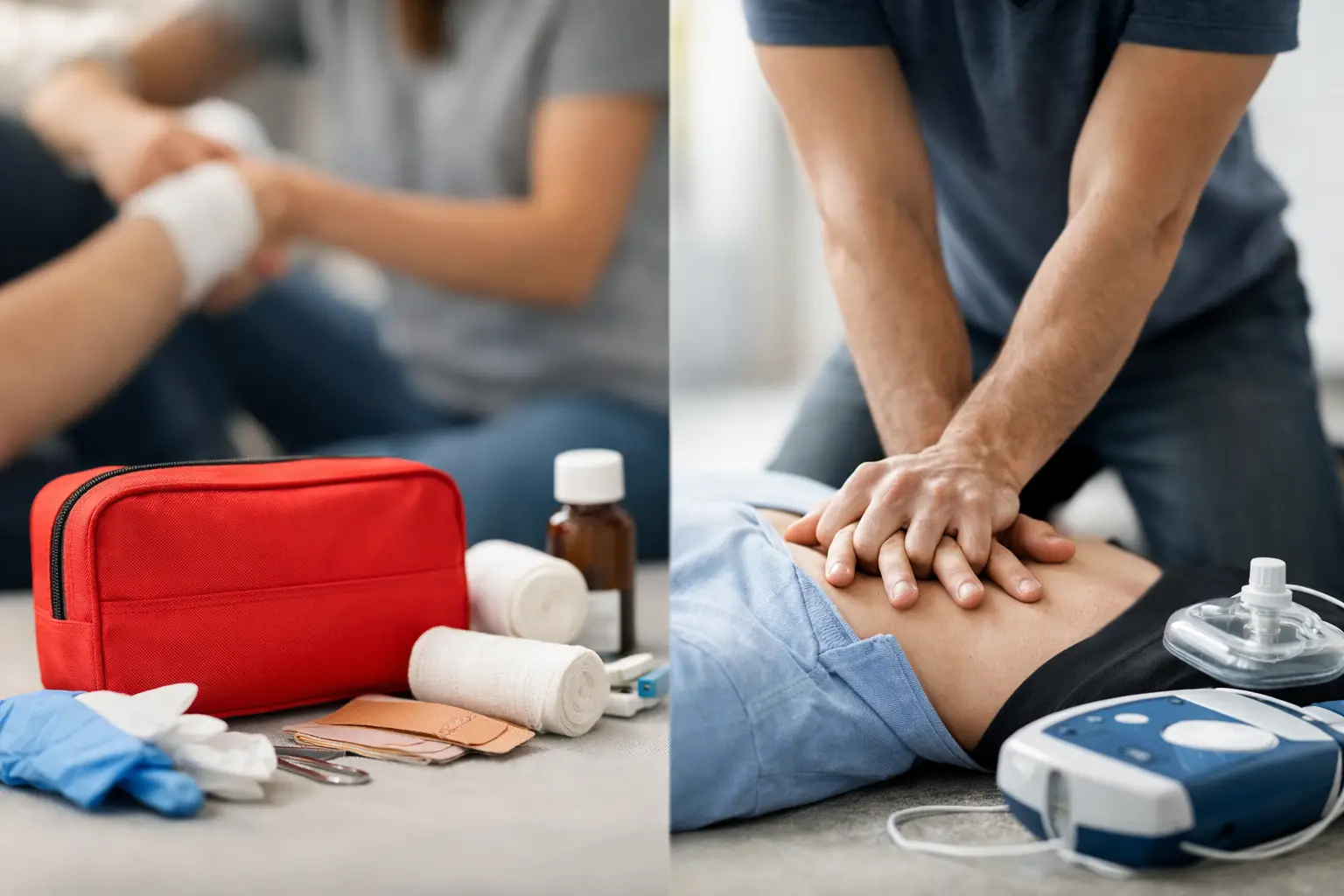
First aid is the broad set of immediate care skills used for injuries and sudden illness. CPR is a specific life-saving technique used when someone is unresponsive and not breathing normally. Both are essential parts of emergency preparedness, but they apply to very different situations.
First Aid vs. CPR: What’s the Difference?
Think of first aid as the wider category. It covers the early care you provide before professional medical help arrives or until the person can receive further treatment. First aid may involve stopping bleeding, treating a burn, helping someone who is choking, recognizing signs of stroke, stabilizing an injury, or assisting a person having a seizure.
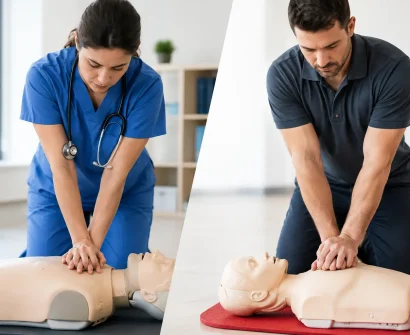
CPR, short for cardiopulmonary resuscitation, has a narrower and more urgent purpose. It is used when a person has suffered cardiac arrest or another emergency that has caused them to become unresponsive and stop breathing normally. CPR uses chest compressions, and sometimes rescue breaths depending on the situation and the responder’s training, to keep blood moving to the brain and other vital organs.
The simplest distinction is this: first aid helps manage many types of medical emergencies, while CPR is used to support circulation and breathing during a life-threatening collapse.
CPR can be taught as part of a first aid course, but learning general first aid does not automatically mean you have learned the full CPR process. Course requirements vary by workplace, profession, and licensing body, so it is worth confirming exactly what a course includes before registering.
What First Aid Covers
First aid begins with assessing the scene and making sure it is safe to approach. A responder then checks the person, calls 911 when needed, and provides care within the limits of their training.
Many common first aid situations are serious, but they do not require CPR. For example, someone with a deep cut may be awake and breathing but need firm direct pressure to control bleeding. Someone with a suspected fracture may need to remain still while you support the injured area and wait for help. A person who is conscious but choking may need abdominal thrusts or other choking care.
First aid training also teaches responders how to recognize warning signs that require immediate medical attention. Chest discomfort, sudden weakness on one side of the body, trouble speaking, severe allergic reactions, heat illness, diabetic emergencies, and poisoning concerns all require prompt action. In many cases, the most valuable thing a bystander can do is call 911 early, monitor the person, and provide appropriate care until emergency responders arrive.
A first aid kit supports this response, but it does not replace training. Gloves, gauze, bandages, a cold pack, and a barrier device are useful supplies. Knowing when and how to use them is what turns supplies into practical help.
When CPR Is Needed
CPR is needed when a person is unresponsive and not breathing normally. This includes a person who is not breathing at all or who is only gasping. Occasional gasps are not normal breathing and should not be treated as a sign that the person is recovering.
If the scene is safe, check for responsiveness, call 911 or direct a specific bystander to call, and send someone for an automated external defibrillator, or AED, if one is available. Begin CPR as soon as possible. If you are trained and willing to provide rescue breaths, follow the method taught in your course. If you are not trained in breaths or cannot provide them, hands-only CPR with continuous chest compressions is still far better than doing nothing for a sudden adult collapse.
An AED is a critical part of many cardiac arrest responses. It analyzes the heart rhythm and, when appropriate, tells the responder to deliver a shock. Modern AEDs provide clear voice prompts, and they are designed to guide lay responders. CPR keeps blood circulating while the AED is retrieved and prepared for use.
CPR is not the right response for every collapse. A person who is awake, breathing, and able to communicate needs a different form of care, even if they appear very ill. That is why training emphasizes assessment rather than assuming every emergency looks the same.
Why Both Skills Matter at Home and at Work
Emergencies are rarely convenient or predictable. A caregiver may need to respond to a choking child. A teacher may need to recognize an allergic reaction. A fitness instructor may be the first person near an adult who collapses during exercise. A workplace safety team may need to manage bleeding, shock, or a medical emergency while emergency services are on the way.
First aid gives you a practical framework for these moments. It helps you notice what is wrong, prioritize immediate dangers, and avoid common mistakes. CPR prepares you for the most time-sensitive type of emergency, where delays in action can quickly reduce the chance of survival.
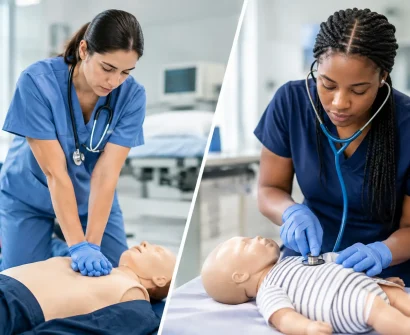
For many people, combining first aid, CPR, and AED training makes the most sense. It creates a more complete response skill set for home, school, public spaces, sports settings, and workplaces. However, the right course depends on your role. A parent or babysitter may need pediatric-focused training, while a healthcare professional may require BLS or an advanced certification such as ACLS or PALS. A workplace may require Standard First Aid with CPR, while some roles only need a shorter emergency first aid course.
Training Builds Confidence Under Pressure
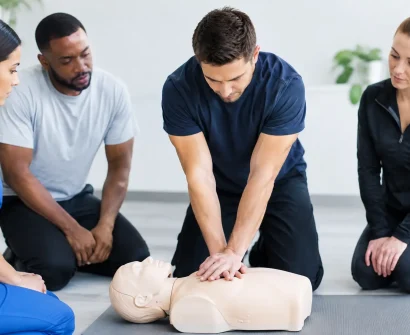
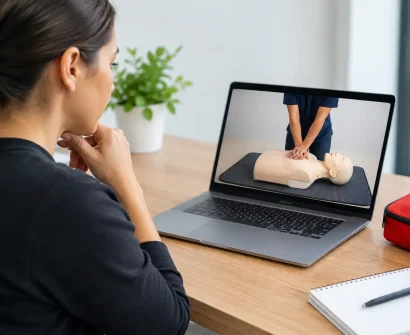
Watching a video can introduce the basics, but an emergency is not a quiz. It may involve noise, fear, limited space, multiple bystanders, or a person you know. Hands-on training gives you the chance to practice chest compressions, AED use, choking care, bandaging, and emergency decision-making before the pressure is real.
It also helps correct misunderstandings. For example, CPR does not restart a heart by itself. It helps circulate oxygenated blood while emergency medical services and an AED provide the next level of care. First aid does not mean trying to diagnose every condition. It means recognizing immediate concerns, providing appropriate care, and getting help quickly.
Skills also fade when they are not used. Renewal and recertification courses are more than paperwork requirements. They are an opportunity to refresh technique, practice current guidelines, and rebuild confidence. For healthcare teams, childcare professionals, and workplace responders, regular practice can improve coordination as well as individual skill.
Choosing the Right Course
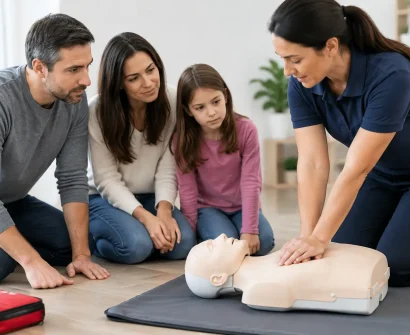
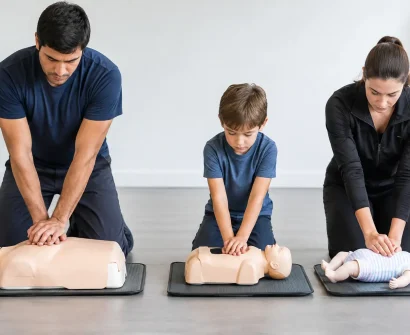
When selecting training, start with the setting where you are most likely to respond. Parents, grandparents, and caregivers often benefit from first aid and CPR training that includes infant and child emergencies. Teachers, coaches, and daycare staff may need certification that meets employer or regulatory requirements. Healthcare professionals should choose a course aligned with their clinical role and professional standards.
Look for instruction that includes hands-on practice and real-world scenarios, not just online information. Blended learning can be a practical option when it combines self-paced online coursework with an in-person skills session. The online portion can make scheduling easier, but practicing with an instructor remains essential for skills such as compressions, rescue breaths, and AED use.
At Save a Life First Aid & CPR Training, participants can choose training that fits both their certification needs and the people they care for. The goal is not simply to complete a course. It is to leave prepared to recognize an emergency and take the next right step.
The best time to learn first aid and CPR is before you need either one. A few hours of practical training can give you the calm, capable response that someone else may depend on when help has not arrived yet.