
Currently Empty: $0.00
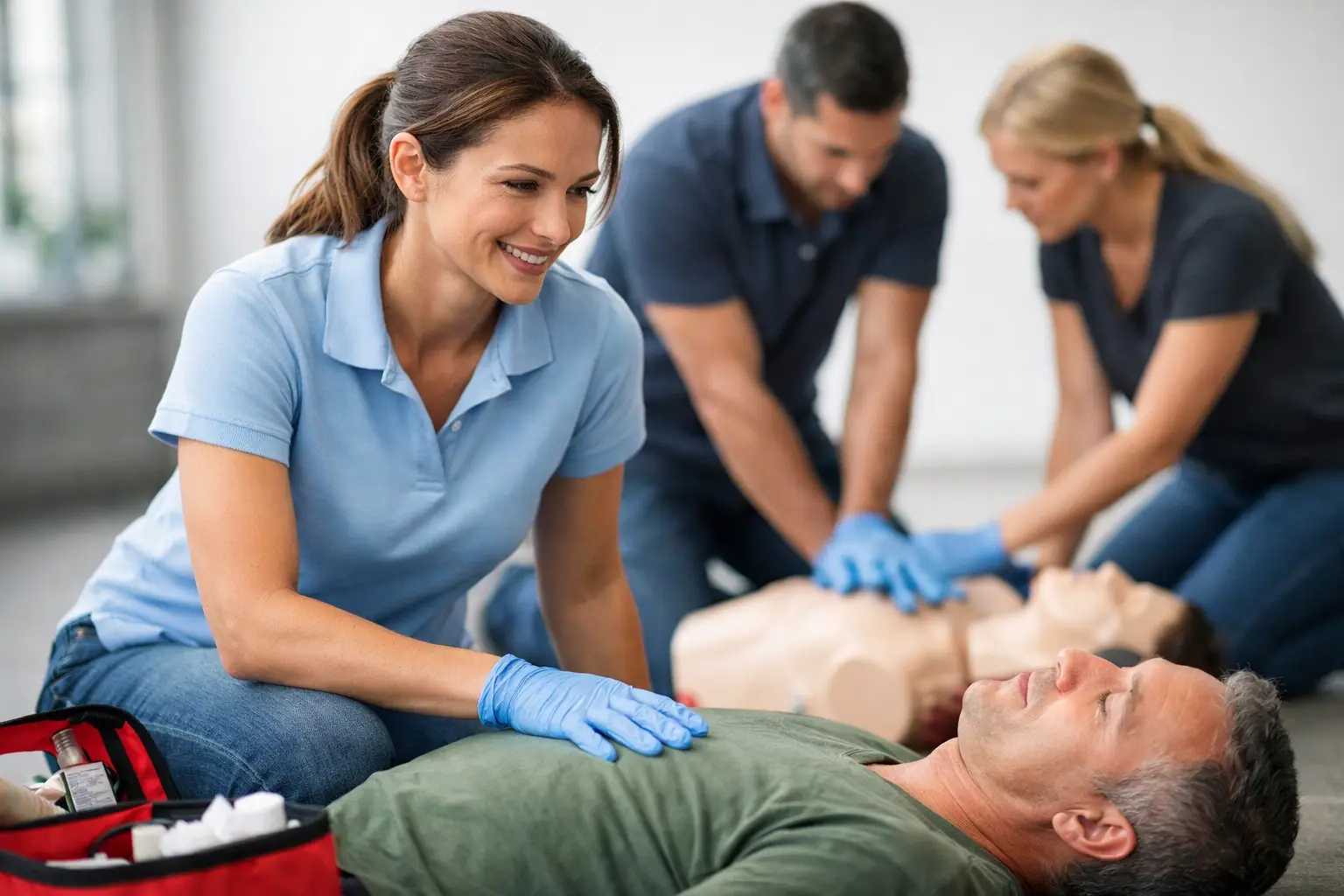
A child suddenly becomes unresponsive at daycare. A coworker collapses during a meeting. A family member starts choking at dinner. In these moments, people rarely struggle because they do not care. They struggle because stress can make even simple decisions feel impossible. That is how first aid training gives you confidence during emergencies: it replaces panic and uncertainty with a practiced, purposeful response.
Confidence in an emergency does not mean feeling fearless or assuming you can solve every medical problem. It means recognizing that you can take useful action, call for help, and provide care within the limits of your training while emergency services are on the way. For parents, workplace teams, educators, caregivers, and healthcare professionals, that ability can change the outcome of a critical situation.
Why Emergencies Can Make People Freeze
Most medical emergencies are unexpected. The brain may react with a rush of adrenaline, racing thoughts, tunnel vision, or a sense that time has stopped. A person may worry about doing the wrong thing, hurting someone, or being judged by bystanders. Without training, those concerns can delay the first call for help or prevent someone from starting care.
First aid education cannot remove the emotional weight of seeing someone sick or injured. What it can do is give you a mental framework to follow. Instead of asking, “What am I supposed to do?” you have an organized sequence: check that the scene is safe, assess the person, call 911 or direct someone else to call, retrieve an AED when appropriate, and begin the care you have learned.
That structure matters. Under pressure, people do better when they do not have to invent a response from scratch.
How First Aid Training Gives You Confidence During Emergencies
The most valuable part of first aid and CPR training is not memorizing a list of medical terms. It is learning how to recognize priorities and act on them. Participants practice identifying life-threatening problems, responding to common injuries and illnesses, and knowing when professional emergency care is needed.
For example, CPR training teaches learners to recognize when a person is unresponsive and not breathing normally, activate emergency response, begin chest compressions, and use an AED. The first time someone sees an AED cabinet in a public building, it can feel intimidating. After hands-on instruction, they understand that the device provides clear prompts and is designed to guide a rescuer through the process.
First aid training also builds confidence for situations that may not require CPR but still require prompt decisions. These can include severe bleeding, choking, burns, allergic reactions, seizures, diabetic emergencies, suspected strokes, and injuries from falls. Knowing the appropriate first steps helps a responder stay focused on what can be done right now.
Practice Turns Knowledge Into Action
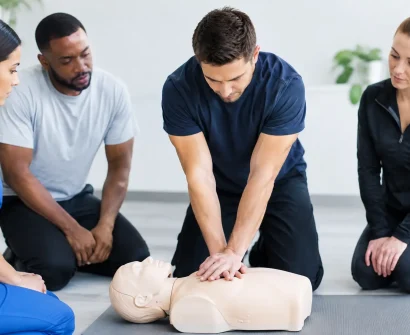
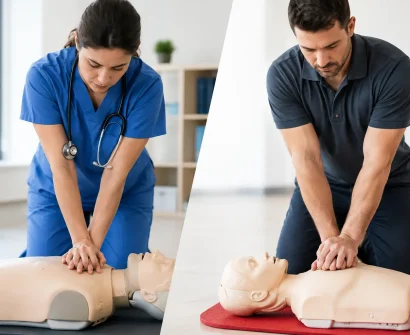
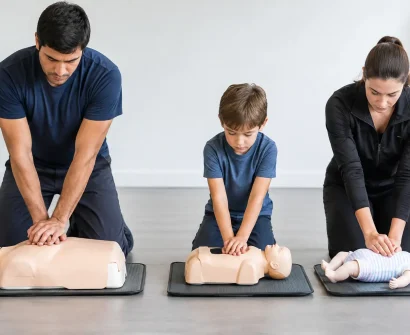
Reading about emergency care can be helpful, but knowledge on a screen is different from performing a skill. In a well-designed course, learners practice chest compressions, rescue breaths when included in their program, AED use, choking response, and first aid techniques with instructor guidance.
This hands-on experience creates familiarity. Participants learn how it feels to position their hands for compressions, apply pressure to control bleeding, or communicate with a person who is frightened and injured. They can ask questions, make mistakes in a safe setting, and correct their technique before a real emergency occurs.
That rehearsal is a major source of confidence. When an emergency happens, a trained responder may still feel nervous, but the actions are no longer completely unfamiliar. The body and mind have a reference point to return to.
Training Helps You Make Better Decisions Under Pressure
A common misconception is that first aid certification makes someone responsible for diagnosing medical conditions. It does not. First aid training teaches practical recognition and response, not guesswork or advanced diagnosis.
A confident responder knows how to look for warning signs, provide immediate care, and seek additional help. They also know when not to move someone, when to avoid giving food or drink, and when a symptom requires urgent medical attention. This awareness can prevent well-intentioned actions from making a situation worse.
Confidence also includes communication. Trained responders are more prepared to give clear instructions to bystanders: ask someone to call 911, send another person for an AED or first aid kit, and keep the area clear. Assigning specific tasks reduces confusion and ensures that no critical step is overlooked.
Confidence Is Not the Same as Overconfidence
The goal of training is calm, capable action – not false certainty. Every emergency is different, and even experienced healthcare professionals rely on teamwork, equipment, protocols, and emergency medical services.
A first aid provider should always consider scene safety first. A responder should not enter traffic, approach a violent situation, or expose themselves to hazards such as fire, smoke, live electricity, or unsafe water. Calling 911 promptly remains essential when a life-threatening condition is suspected.
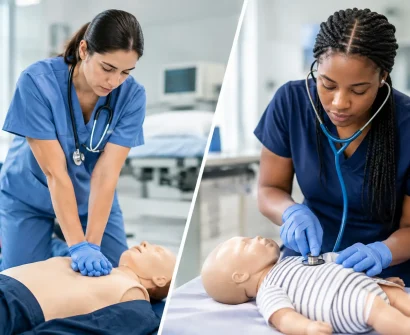
It also depends on the person’s role and training level. A parent may benefit most from CPR and choking skills, while a childcare educator may need daycare-specific emergency first aid. A nurse, paramedic, or other healthcare provider may require BLS, ACLS, PALS, or another advanced course that matches their professional responsibilities. The right training builds relevant confidence rather than encouraging someone to work beyond their scope.
The Value of Repetition and Recertification
Skills can fade when they are not used. That is normal. Many people take a course, feel capable afterward, and then realize months later that they are unsure about compression depth, choking steps, or how to use certain first aid supplies.
Recertification and refresher training restore muscle memory and update learners on current guidelines. They are particularly valuable for workplace safety teams, healthcare professionals, teachers, coaches, and anyone whose certification is required for employment or licensing. For families and community members, renewing training is an investment in continued readiness.
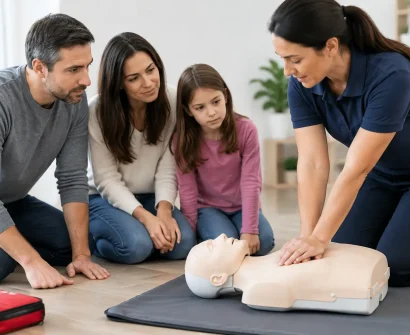
Between courses, it helps to know where AEDs and first aid kits are located at work, school, the gym, or a community facility. Families can also discuss who would call 911, who would stay with a child, and where emergency contacts and medications are kept. Preparedness is stronger when training is supported by simple planning.
Training Creates Safer Workplaces and Communities
One trained person can make a difference, but a prepared group is even more powerful. In a workplace, employees who understand emergency procedures can respond more effectively before a designated first aider or emergency services arrive. In schools and daycare settings, trained educators can act quickly while also reassuring children and communicating with families.
For community organizations, sports teams, and places of worship, first aid education creates a culture of shared responsibility. People are more likely to notice warning signs, speak up when someone needs help, and respond without waiting for someone else to take charge.
Save a Life First Aid & CPR Training supports this kind of preparedness through practical, instructor-led courses for both first-time learners and professionals renewing advanced credentials. The strongest course is the one that fits the learner’s real environment and gives them opportunities to practice the skills they may need.
Choosing Training That Builds Real Confidence
When selecting a course, consider the situations you are most likely to encounter. Parents and caregivers may want training that includes child and infant CPR, choking response, and common pediatric emergencies. A workplace may need Standard First Aid and CPR certification for staff members. Healthcare professionals should choose programs that meet their clinical role and licensing requirements.
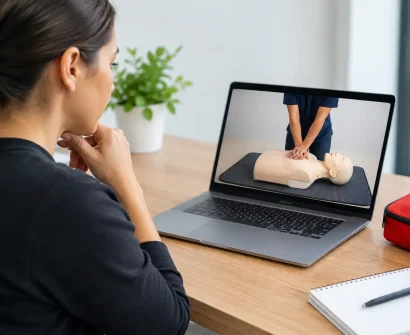
Format matters, too. Blended learning can offer flexibility by covering some material online before a hands-on classroom session. However, practical skills still need in-person assessment and feedback. For emergency response, watching a video is useful preparation, but physically performing the skills is what helps build reliable confidence.
The next emergency may happen at home, at work, on a sports field, or in a public place. You cannot predict who will need help or exactly what will happen. You can decide, however, to be someone who recognizes the moment, calls for help, and takes the first meaningful steps to protect a life.