
Currently Empty: $0.00
When a medical emergency happens, most people do not freeze because they do not care. They freeze because they are unsure what to do first, worried about making the situation worse, or relying on advice they heard years ago. Understanding common first aid mistakes and how proper training prevents them can replace that uncertainty with calm, practical action when every moment matters.
First aid is not about performing complicated medical procedures. It is about recognizing immediate danger, protecting yourself and the person who is ill or injured, and providing appropriate care until professional help takes over. Quality training gives people a clear sequence to follow, plus the hands-on practice needed to use it under pressure.
Common First Aid Mistakes and How Proper Training Prevents Them
Skipping scene safety
A person who appears injured may need help immediately, but rushing in without checking the area can create a second victim. Traffic, broken glass, exposed wires, fire, unstable equipment, violence, and hazardous substances can all put a responder at risk.
Proper first aid training begins with scene safety for a reason. Participants learn to pause, scan for hazards, use protective equipment when available, and call for emergency assistance before putting themselves in danger. If a scene is not safe, the right action may be to wait at a safe distance and direct professional responders to the location. Helping effectively should never require taking an unnecessary risk.
Delaying the call for emergency help
People sometimes spend too long deciding whether a situation is serious enough to call 911. They may hope symptoms will pass, look for a family member, or attempt to drive the person to a hospital themselves. This delay can be especially dangerous during suspected cardiac arrest, stroke, severe allergic reactions, serious bleeding, breathing problems, or an altered level of consciousness.
Training teaches responders to recognize red flags and activate emergency services early. It also reinforces that calling 911 does not mean you have failed to help. It is often the most important first step. A trained responder can place the phone on speaker, follow dispatcher instructions, and continue care while help is on the way.
Moving an injured person unnecessarily
After a fall, collision, sports injury, or suspected spinal injury, well-meaning bystanders may try to sit the person up, move them to a more comfortable spot, or get them into a vehicle. Movement can worsen certain injuries, particularly when the head, neck, or back may be involved.
A first aid course teaches a more thoughtful approach: keep the person still when possible, support the head and neck in the position found, monitor breathing and responsiveness, and wait for emergency responders. There are exceptions. If the person is in immediate danger, such as a fire or unsafe roadway, moving them may be necessary. Training helps responders understand this trade-off rather than applying a one-size-fits-all rule.
Using outdated treatments for burns and wounds
Home remedies can feel familiar, but some create additional harm. Applying butter, oil, toothpaste, or ice directly to a burn can damage tissue or make assessment more difficult. Pouring harsh chemicals into a wound may also irritate the area and delay proper healing.
Current first aid practices focus on simple, evidence-based care. For a minor thermal burn, cool running water is generally the appropriate first step. For bleeding wounds, direct pressure with a clean dressing is often more useful than repeatedly lifting the dressing to check whether the bleeding has stopped. Training explains why these actions work, when a wound needs urgent medical attention, and how to avoid contaminating the injury.
Removing embedded objects
An object lodged in a wound can be alarming to see, and the instinct may be to pull it out. That can cause severe bleeding or further tissue damage. The object may be limiting blood loss, even though it should never be treated as a solution.
Proper training teaches responders to leave embedded objects in place, stabilize them with dressings if practical, control bleeding around the object, and seek emergency care. The same principle applies to a deeply embedded fishhook, a piece of glass, or an impaled object. Knowing when not to intervene is an essential first aid skill.
Giving food, drink, or medication too quickly
Offering water, food, or medication can seem comforting, especially when someone feels faint, has chest discomfort, is nauseated, or is confused. Yet swallowing may be unsafe if the person is drowsy, vomiting, having a stroke, or experiencing a serious medical emergency. Giving another person’s prescribed medication is also risky.
Training helps responders assess responsiveness and breathing, gather useful information, and follow emergency dispatcher guidance. It also clarifies the limited situations in which assisting a person with their own prescribed medication may be appropriate. The goal is not to guess at a diagnosis. It is to provide safe support while getting the right level of care.
Hesitating to start CPR or use an AED
Fear of doing CPR incorrectly is one of the most common barriers to action. Some people worry about causing injury, while others believe they need perfect technique before beginning. In a suspected cardiac arrest, however, doing nothing is the greater danger.
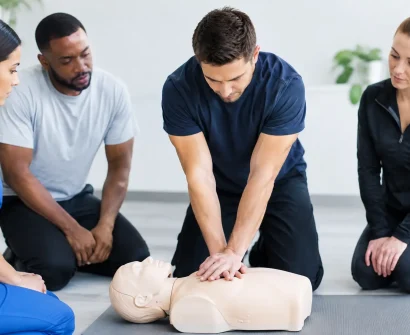
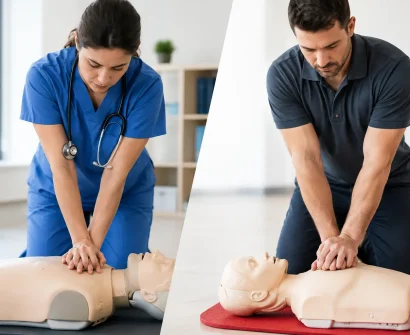
Hands-on CPR and AED training builds the muscle memory that online reading alone cannot provide. Participants practice checking responsiveness and breathing, calling 911, delivering chest compressions with appropriate depth and rate, and using an automated external defibrillator. AEDs are designed to guide users with clear voice prompts. The device analyzes the heart rhythm and will not advise a shock unless it identifies a shockable rhythm.
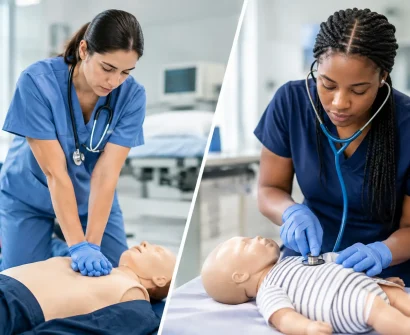
For healthcare professionals, BLS, ACLS, and PALS education adds team-based skills and clinical decision-making. For parents, teachers, coaches, and workplace teams, CPR and AED certification creates a practical foundation for responding before paramedics arrive. The course should fit the setting and the learner’s responsibilities.
Forgetting that children and infants need different care
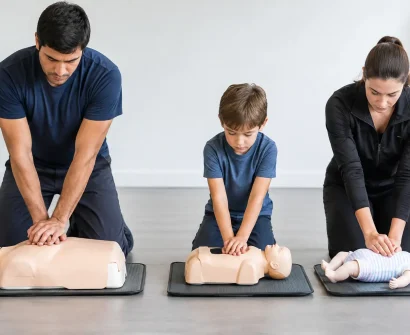
Children are not simply smaller adults. Their airway size, common emergencies, and CPR techniques differ. An infant who is choking, for example, requires a different response than an adult. Using the wrong force or sequence can be ineffective or unsafe.
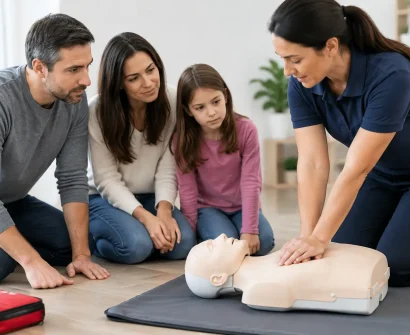
Pediatric-focused training gives caregivers, daycare educators, babysitters, and parents an opportunity to practice age-appropriate skills. It covers recognizing breathing emergencies, responding to choking, performing CPR, and understanding when to seek emergency help. This practice matters because pediatric emergencies are emotionally intense, and confidence is easier to access when the steps have been rehearsed.
Failing to monitor after the immediate problem
Care does not end when bleeding slows, a person regains consciousness, or an allergic reaction appears to improve. Symptoms can return or worsen. Shock, breathing changes, confusion, skin color changes, and declining responsiveness all require attention.
Proper training teaches responders to stay with the person when safe to do so, monitor their condition, keep them comfortable, and share clear observations with emergency responders. Details such as the time symptoms began, what happened before the injury, known allergies, medications, and changes in responsiveness can help guide further care.
Training Turns Information Into Action
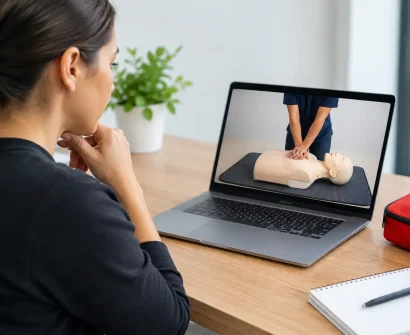
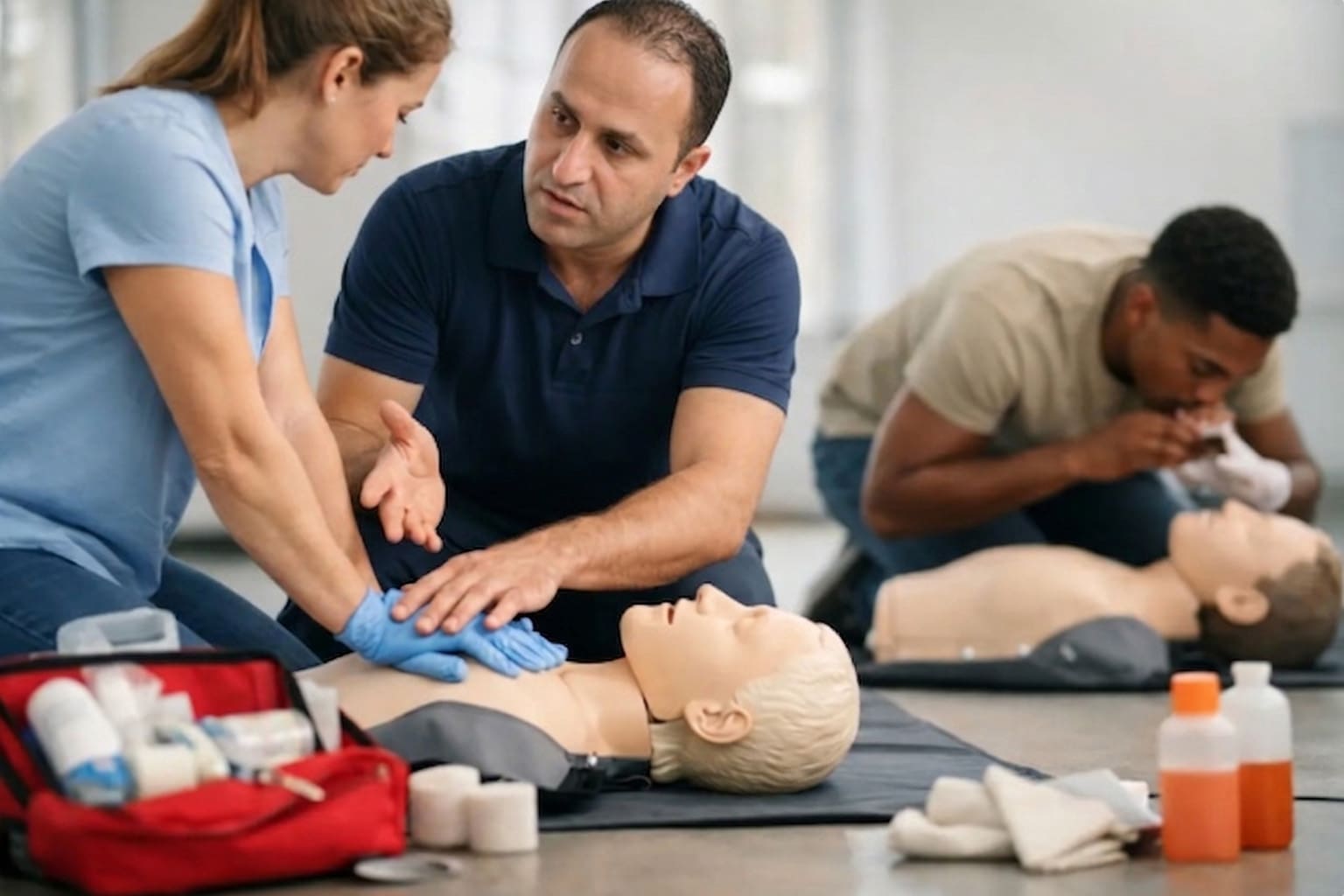
Watching a short video can introduce a first aid concept, but it cannot fully prepare someone for the realities of an emergency. Skills such as chest compressions, placing a person in a recovery position, applying pressure to serious bleeding, or responding to choking benefit from instructor feedback and realistic practice.
A well-designed course also gives participants permission to act within their training. Instead of trying to remember scattered advice, they learn an organized response: assess the scene, check the person, call for help, provide appropriate care, and continue monitoring. That sequence reduces hesitation without encouraging people to exceed their role.
Save a Life First Aid & CPR Training provides practical, instructor-led courses for workplaces, healthcare professionals, families, educators, and community members in Laval and the Greater Montreal region. Whether you need Emergency First Aid, Standard First Aid, CPR/AED training, BLS, or a pediatric-focused course, choosing training that matches your environment makes the learning more useful.
The most valuable outcome of first aid training is not memorizing every possible emergency. It is knowing how to take the next safe step. Practice those skills, keep your certification current, and you will be better prepared to protect a coworker, a child, a patient, or a stranger when they need help most.