
Currently Empty: $0.00
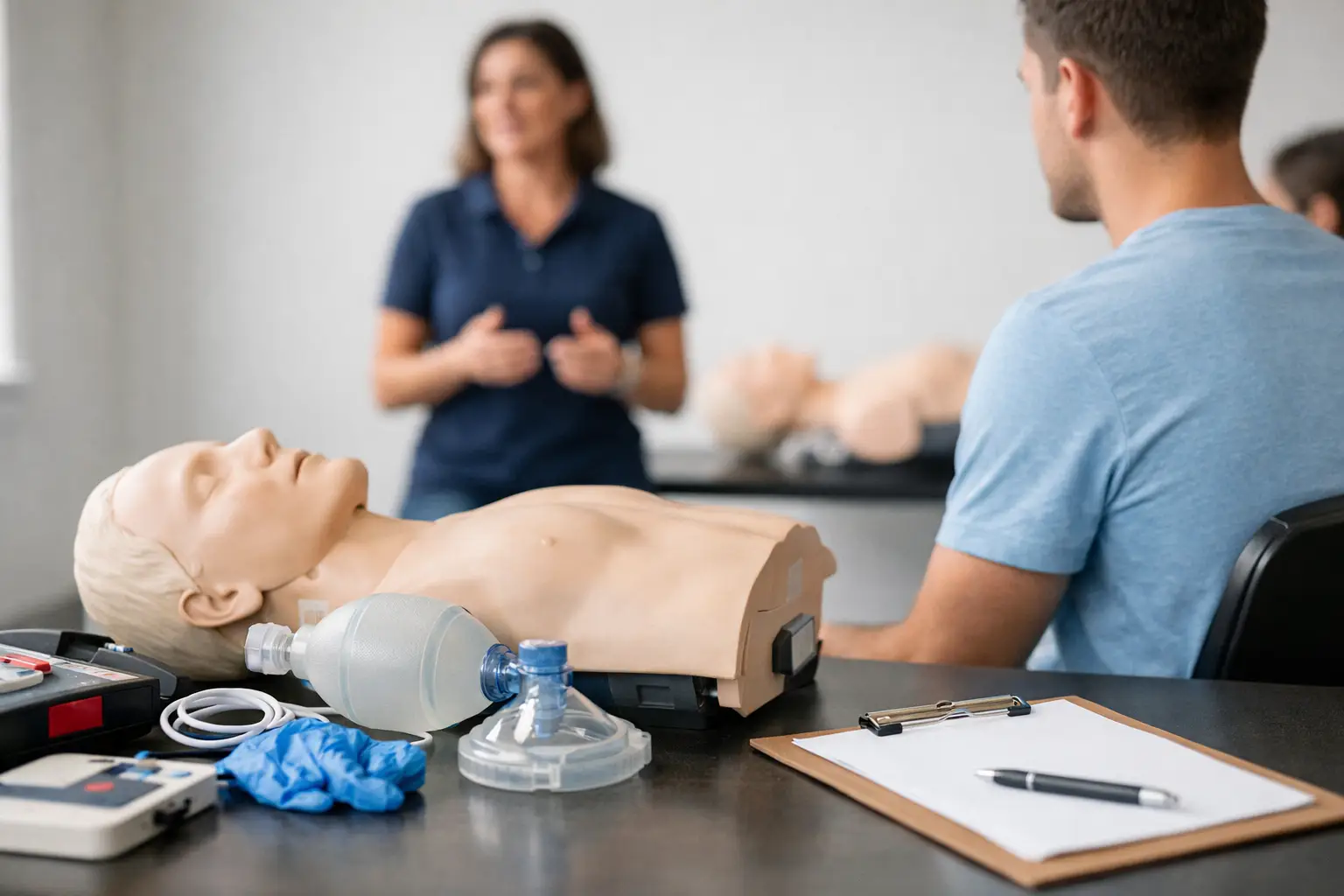
A manikin on the floor, a bag-mask device in your hands, and an instructor asking what comes next can feel intimidating when you have never taken a healthcare resuscitation class. Preparing for your first BLS provider course: what to expect is less about memorizing every detail before you arrive and more about knowing how the day will work. You will learn a repeatable response process, practice it with feedback, and show that you can perform essential skills safely.
BLS, or Basic Life Support, is designed for healthcare professionals and others who may need to respond to cardiac arrest or respiratory emergencies as part of their role. It is more hands-on and clinically focused than a general community CPR course. That does not mean you need prior emergency experience. Your course is built to teach beginners as well as people returning for renewal.
What a First BLS Provider Course Is Really Like
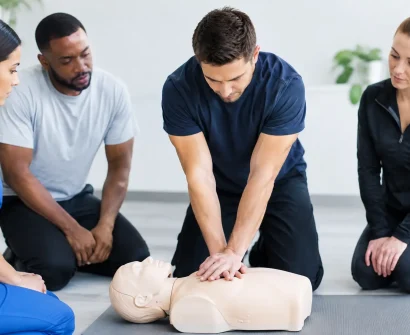
A BLS class moves between short instruction, demonstration, individual practice, and realistic response scenarios. Rather than sitting through a long lecture, expect to spend substantial time working with manikins and training equipment. The goal is not simply to recognize the right answer on paper. It is to build the physical rhythm, decision-making habits, and team communication needed in an emergency.
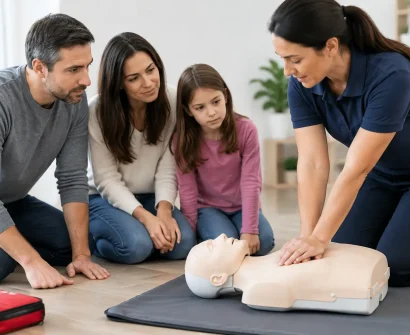
Your instructor will explain why each step matters, then demonstrate the skill before asking participants to practice. You may work independently, in pairs, or as part of a small resuscitation team. It is normal to make corrections during practice. That is precisely what practice time is for.
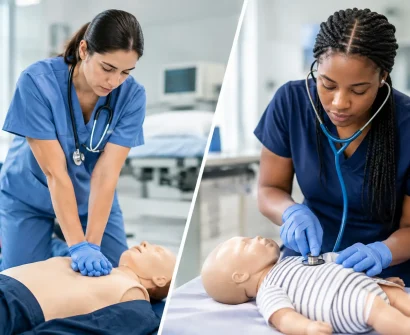
The course commonly covers how to quickly assess a collapsed person, activate an emergency response system, provide high-quality chest compressions, deliver rescue breaths, and use an AED. Depending on the curriculum and certification requirements, you may also train for adult, child, and infant emergencies; choking; bag-mask ventilation; and team-based CPR.
BLS Is About Performance, Not Perfect Recall
New learners often worry that they must walk in knowing every compression ratio, sequence, and equipment detail. You do not. Your instructor will teach the current course standards and guide you through the expected sequence.
What helps most is arriving ready to participate. CPR has a physical component, and repetition matters. You will likely practice chest compressions several times to develop appropriate hand placement, rate, depth, recoil, and minimal interruptions. You may also practice rescue breathing with barrier devices or a bag-mask device. These skills can feel awkward at first, especially when classmates are watching, but confidence grows quickly when you focus on the next step rather than trying to perform everything flawlessly at once.
Preparing for Your First BLS Provider Course Before Class
Start by confirming the exact course required by your employer, school, licensing body, or clinical placement. “CPR certification” can mean different things. A healthcare BLS provider credential may be required for nurses, medical students, dental teams, paramedics, respiratory therapists, and other clinical professionals, while a workplace or community course may be more appropriate for non-medical roles.
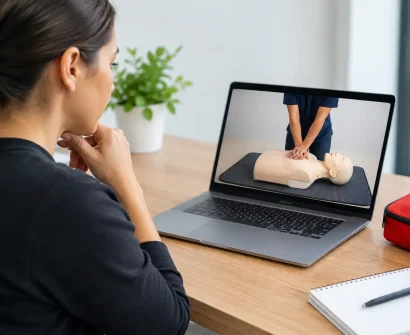
Check your registration confirmation for the course format, start time, address, identification requirements, and whether there is an online portion to complete beforehand. Blended courses often require participants to finish assigned online learning before attending the in-person skills session. Do not leave that component until the last minute. Completion may be necessary before you can participate in the practical portion or receive certification.
Wear comfortable clothing that allows you to kneel, bend, and use your shoulders and arms freely. Closed-toe shoes are usually a practical choice. CPR practice can be physically demanding, particularly during repeated compression drills, so avoid planning a restrictive outfit or arriving dehydrated after a long shift.
If you have a temporary injury, chronic pain, pregnancy-related mobility concerns, or another condition that could affect floor-based practice, contact the training provider before class. Many accommodations can be discussed in advance. At the same time, BLS certification requires participants to demonstrate specific skills, so it is wise to understand the practical expectations before the course begins.
What to Bring and What to Leave Behind
Bring a government-issued photo ID if requested, any prerequisite completion record, and your glasses or hearing aids if you use them. A pen and water bottle can also be useful. Most training equipment is supplied.
You generally do not need to purchase a personal CPR mask, AED trainer, or bag-mask device for a first course. You also do not need to bring medical scrubs unless your organization specifically asks you to. Come ready to learn, ask questions, and practice.
Skills You Will Practice During the Course
High-quality CPR is the center of BLS training. You will learn to recognize when a person is unresponsive and not breathing normally, call for help, begin compressions promptly, and use an AED as soon as it is available. In a real emergency, rapid action and clear priorities can make a meaningful difference.
You will also learn that BLS is not always a one-person response. In healthcare settings, effective resuscitation depends on coordinated teamwork. One rescuer may deliver compressions while another prepares the AED, manages ventilation, calls for additional help, or monitors timing. Closed-loop communication, in which directions are stated clearly and confirmed, helps reduce confusion when seconds matter.
Child and infant CPR require different techniques and careful attention to body size. Participants often find these stations particularly useful because the equipment and hand positions are unfamiliar. Your instructor will break the skills into manageable steps and give you time to repeat them.
Bag-mask ventilation may be one of the more challenging practical skills. Maintaining a proper mask seal while delivering effective breaths takes coordination. Do not be discouraged if it takes several attempts. Even experienced providers benefit from refresher practice because ventilation is a hands-on skill, not just a fact to remember.
What the Evaluation Usually Involves
Most BLS provider courses include both a knowledge evaluation and a hands-on skills assessment. The exact process depends on the curriculum being taught, but you should expect to demonstrate that you can follow the response sequence and perform CPR skills correctly.
During a skills assessment, an instructor may present a scenario such as finding an unresponsive adult, child, or infant. You will be expected to assess the situation, call for help, start appropriate care, and use available equipment in the correct order. In team scenarios, you may need to communicate with another rescuer and switch compressor roles efficiently.
The assessment is not meant to catch you off guard. It reflects the skills you practiced during the class. Listen carefully to coaching, take correction seriously, and ask for clarification whenever a step is unclear. If you are nervous, slow down enough to think through the sequence. A controlled, organized response is more effective than rushing through a scenario.
Written or online testing can include questions about recognition, CPR priorities, AED use, choking response, and team dynamics. Review any course materials provided in advance, but do not rely on memorization alone. Connecting the information to the skill stations makes it easier to remember under pressure.
How to Get More From Hands-On Practice
The participants who gain the most from a first BLS course are not always those with clinical experience. They are often the people who actively practice, ask questions, and request another attempt when a skill does not feel right.
Pay attention to the feedback that changes performance: keeping your arms straight during compressions, allowing full chest recoil, limiting pauses, counting out loud, or adjusting your position for a better bag-mask seal. Small corrections can have a large effect on CPR quality.
It also helps to practice speaking with purpose. Say what you see, state what you need, and confirm instructions when working with another rescuer. In an emergency, clear communication protects the patient and helps everyone on the team stay focused.
At Save a Life First Aid & CPR Training, instructor-led BLS classes are structured to give participants practical repetition and supportive feedback, whether they are entering healthcare or meeting a workplace requirement. The objective is not to make emergencies feel routine. It is to make your first actions more certain when routine suddenly disappears.
After You Earn Your Certification
Once you have completed the course requirements, keep a record of your certification and note its expiration date. Employers, schools, and professional programs may have their own renewal timelines, so verify what applies to your role. Skills can fade when they are not used, which is why renewal training and occasional review matter even for experienced providers.
Your first BLS course is not a test of whether you are naturally calm in a crisis. It is a chance to learn what to do before a crisis asks you to act. Arrive prepared to practice, accept feedback, and take each scenario one step at a time. That preparation can help you protect a life when someone needs help most.