
Currently Empty: $0.00
A child begins choking during lunch at daycare. A coworker collapses in a break room. A grandparent becomes unresponsive at a family gathering. In those first minutes, the outcome can depend on whether someone nearby recognizes the emergency and knows what to do. That is how Save a Life First Aid & CPR Training is helping build safer communities across Quebec: by turning ordinary people into calm, capable first responders.
Emergency preparedness is not about expecting the worst. It is about giving people a practical plan for the moments when waiting for help is not enough. From healthcare settings and classrooms to sports facilities, offices, and homes, trained community members create a stronger first line of care before emergency services arrive.
Safer Communities Start With People Who Can Act
Emergency responders remain essential, but they cannot be everywhere at once. In a cardiac arrest, severe bleeding incident, allergic reaction, or choking emergency, a bystander may be the first person able to provide meaningful help. Calling 911 is critical, but immediate CPR, AED use, or first aid can support a person while professional help is on the way.
Training changes the question from “What do I do?” to “What is the next step?” Participants learn how to assess a scene, protect themselves, recognize life-threatening conditions, contact emergency services, and begin appropriate care. This structure matters because emergencies are stressful. Even people with good intentions can hesitate when they have never practiced the response.
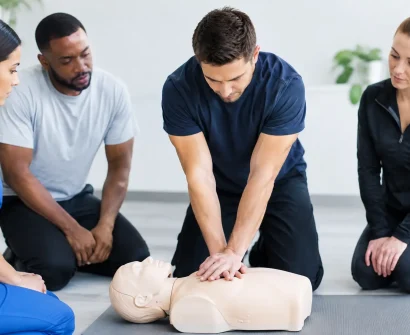
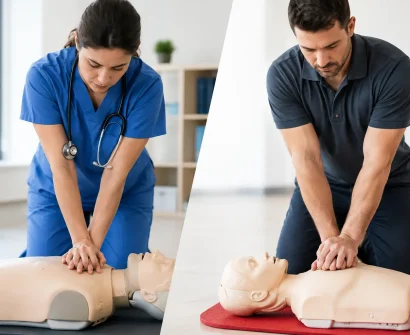
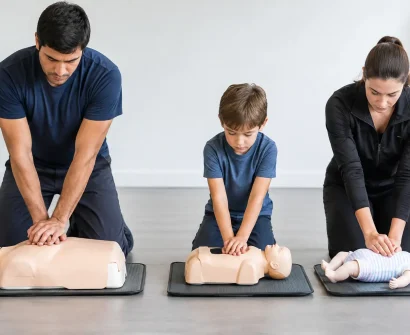
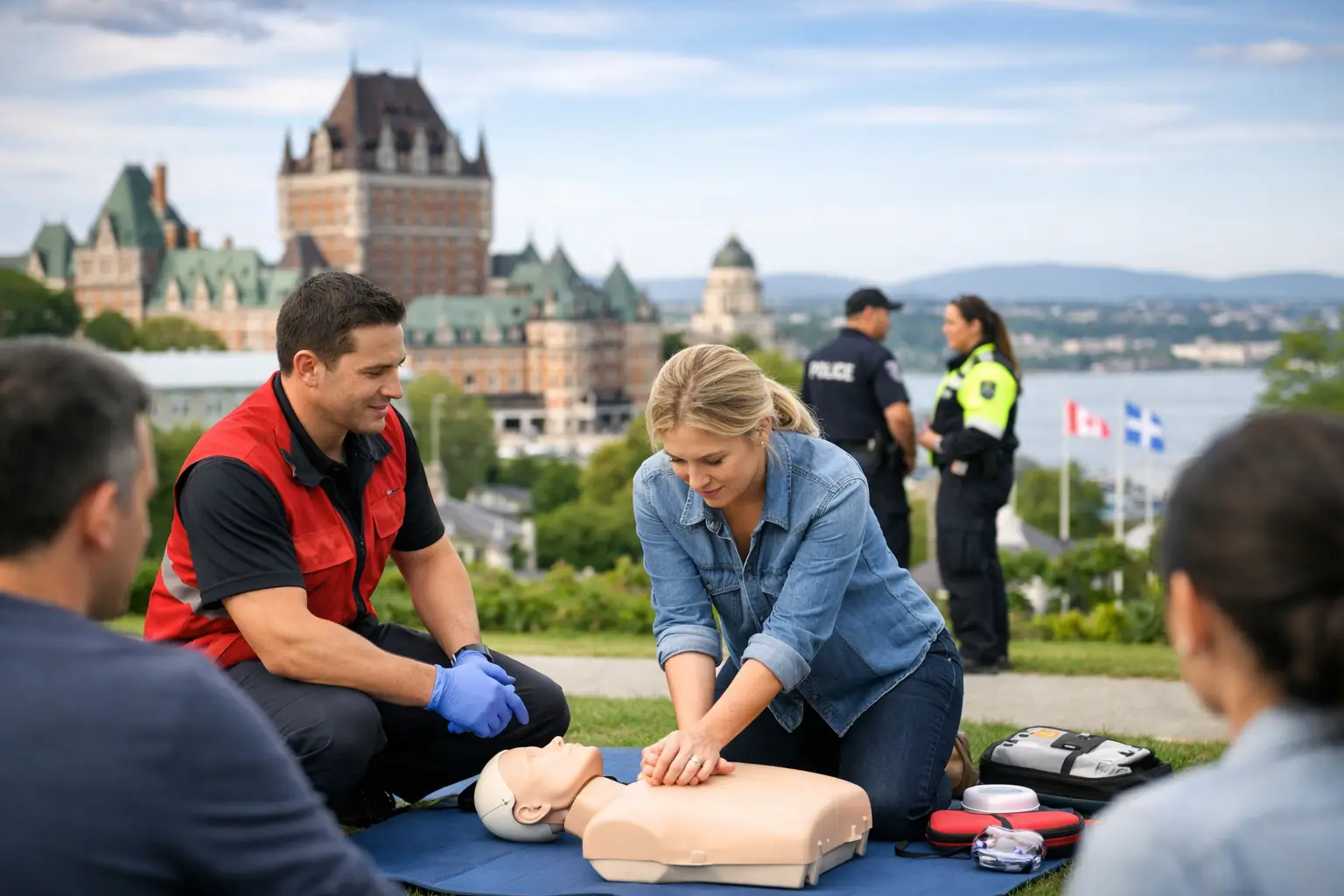
Hands-on instruction gives learners the opportunity to work through that hesitation in a supportive setting. Performing chest compressions on a manikin, practicing AED steps, applying a bandage, or responding to a simulated choking event makes the information more usable when pressure is high.
Why Practical CPR and First Aid Training Matters in Quebec
Quebec communities are diverse, busy, and connected. A medical emergency may happen in a Laval workplace, at a Montreal youth program, in a Brossard fitness center, or during a family visit in the Laurentians. The setting changes, but the need for immediate, informed action does not.
First aid and CPR education helps close the gap between an emergency happening and advanced care becoming available. It also helps participants understand the limits of their role. A trained bystander does not need to diagnose every condition or replace medical professionals. Their job is to recognize warning signs, provide the care they have been trained to give, and communicate clearly with emergency responders.
For many learners, that clarity is as valuable as the technical skills. They leave knowing that an emergency response is not one perfect action. It is a sequence: stay aware, call for help, use available equipment, provide care, and continue until help takes over or the situation changes.
CPR and AED Skills Can Reduce Delays
When a person is unresponsive and not breathing normally, every moment matters. CPR keeps blood moving through the body, while an AED can analyze a heart rhythm and, when advised, deliver a shock. Modern AEDs are designed to guide users with clear prompts, but people are far more likely to retrieve and use one when they have practiced the process.
CPR training also corrects common misconceptions. People often worry they will hurt someone, perform a step incorrectly, or make the situation worse. While training appropriately addresses safety and technique, it reinforces a central lesson: prompt action is often better than standing by in fear. The goal is not perfection. The goal is to provide the best possible care with the skills and resources available.
Training Supports More Than Cardiac Emergencies
CPR is often the skill people associate with lifesaving training, but community safety requires broader preparedness. First aid courses can help people respond to injuries and medical conditions that occur far more often in daily life.
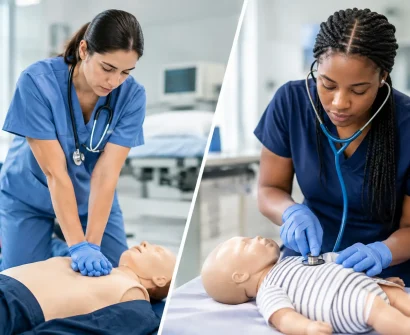
Participants may learn how to manage bleeding, burns, fractures, fainting, seizures, diabetic emergencies, asthma symptoms, allergic reactions, heat-related illness, and choking. The exact content depends on the course level and learner needs. A parent may need pediatric-focused emergency skills, while a healthcare professional may require advanced resuscitation training for clinical practice.
This is why choosing the right course matters. A general CPR class may be an excellent starting point for a coach, volunteer, or family member. A workplace team may need Emergency First Aid or Standard First Aid to meet occupational requirements. Nurses, physicians, paramedics, and other clinical professionals may require BLS, ACLS, PALS, or PEARS based on their role and licensing standards.
Certification requirements should never be the only reason to train. They are important for employment, regulation, and professional readiness, but the lasting value comes from knowing that the skills may help a colleague, patient, neighbor, friend, or stranger.
Workplaces, Schools, and Daycares Create a Safety Network
A safer community is built through everyday institutions. Employers, educational settings, and childcare providers are often responsible for large groups of people, including children, older adults, visitors, and staff with different medical needs. Prepared teams can respond faster and more effectively because they have a shared understanding of their emergency procedures.
In workplaces, training can help safety teams identify hazards, respond to injuries, and coordinate during a medical event. It also builds confidence among employees who may otherwise feel unprepared to step forward. The best workplace programs do more than assign one designated first aider. They encourage a culture in which people know where emergency supplies are stored, how to call for help, and who can support an emergency response.
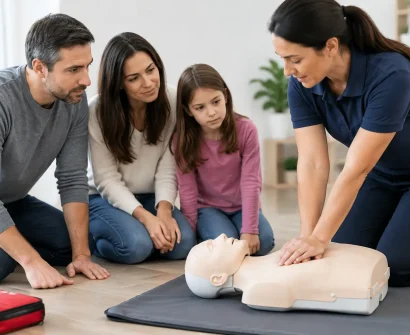
For schools and daycares, pediatric emergency training has particular value. Young children can deteriorate quickly, and their care needs differ from those of adults. Educators and caregivers benefit from practicing situations they may realistically encounter, including choking, allergic reactions, fevers, falls, and breathing concerns. Parents benefit, too, because a trained caregiving environment brings added peace of mind.
Sports organizations and community programs also have a role to play. Coaches, fitness instructors, volunteers, and event staff may be responsible for participants during physical activity, heat exposure, or crowded events. Training prepares them to act decisively while maintaining scene safety and contacting emergency services quickly.
Confidence Comes From Repetition, Not Just Information
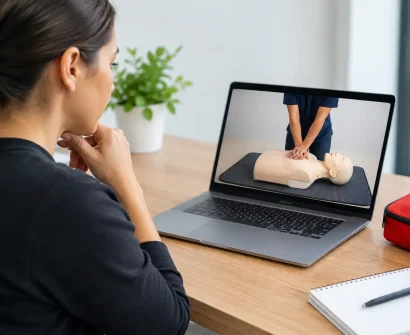
Watching a video or reading an emergency checklist can introduce important concepts. It cannot fully replace the experience of positioning hands for compressions, following AED prompts, or working through an emergency scenario with an instructor. Blended learning can be a useful option for busy learners, combining self-paced online material with in-person skills practice and evaluation.
The right format depends on the course, the certification requirement, and the learner’s experience. Healthcare professionals may need focused recertification that refreshes advanced protocols. First-time learners may benefit from more time to ask questions and repeat skills. Organizations scheduling groups may need a format that minimizes time away from work while preserving meaningful hands-on practice.
Skills also fade when they are not used. Renewal and recertification are opportunities to correct technique, revisit changing guidance, and restore confidence. Rather than treating renewal as an administrative task, learners can use it to ask practical questions: Where is the closest AED? What is our workplace emergency plan? How would I respond if I were alone with a child? Who takes charge when multiple people are present?
Building Preparedness Beyond the Classroom
A course is the beginning of preparedness, not the finish line. After training, individuals and organizations can strengthen their readiness by checking first aid supplies, locating nearby AEDs, displaying emergency contact information, and discussing response roles. Families can make sure caregivers understand medical conditions, allergies, medications, and emergency contacts.
Four simple habits can make training easier to use when it counts:
- Keep first aid kits stocked, visible, and accessible.
- Identify AED locations at work, school, sports facilities, and public venues.
- Review emergency plans after staffing changes, moves, or new activities.
- Encourage certification renewal before skills and confidence fade.
Preparedness should be practical, not intimidating. A small business may not need the same plan as a hospital unit, and a family’s needs will differ from those of a daycare. What matters is creating a response plan that fits the people, environment, and risks involved.
How Save a Life Training Builds Safer Quebec Communities
Save a Life First Aid & CPR Training helps learners across Laval, Greater Montreal, and surrounding Quebec communities find training suited to their responsibilities and goals. Whether someone is pursuing a first CPR certification, renewing a healthcare credential, preparing a workplace team, or seeking pediatric skills for childcare, practical instructor-led education makes lifesaving knowledge more accessible.
The strongest communities are not those that assume emergencies will never happen. They are communities where more people are ready to notice, respond, and support one another when they do. Taking a first aid or CPR course is a direct way to protect lives – and to become the person who can make a critical difference before help arrives.