
Currently Empty: $0.00

“Meet Wafi Saida: the mission behind Save a Life First Aid & CPR Training” is more than a profile headline. It is a question about what life-saving education should accomplish. A certification card matters, especially when an employer, licensing body, school, or daycare requires it. But when someone collapses at work, a child begins choking, or a family member becomes unresponsive, the real value of training is the ability to recognize what is happening and take purposeful action.
That is the mission reflected in high-quality first aid and CPR education: make emergency skills practical, approachable, and ready to use when seconds matter. It is a commitment to helping people move from hesitation to informed action, whether they are healthcare professionals maintaining credentials or parents preparing to protect the people they love.
The Mission Behind Save a Life First Aid & CPR Training
Emergency training is often viewed as something people complete because they have to. A nurse may need BLS renewal. A childcare educator may need first aid certification for licensing. A workplace may need trained responders to meet safety requirements. Those needs are valid, but they are only the starting point.
The deeper purpose is preparedness. In a medical emergency, bystanders are commonly the first people present. They may be a coworker, teacher, coach, grandparent, neighbor, or stranger nearby. Their willingness and ability to call for help, start CPR, use an AED, control severe bleeding, or provide first aid can shape what happens before emergency services arrive.
A mission centered on saving lives therefore cannot rely on memorization alone. Participants need clear instruction, repeated practice, and the chance to ask questions without feeling intimidated. They need to understand not just the steps, but the reason behind them and the situations in which those steps apply.
Confidence Is Built Through Hands-On Practice
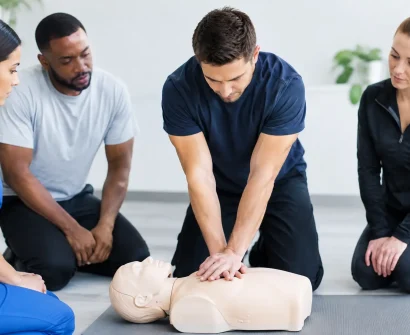
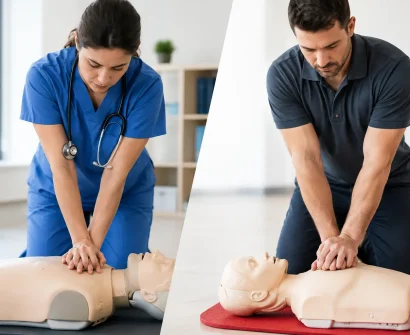
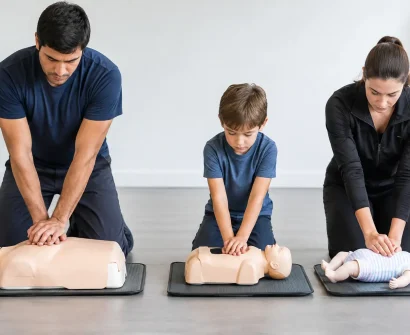
Many people can recall seeing CPR performed in a television show or scrolling past emergency advice online. That is not the same as placing hands correctly for chest compressions, practicing the rhythm, attaching AED pads, or responding to a choking scenario under the guidance of an instructor.
Hands-on learning creates familiarity. It gives participants an opportunity to make corrections before a real emergency occurs. A learner may discover that compressions are more physically demanding than expected, that AED prompts are easier to follow than they assumed, or that they need to slow down and assess the scene before assisting someone. These are valuable lessons because they replace uncertainty with experience.
That does not mean training can eliminate every moment of stress. Emergencies are unpredictable, and even experienced healthcare providers can feel the weight of a critical situation. The goal is more realistic: give people a dependable process to follow. Check for safety. Assess responsiveness. Call for emergency help. Begin the appropriate care. Use available equipment. Continue until help arrives or the situation changes.
When those actions have been practiced, they are more likely to come forward when they are needed.
Training Should Match the Responsibility
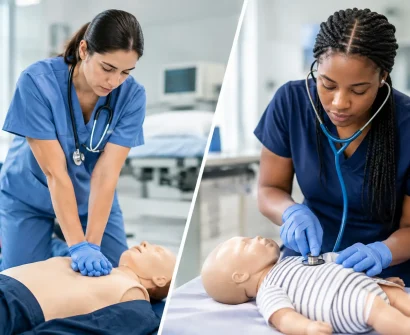
Not every learner needs the same course, and treating all participants as though they do can reduce the value of training. A medical student preparing for clinical placement has different requirements from a new parent. A dental professional renewing BLS needs a different level of detail than a babysitter taking emergency first aid for the first time.
This is why course selection matters. Basic Life Support, ACLS, PALS, PEARS, Heartsaver CPR AED, Emergency First Aid, Standard First Aid, and daycare-focused courses are designed for different roles and environments. The right choice depends on professional requirements, the people a participant supports, and the level of emergency response they may be expected to provide.
There are trade-offs to consider. Advanced courses can be essential for healthcare professionals, but they are not automatically the best fit for every community learner. Conversely, a basic course may provide an excellent foundation but may not meet an employer’s credentialing standard. The most useful training is the training that meets the learner where they are and prepares them for the situations they are most likely to face.
Certification Is a Milestone, Not the Finish Line
A course completion card confirms that a participant has met the required standard at a point in time. It should also mark the beginning of continued readiness.
Skills can fade when they are not used. People may forget the sequence for responding to an adult versus an infant, lose confidence with AED use, or become unsure about changes to workplace procedures. Renewal and recertification courses help reinforce core skills, update participants on current guidelines, and restore the confidence that comes from practice.
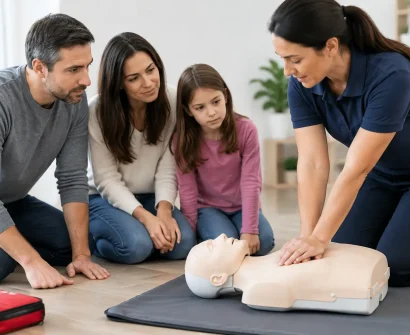
For healthcare professionals, ongoing training supports clinical competence and helps meet workplace or licensing expectations. For families and workplaces, refreshing skills can be just as meaningful. A parent whose infant has started eating solid foods, a manager with new employees, or a coach beginning a new season may have a renewed reason to prepare.
Preparedness also extends beyond the classroom. A trained person should know where emergency equipment is located, how to contact local emergency services, and who may need support in their home or workplace. A first aid kit that cannot be found quickly or an AED hidden behind an inaccessible door does not offer much protection in a crisis.
Making Training Accessible Without Making It Easier Than It Should Be
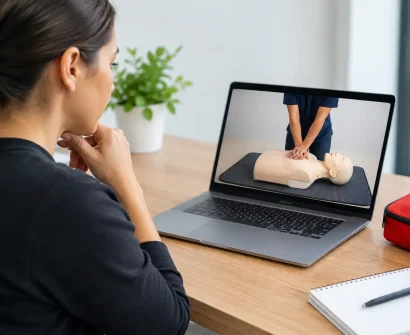
A practical training mission recognizes that adults have demanding schedules. Healthcare workers may work shifts. Parents may need to coordinate child care. Workplace teams may need instruction organized around operations. Flexible formats, including blended learning that combines online coursework with in-person skills practice, can make certification more accessible.
Still, convenience should never come at the expense of competence. Online learning can efficiently introduce concepts, terminology, and decision-making frameworks. It cannot fully replace instructor feedback on compression technique, AED practice, or hands-on first aid skills. The strongest learning approach preserves the parts that must be practiced in person while giving participants reasonable options for completing the knowledge-based portion of a course.
That balance is especially valuable across Laval and the Greater Montreal area, where learners may be fitting professional development or family safety education into already full weeks. Access matters because a course only protects a community when people can realistically attend it.
Building Safer Communities One Prepared Person at a Time
Life-saving readiness is not reserved for hospitals or emergency crews. Communities become safer when ordinary people understand that they have a role before professional help arrives.
A teacher can recognize an allergic reaction and begin the emergency plan. A coworker can retrieve an AED while another starts CPR. A grandparent can respond to a choking emergency. A fitness instructor can identify warning signs that require immediate attention. In each case, training turns concern into a useful next step.
This is also why a compassionate learning environment matters. Some participants enter a course after witnessing a frightening event or after realizing how unprepared they felt during a family emergency. Others are nervous about performing skills in front of a group. Good instruction does not dismiss those feelings. It creates a focused, respectful space where questions are welcomed and competence is built through practice.
The mission behind Save a Life First Aid & CPR Training is ultimately about giving people the knowledge, skills, and confidence to help when help is needed most. No one can predict when an emergency will occur. Everyone can choose to be better prepared for one.
The next time you consider first aid or CPR training, think beyond the credential. Choose the course that fits your responsibilities, practice until the steps feel familiar, and keep your skills current. The person who needs help may be someone you know, and your readiness can give them a better chance.