
Currently Empty: $0.00

A certification card can look valid right up until the day it is not – and that can create real problems for a shift schedule, clinical placement, employer file, or professional requirement. So, when should you renew your BLS or ACLS certification? The practical answer is: well before its expiration date, after confirming the exact renewal rules set by your certifying organization, employer, school, or licensing body.
For many healthcare professionals, BLS and ACLS credentials are valid for two years. But a two-year card does not mean waiting until the final week is the best plan. Renewal is more than paperwork. It is an opportunity to refresh the hands-on skills that matter when a patient suddenly becomes unresponsive, develops a dangerous rhythm, or needs immediate, coordinated resuscitation.
When Should You Renew Your BLS or ACLS Certification?
Start planning your renewal about 60 to 90 days before your current card expires. This gives you time to find a suitable course date, confirm whether you qualify for a renewal course, and avoid a gap in credentials if a class is full or your schedule changes.
If your employer requires continuous certification, aim even earlier. Hospitals, clinics, long-term care settings, dental offices, EMS organizations, schools, and other workplaces may not allow employees to work in certain roles once a required certification has expired. A one-day lapse can affect your ability to be scheduled, complete clinical duties, or meet workplace compliance requirements.
The expiration date on your card is the starting point, not the only rule. Some employers require proof of renewal before the expiration date, while others have internal deadlines for uploading documentation. Students may also need a current card before a practicum or placement begins. Check those requirements early rather than assuming the printed date is all that matters.
Typical BLS and ACLS Renewal Timelines
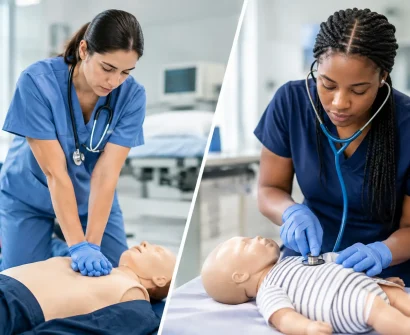
BLS, or Basic Life Support, is commonly required for healthcare professionals and others who may be expected to respond to cardiac arrest. It focuses on high-quality CPR, AED use, choking response, team dynamics, and effective ventilation. Most recognized BLS certifications are valid for two years, although the accepted provider and course format can vary by workplace.
ACLS, or Advanced Cardiac Life Support, is intended for qualified healthcare professionals who manage cardiopulmonary emergencies as part of a clinical team. ACLS builds on BLS skills and covers advanced assessment, cardiac arrest algorithms, airway management, rhythm recognition, medication considerations, and post-cardiac arrest care. ACLS credentials are also commonly renewed every two years.
Because ACLS relies on a strong BLS foundation, many learners renew both credentials around the same time. This can simplify recordkeeping and help ensure that current BLS status supports ACLS eligibility. However, do not assume the dates will always match. If you took the courses at different times, each card may have its own expiration date.
Renew Before the Card Expires Whenever Possible
A renewal course is generally designed for participants with a current, unexpired credential who need to update their knowledge and demonstrate competency again. If your certification has already expired, you may no longer be eligible for a shorter renewal format. You could be required to take the full initial course instead.
Requirements differ among certifying bodies and employers, so there is no single grace period to rely on. Some organizations may allow a recently expired participant to enroll in a renewal course, while others require a full course immediately after expiration. Waiting to ask can turn a simple recertification into a longer, more expensive, and more disruptive process.
Why Early Renewal Is the Safer Choice
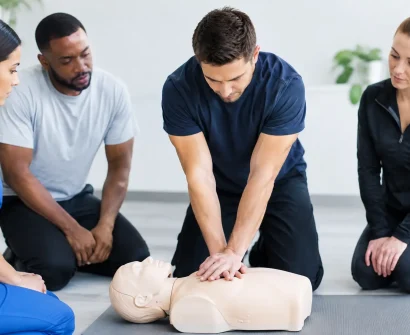
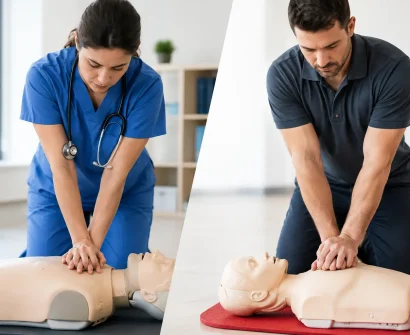
Scheduling is one reason to renew early, but skill retention is the more meaningful one. CPR and advanced resuscitation procedures are psychomotor skills. You need to perform them correctly under pressure, often as part of a team. Reading an algorithm or watching a video cannot fully replace practicing compressions, AED operation, bag-mask ventilation, communication, and role coordination with an instructor.
An early renewal also gives you room to address issues that sometimes arise at the last minute. Your employer may require a specific credential provider. You may need to complete online coursework before an in-person skills session. A course date may be canceled because of weather, enrollment, or an unexpected work conflict. Planning ahead protects your credential and reduces stress.
For healthcare workers, current certification also supports professional confidence. Guidelines and best practices can be updated, and even familiar procedures can become less automatic when they are not practiced regularly. Renewal training gives you a structured setting to ask questions, correct technique, and work through realistic emergency scenarios.
How to Know Which Course You Need
Before registering, review your current card and confirm three details: the expiration date, the name of the certifying organization, and the course level. Then check your employer, school, or regulatory requirement. A course that sounds similar may not meet the standard your role requires.
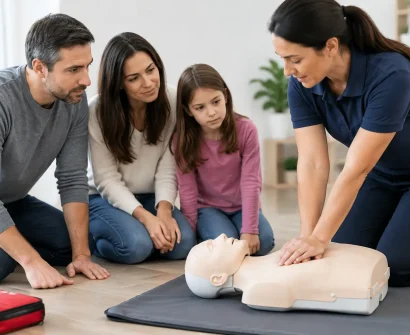
For example, a non-medical workplace employee may need CPR and AED training rather than healthcare-provider BLS. A nurse working in acute care may need both BLS and ACLS. A childcare provider may need pediatric-focused emergency training. The right course depends on your responsibilities, the people you serve, and the policy that governs your role.
Course format matters, too. Blended learning can be a convenient option when available, combining online instruction with an in-person skills session. But if your employer requires instructor-led training, a particular card type, or hands-on evaluation, confirm that the format meets those requirements before you enroll.
Keep Your Documentation Ready
Bring or have access to your current certification record when registering for a renewal. Training providers may need it to verify eligibility, and your employer may request a copy of the new card promptly after successful completion.
It helps to save a digital copy of every certification card in a secure personal folder and add the expiration date to your calendar. Set two reminders: one about 90 days before expiration to research courses, and another about 30 days before expiration to make sure your training is completed and your documentation has been submitted.
If you are responsible for a workplace team, do not manage certifications only when an audit approaches. A simple tracking system can identify expiring credentials months in advance, spread training across the year, and prevent several employees from being unavailable at once.
Renewal Is Not the Only Time to Practice
A two-year renewal cycle is a certification requirement, not a recommendation to wait two years before thinking about resuscitation skills again. The best responders review and practice key actions between courses. In a real cardiac arrest, the first minutes are critical, and confident action can make a meaningful difference.
For BLS providers, that may mean mentally reviewing the response sequence, knowing where AEDs are located, and participating in workplace drills. For ACLS providers, it may include reviewing team roles, emergency equipment locations, communication practices, and local response protocols. Healthcare environments vary, so knowing the algorithm is only one part of being ready.
If you feel uncertain before your renewal date, take that feeling seriously. Additional practice, a refresher session, or a full course may be more valuable than choosing the fastest option. The goal is not simply to receive another card. The goal is to be prepared to protect lives when a colleague, patient, child, family member, or stranger needs help.
At Save a Life First Aid & CPR Training, hands-on instruction is designed to help participants build that readiness, whether they are renewing a required healthcare credential or strengthening their ability to respond at home and at work. Put your renewal date on the calendar early, then use the training time to leave more capable than when you arrived.