
Currently Empty: $0.00

A child who suddenly deteriorates rarely presents with a single, obvious problem. Respiratory failure may progress to shock, bradycardia, or cardiac arrest within minutes, and the clinical team must recognize the pattern before the crisis becomes irreversible. That is why everything healthcare professionals need to know about PALS certification begins with one central purpose: preparing providers to assess, communicate, and intervene effectively during pediatric emergencies.
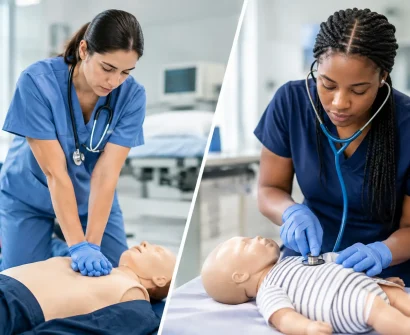
Pediatric Advanced Life Support, commonly called PALS, is an advanced resuscitation course for healthcare professionals who may lead or participate in the care of critically ill or injured infants and children. It builds on high-quality Basic Life Support skills and applies them to the more complex decisions that occur when a young patient is in respiratory distress, shock, arrhythmia, or cardiac arrest.
What PALS Certification Prepares You to Do
PALS training is not simply a longer CPR course. It focuses on the clinical reasoning and coordinated team response required when a child’s condition is changing quickly. Participants learn to identify early warning signs, prioritize immediate actions, and reassess the patient after each intervention.
A major principle of pediatric emergency care is that children often experience respiratory failure or shock before cardiac arrest. Early recognition matters. A provider who notices increasing work of breathing, altered mental status, poor perfusion, or an abnormal heart rate can help initiate treatment before the child reaches a life-threatening stage.
PALS certification commonly covers pediatric assessment, airway management, oxygenation and ventilation, vascular access concepts, rhythm recognition, medication considerations, fluid management, and post-cardiac-arrest care. It also places strong emphasis on clear communication, defined team roles, and closed-loop communication during resuscitation.
The course includes both infants and children, but it is not a neonatal resuscitation program. Newborn care immediately after birth involves distinct guidelines, equipment, and clinical priorities. Professionals who work in labor and delivery, newborn nurseries, or neonatal intensive care may need additional training that is specific to neonatal emergencies.
Who Needs PALS Certification?
PALS is most relevant for professionals who work in settings where pediatric emergencies may occur and where advanced intervention is within their role or team response plan. This may include emergency department staff, pediatric nurses, physicians, paramedics, respiratory therapists, critical care professionals, urgent care teams, and hospital-based clinicians.
It can also be appropriate for healthcare professionals in outpatient clinics, dental settings, ambulatory care centers, and specialty practices that treat children. Whether PALS is required depends on the employer, professional role, facility policy, licensing expectations, and the age groups served. A clinician who rarely treats pediatric patients may not need the same advanced credential as a pediatric emergency nurse, but should still understand the emergency plan in their workplace.
Before registering, confirm exactly what your employer or governing body requires. Some organizations specify a particular credentialing organization, course format, or renewal schedule. Others accept PALS only for designated roles, while requiring BLS for all clinical personnel.
PALS Certification vs. BLS, ACLS, and PEARS
These programs work together, but they are not interchangeable.
BLS establishes the foundation: recognizing cardiac arrest, starting high-quality CPR, using an AED, and providing basic airway support. Every healthcare professional involved in emergency response should have current BLS skills, because advanced care cannot compensate for delayed or ineffective basic resuscitation.
ACLS focuses on adult advanced cardiovascular emergencies. It addresses adult cardiac arrest rhythms, acute coronary syndromes, stroke, airway management, and pharmacology. While there are shared concepts, pediatric assessment and treatment are different. Children require weight-based medication dosing, age-appropriate equipment, and a clinical approach that recognizes respiratory failure as a frequent pathway to arrest.
PEARS is designed for providers who may be the first to recognize a pediatric emergency but do not usually manage advanced resuscitation. It supports early assessment, stabilization, and escalation. PALS is the more advanced choice for professionals expected to participate in or direct a pediatric resuscitation team.
What to Expect During PALS Training
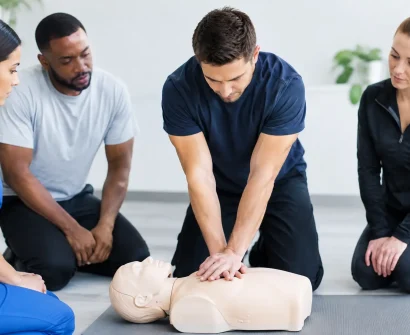
High-quality PALS instruction combines knowledge with hands-on performance. The goal is not to memorize an algorithm in isolation. It is to apply evidence-based steps while managing a realistic, time-sensitive scenario.
Before class, participants may need to complete assigned online learning or a pre-course assessment. This preparation is valuable because the classroom session moves quickly through pediatric physiology, rhythm interpretation, case discussions, and skills practice. Reviewing pediatric BLS, ECG basics, and medication calculations beforehand can reduce stress and leave more time to focus on decision-making.
During the practical portion, learners typically work through simulated cases as part of a team. One provider may lead the resuscitation, another may manage the airway, while others perform CPR, prepare medications, monitor the patient, or document events. These scenarios reveal an essential truth about real emergencies: strong care depends on teamwork, not on one person trying to do everything.
Expect to be evaluated on both skills and knowledge. Requirements vary by course provider, but successful completion commonly involves demonstrating effective team participation, performing critical interventions correctly, and passing a written or online examination. Do not treat evaluation as a hurdle to get through. It is an opportunity to identify gaps before an actual emergency places a child at risk.
The Skills That Matter Most in a Pediatric Emergency
PALS algorithms are useful, but the strongest providers do more than follow boxes and arrows. They understand what the patient is telling them.
A structured pediatric assessment helps clinicians quickly identify instability. Appearance, work of breathing, circulation to the skin, vital signs, and mental status all provide clues. A quiet child may be more concerning than a crying child if that quietness reflects fatigue, poor oxygenation, or decreased responsiveness.
Airway and ventilation decisions also require judgment. Oxygen alone may not correct inadequate breathing, and rapid deterioration can occur when fatigue sets in. Providers must recognize when basic support is enough, when bag-mask ventilation is needed, and when the team should prepare for advanced airway management according to the patient’s condition and scope of practice.
Medication and equipment safety are equally critical. Pediatric doses and equipment sizes are generally based on weight, making careful calculation and verbal confirmation essential. In an emergency, a length-based tape, clearly labeled medication system, and closed-loop communication can reduce preventable errors.
How Long Does PALS Certification Last?
PALS certification is commonly valid for two years, although the exact expiration date and renewal requirements are determined by the issuing organization and workplace policy. Waiting until the last week before expiration can create avoidable problems, especially if a course is full or an employer requires proof of current certification before scheduling clinical shifts.
A renewal or recertification course is usually intended for providers with a current, unexpired credential. If your certification has lapsed, you may need a full provider course instead. Confirm the rules early, keep a copy of your certification record, and set a reminder several months before the expiration date.
Certification renewal should not be viewed as a paperwork task. Pediatric emergencies may be infrequent in some roles, which makes skill refreshment even more valuable. The details of rhythm management, team communication, ventilation, and weight-based dosing can fade without practice.
Choosing the Right PALS Course Format
The best format depends on the credential required, your experience level, and how you learn. A fully instructor-led course offers direct feedback and extended hands-on practice. Blended learning can provide flexibility by moving knowledge-based content online while reserving in-person time for skills assessment and scenario practice.
For a first-time learner, more instructor interaction can be especially helpful. For an experienced provider renewing a current credential, a focused renewal format may be appropriate if it meets employer requirements. In either case, verify that the program includes the required hands-on component and is recognized by your workplace before enrolling.
Save a Life First Aid & CPR Training supports healthcare professionals with practical, instructor-led education that emphasizes real-world performance, not just course completion. The right training environment should leave participants better prepared to act calmly, communicate clearly, and protect young patients when every second matters.
Preparing for Class and Carrying the Learning Forward
Arrive prepared to participate. Review any assigned materials, bring required identification or documentation, and wear clothing that allows you to perform CPR and skills practice comfortably. If rhythm interpretation, pediatric pharmacology, or airway management feels unfamiliar, spend time reviewing those areas before class rather than hoping to learn them under evaluation pressure.
After certification, keep the skills active. Discuss pediatric emergency roles during team meetings, know where pediatric equipment is stored, and take part in mock codes when they are available. A current card confirms training, but regular practice is what helps a team respond with confidence when a frightened family is depending on them.