
Currently Empty: $0.00

A toddler suddenly begins choking during snack time. A preschooler falls hard on the playground. An infant develops a fever and becomes unusually sleepy. These situations are frightening, but they are not rare possibilities in childcare. That is why every daycare worker should be certified in emergency first aid: the first few minutes of an emergency can shape what happens next.
Children depend on adults to recognize when something is wrong, stay calm, and take appropriate action. Emergency first aid certification gives daycare professionals more than a credential for a personnel file. It provides practical skills, a clear response process, and the confidence to protect children while emergency services or a parent is on the way.
Young Children Can Deteriorate Quickly
Infants, toddlers, and preschoolers are not simply smaller versions of adults. Their airways are smaller, their bodies have less reserve, and they may not be able to explain pain, breathing difficulty, dizziness, or other symptoms clearly. A child who appears fine one moment can become seriously ill or injured in a short period of time.
Choking is one of the clearest examples. Young children are still learning to chew thoroughly, and common foods such as grapes, hot dogs, popcorn, and hard candy can present hazards when they are not prepared or supervised appropriately. A trained daycare worker knows how to identify the difference between effective coughing and a severe airway obstruction, when to intervene, and how to provide age-appropriate care.
The same need for quick recognition applies to breathing emergencies, allergic reactions, seizures, diabetic concerns, head injuries, burns, poisoning, and severe bleeding. First aid training helps staff identify warning signs early rather than waiting to see whether a child improves on their own.
Emergency First Aid Certification Creates a Clear Response Plan
During a stressful incident, uncertainty can slow people down. Staff may wonder whether they should call 911, contact a parent first, move the child, administer medication, or wait for a supervisor. Emergency first aid training replaces guesswork with a practiced sequence of actions.
Daycare workers learn to assess scene safety, check responsiveness, recognize life-threatening conditions, call for help, and provide care within the limits of their training. They also learn the importance of assigning roles when more than one staff member is available. One educator can remain with the child, another can contact emergency services, and another can supervise the rest of the group.
This organized response matters because childcare emergencies rarely happen in a quiet room with one adult and one child. They may happen during outdoor play, pickup time, meals, field trips, or a busy transition between activities. A team that has practiced emergency procedures is better prepared to protect the injured child and maintain a safe environment for everyone else.
CPR and AED Skills Are Especially Valuable
Emergency first aid is often paired with CPR and AED training because cardiac and breathing emergencies require immediate action. Although cardiac arrest in children is less common than in adults, it can occur after drowning, choking, severe respiratory distress, trauma, or certain medical conditions.
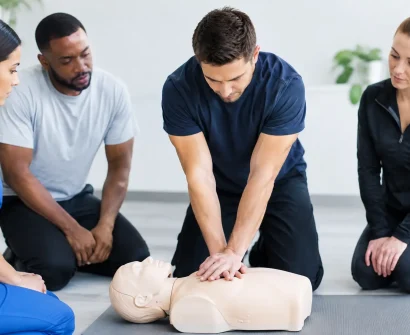
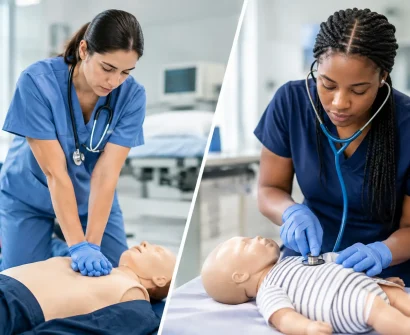
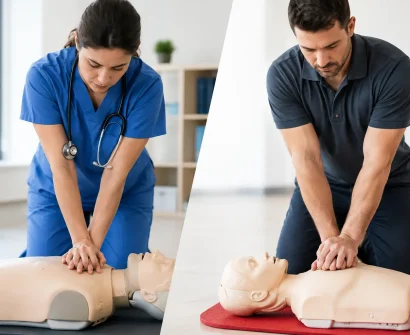
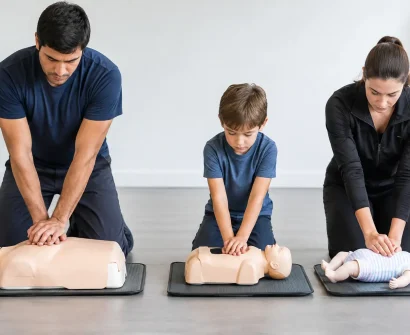
Pediatric CPR differs from adult CPR. The compression technique, depth, and approach must be suited to the child’s age and size. Training also teaches daycare workers how to respond to infants, who require distinct techniques for choking and CPR.
An automated external defibrillator, or AED, can guide a rescuer with voice prompts and analyze whether a shock is advised. Staff should know where the AED is located, how to retrieve it quickly, and how to use it safely. The device is designed to support trained responders, not replace their judgment or emergency medical care.
Why Every Daycare Worker Should Be Certified in Emergency First Aid
Some childcare settings rely on having one certified employee on site. While that may meet a minimum requirement in certain locations, it can leave a dangerous gap when that person is on break, absent, assisting another child, or working in a different area of the facility.
Every staff member who directly supervises children should be prepared to respond. This includes lead educators, assistants, float staff, program coordinators, and, when applicable, staff who accompany children on transportation or outings. Emergencies do not schedule themselves around staffing plans.
Certification also supports consistency. When the entire team has learned the same core response principles, staff are more likely to communicate clearly and act in a coordinated way. That consistency reassures families that safety is not dependent on which educator happens to be in the room.
There is an important distinction between being certified and being clinically trained. Daycare workers are not expected to diagnose illnesses or replace healthcare professionals. Their role is to recognize emergencies, provide immediate first aid, activate emergency services when needed, document what occurred, and communicate essential information to parents or guardians. High-quality training makes those boundaries clear.
Training Protects Children and Strengthens Family Trust
Parents place extraordinary trust in daycare professionals. They expect caring routines, engaging learning activities, and attentive supervision. They also need to know that the adults responsible for their children can respond when a situation becomes urgent.
A visible commitment to current first aid and CPR certification demonstrates that a daycare takes this responsibility seriously. It tells families that the program has prepared for more than everyday bumps and scrapes. It has invested in the skills needed for rare but high-stakes moments.
That trust can be especially meaningful for parents of children with asthma, severe allergies, epilepsy, diabetes, or other health needs. A care plan from the family and healthcare provider remains essential, but trained staff are better equipped to recognize symptoms, follow established procedures, and seek emergency support promptly.
Certification Supports Compliance, but Minimum Rules Are Not the Goal
Childcare licensing rules, workplace policies, and certification requirements vary by jurisdiction. Some programs may require emergency first aid and CPR certification, specific pediatric content, or renewal within a defined period. Daycare owners and directors should confirm the requirements that apply to their facility and the communities they serve.
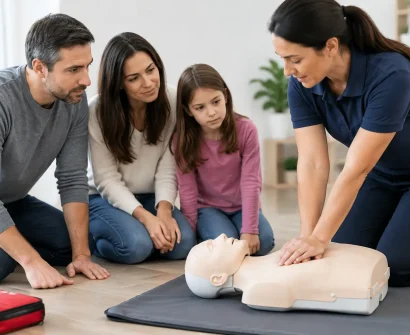
Still, compliance should be the starting point, not the finish line. A certificate is most valuable when staff can use what they learned under pressure. That means choosing instructor-led training with hands-on practice, realistic scenarios, and opportunities to ask questions.
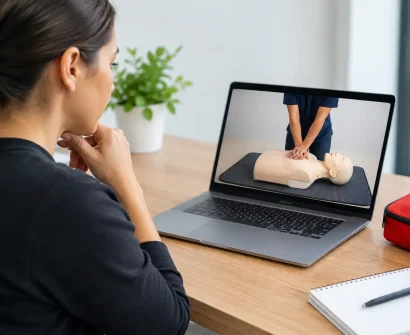
Blended learning can be a practical option for busy childcare teams. Online coursework may cover foundational knowledge, while in-person sessions allow participants to practice CPR, choking response, bandaging, and other skills with an instructor. The hands-on component is where many learners build the muscle memory and confidence that a video alone cannot provide.
First Aid Skills Need Refreshing Before an Emergency Happens
Even a strong course cannot make skills permanent without reinforcement. Details fade, guidelines evolve, and equipment or facility procedures can change. Regular recertification keeps knowledge current and gives staff another opportunity to practice techniques they may not use often.
Between courses, daycare leaders can reinforce readiness through short safety discussions and simple emergency drills. Staff should know the location of first aid kits, emergency contact records, medications authorized by care plans, evacuation supplies, and AEDs. They should also review how to document incidents and when to notify parents.
Practice should be purposeful, not performative. A useful scenario might ask: What happens if a child chokes during lunch while another child needs a diaper change and the classroom phone is not nearby? Working through the answer helps staff identify practical issues before a real emergency exposes them.
Prepared Staff Help Create Safer Childcare Environments
First aid certification does not eliminate every risk. Children explore, fall, get sick, and sometimes experience medical emergencies despite thoughtful supervision. What training changes is the quality of the response.
Save a Life First Aid & CPR Training helps daycare professionals develop practical, hands-on emergency response skills so they can act decisively when children need them most. The goal is not to create fear around childcare. It is to ensure that caring adults have the knowledge, calm, and capability to protect a child until further help arrives.
A well-prepared daycare worker may never need to perform CPR or manage a severe emergency. But every child deserves to be in the care of someone who is ready if that moment comes.