
Currently Empty: $0.00

A child can move from playing normally to struggling to breathe in seconds. That possibility is frightening, but it is also why the best CPR course for parents is one that replaces uncertainty with practical, repeatable skills. The goal is not to make parents feel responsible for preventing every emergency. It is to help them recognize a serious problem, call for help, and begin appropriate care while emergency services are on the way.
For most families, a course that includes infant, child, and adult CPR, choking response, and AED training offers the most useful foundation. But course titles can be confusing, and not every format provides the same experience. Choosing well means looking beyond convenience and asking whether the training reflects the real situations parents and caregivers may face.
What Makes the Best CPR Course for Parents?
The best option depends on your child’s age, your family’s needs, and whether you need certification for work, daycare, or volunteering. Still, the strongest parent-focused CPR courses have several things in common: they teach age-specific skills, include hands-on practice, and are led by a qualified instructor who can correct technique in real time.
Parents should learn CPR for infants and children because their bodies and emergency needs differ from those of adults. The position of the hands or fingers, compression depth, breathing technique, and response to choking all require age-appropriate instruction. A course that treats pediatric care as a brief add-on may not give you enough time to develop confidence.
Training should also cover adult CPR. Parents may need to help a partner, grandparent, neighbor, coach, or another caregiver. Learning how to use an automated external defibrillator, commonly called an AED, is equally valuable. These devices are designed to guide users with clear prompts, but practicing the process makes it far easier to act quickly when every moment feels urgent.
Hands-On Practice Is Not Optional
Reading about CPR or watching an instructional video can introduce the steps, but it cannot show whether your compressions are deep enough, fast enough, or correctly positioned. In a true emergency, technique matters.
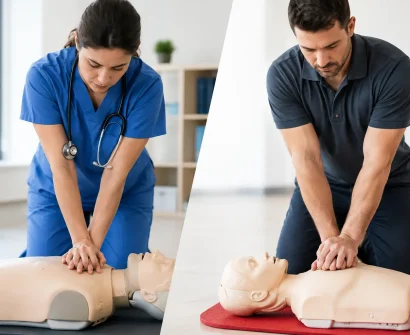
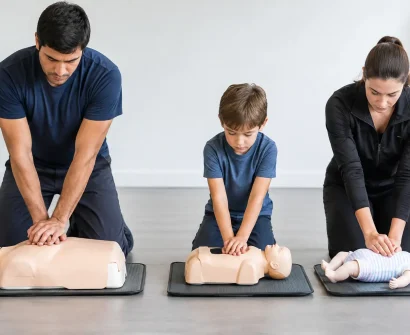
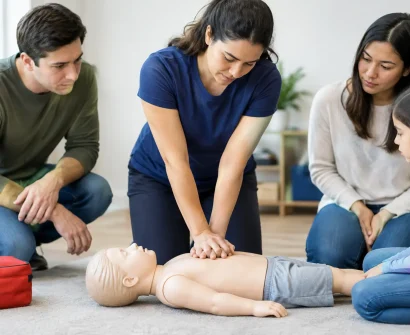
Look for a course that gives participants meaningful practice time with infant, child, and adult manikins. You should be able to practice assessing responsiveness, calling emergency services, delivering compressions, giving breaths when included in the course, using an AED trainer, and clearing an airway obstruction. An instructor should be available to answer questions and offer practical feedback.
This is where fully online courses have a trade-off. They can be convenient for reviewing information or fitting education into a busy schedule, but an online-only course may not provide the physical practice or recognized certification needed by an employer, daycare, or organization. A blended course can be a strong middle ground: complete the knowledge portion online, then attend an instructor-led session to practice and demonstrate your skills.
Choose Pediatric CPR, Not a General Course Alone
A general CPR class may be useful, but parents should confirm that it specifically includes infant and child CPR and choking relief. Do not assume that every basic course does. Read the course description carefully before registering.
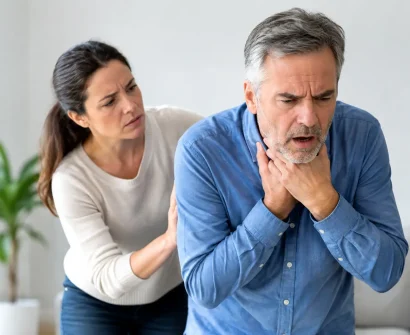
A parent-focused course should address situations that happen at home, at the playground, during meals, and around water. Choking is a particularly relevant skill because young children explore with their mouths and may not recognize a hazard. Training should teach you how to respond differently depending on whether the child is conscious, coughing effectively, unable to make sounds, or unresponsive.
First aid training is also worth considering. CPR is essential when breathing or circulation has stopped, but families often encounter problems that require a different response: serious bleeding, burns, allergic reactions, seizures, heat illness, poisoning concerns, or a possible head injury. A combined first aid and CPR course gives parents a broader emergency-response foundation.
That said, a longer course is not automatically the right choice. If your immediate priority is learning CPR before a new baby arrives or before a caregiver starts, a focused pediatric CPR and choking class may be the most realistic first step. You can add a full first aid course later. Training that you can attend and retain is more valuable than an ambitious plan that never makes it onto the calendar.
Check Whether Certification Actually Matters
Many parents take CPR because they want to be prepared, not because anyone requires a card. In that case, hands-on learning and a reputable instructor may matter more than the exact certificate name.
Certification becomes more important when training is required for daycare staff, teachers, coaches, babysitters, healthcare workers, or workplace roles. Before registering, ask the organization requesting proof of training what it accepts. Requirements can vary by employer, licensing body, school, camp, or local regulation. Confirm the type of course, certifying organization, expiration period, and whether blended learning is accepted.
If you are arranging training for a babysitter, nanny, or grandparent, consider taking the same class together. You will learn the same sequence of actions, use the same terms, and have an opportunity to talk through household details afterward, such as your address, emergency contacts, medications, allergies, and where you keep the first aid kit.
Ask These Questions Before You Register
Before choosing a class, make sure you can answer four practical questions. Does it include infant and child CPR, choking response, and AED use? Is there an in-person skills session with manikins and instructor feedback? Does the certification meet any requirement you have? Finally, will the schedule and location make it realistic for you to attend without rushing through the experience?
It also helps to ask about class size. A smaller group may allow more individual coaching, while a larger class may offer more scheduling options. Neither is automatically better, but parents who feel nervous about performing skills often benefit from a setting where they can ask questions and repeat a technique until it feels more familiar.
Look for Training That Builds Calm, Not Fear
A good instructor does more than demonstrate the steps. They explain what to expect emotionally when an emergency happens. Many people worry that they will freeze, forget the sequence, or hurt someone while giving CPR. Those concerns are common.
Quality training creates a simple mental pathway: check the scene, assess the person, call emergency services or direct someone else to call, begin care, and use an AED as soon as one is available. Repetition turns that pathway into something you can access under stress.
The course should also make clear that CPR is only part of the response. Calling emergency services promptly, following dispatcher instructions, and continuing care until professionals take over are all essential. Parents do not need to diagnose the cause of a collapse. They need to recognize that a child or adult is unresponsive or not breathing normally and act without delay.
For families in Laval and the Greater Montreal area, Save a Life First Aid & CPR Training offers instructor-led and blended options that allow participants to build these skills through practical practice rather than observation alone.
Keep the Skill Current After Class
CPR training is not a one-time household purchase. Skills fade when they are not used, and guidelines can change. Most certifications have a renewal period, but waiting until the card expires is not the only reason to refresh your knowledge.
After class, take a few minutes to talk with the other adults who care for your child. Decide who calls emergency services, where the nearest AED may be located at places you visit often, and how to access your first aid supplies. Review choking hazards as your child grows and becomes more mobile. If a new caregiver joins your family, encourage them to receive current training as well.
You do not need perfect recall of every detail to make a difference. You need current training, a clear first action, and the willingness to step forward when someone needs help. Choosing a course with pediatric practice and hands-on instruction is a practical way to protect the people who depend on you most.