
Currently Empty: $0.00

A CPR certificate can look legitimate on a screen and still fail to meet the requirement that matters most: the one set by your employer, school, licensing body, or professional association. That is why online CPR validity is not simply a question of whether you completed modules and passed a quiz. It is about whether the course gives you recognized training and verifies that you can perform life-saving skills correctly when someone needs help.
For a parent learning CPR for the first time, a fully online course may be a useful introduction. For a nurse renewing Basic Life Support, a daycare educator, or a workplace first aid responder, online-only learning may not meet the required standard. The difference comes down to the course provider, the credential being requested, and whether hands-on skills assessment is included.
What online CPR validity really means
An online CPR course is valid only when the organization asking for certification accepts it. There is no single rule that applies to every employer, province, profession, or setting.
Some online programs provide education only. They may teach the steps of CPR, AED use, choking response, and emergency scene safety through videos, reading, and online tests. These programs can improve awareness, refresh knowledge, and help someone feel more prepared to act. However, a completion certificate is not always the same as a recognized CPR certification.
Many workplaces and healthcare roles require proof that an instructor or qualified evaluator watched you perform the skills. That assessment commonly includes adult CPR, rescue breaths when applicable, chest compressions, AED operation, choking response, and the ability to follow the correct sequence under realistic conditions. A multiple-choice test cannot show whether compressions are deep enough, whether your hand position is correct, or whether you can use an AED without unnecessary delay.
This is why a certificate should be judged by more than its appearance. The key question is whether it meets the specific training standard required for your role.
When an online-only CPR course may be accepted
Online-only CPR training can be appropriate when the goal is education rather than employment, licensing, or regulated practice. It can be a practical option for people who want to understand the basics before attending a classroom session, review emergency steps at home, or build confidence as a family caregiver.
Some organizations may also accept online learning for internal awareness training, especially where no formal credential or hands-on competency requirement exists. A company may want staff to recognize cardiac arrest, call 911, locate an AED, and begin basic care while waiting for trained responders. Even then, practical training usually provides stronger preparation.
Acceptance also depends on the exact course. A credible provider should clearly state whether the course is informational, whether it leads to a certification card, and whether in-person or live skills testing is required. If the course description promises a certificate in minutes without discussing practical evaluation, treat it carefully. Fast completion may be convenient, but it does not necessarily equal accepted certification.
Why hands-on CPR testing matters
CPR is a physical skill performed under pressure. In an emergency, you may need to assess an unresponsive person, direct someone to call 911, send another person for an AED, begin compressions, attach pads correctly, and continue responding to prompts while the scene is stressful and unpredictable.
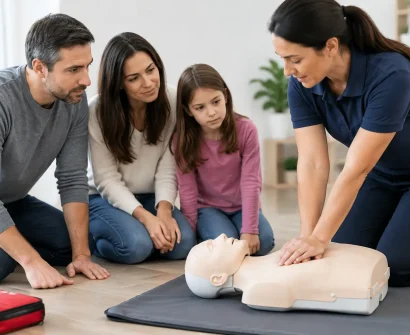
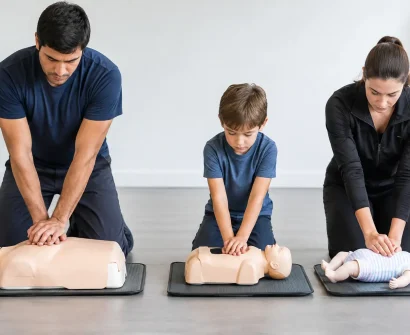
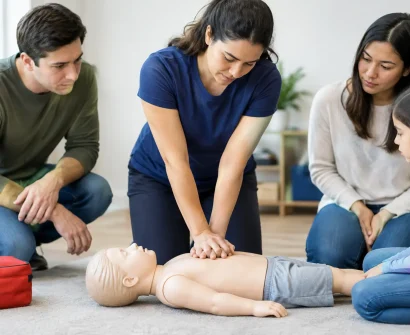
Hands-on learning turns those steps from information into action. It lets an instructor correct body position, compression rate, compression depth, recoil, ventilation technique, and AED pad placement. It also gives participants an opportunity to ask questions, practice scenarios, and make mistakes in a safe setting rather than during a real emergency.
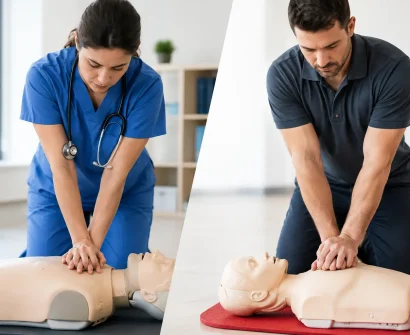
For healthcare professionals, this level of practice is particularly important. BLS, ACLS, PALS, and other advanced courses require more than recognition of terms on a screen. Participants need to apply algorithms, work with a team, communicate clearly, and demonstrate the skills expected in clinical or emergency environments.
Blended learning is often the practical middle ground. Participants complete the knowledge portion online at their own pace, then attend an instructor-led session for skills practice and evaluation. This format respects busy schedules while preserving the hands-on component that employers and regulators commonly expect.
How to check whether a CPR course will be accepted
Before registering, confirm the requirement with the person or organization that will review your certificate. Do not assume that a course accepted by one employer will meet the standard for another.
Ask these questions before you pay for a course:
- What exact certification do I need? Request the course name, required level, and whether CPR, AED, first aid, BLS, or an advanced credential is required.
- Does the requirement specify a recognized training organization or provider? Some employers require a particular credentialing standard.
- Is an in-person or live skills evaluation mandatory? This is often the deciding factor for healthcare, childcare, education, and workplace roles.
- Will a blended course be accepted? If online learning is permitted, determine whether it must be followed by a classroom skills session.
- What is the renewal period? CPR credentials commonly expire, and recertification rules may differ from first-time course requirements.
It is also wise to ask whether your certificate must show the training date, course level, instructor information, certification number, or expiration date. A course can teach valuable information but still create problems if its documentation does not meet an employer’s administrative requirements.
Common situations where online CPR alone is not enough
Healthcare settings are among the clearest examples. Hospitals, clinics, long-term care facilities, dental offices, and allied health employers typically expect a recognized BLS or role-specific credential with practical skills verification. Students entering clinical placements may face the same requirement.
Childcare and education environments may require emergency first aid and CPR training that includes instructor-led practice. The reason is straightforward: staff are responsible for responding to children and adults in real settings, not only demonstrating theoretical knowledge.
Workplace safety teams also often need hands-on certification. Designated responders may be expected to use an AED, provide CPR, manage choking incidents, and coordinate emergency response until professional help arrives. For these roles, practical competence protects both the responder and the people relying on them.
Online learning is still valuable in each of these settings. It can prepare participants for classroom training, reinforce course material before recertification, and make it easier to retain the reasoning behind each step. It simply should not be mistaken for a substitute when the requirement includes a live skills check.
Choosing training that prepares you to act
The best CPR course is not always the shortest or least expensive option. It is the course that satisfies your required standard and leaves you better prepared to respond. Look for clear course descriptions, recognized certification pathways, qualified instructors, realistic practice equipment, and enough time to ask questions and repeat skills.
For many learners, especially those balancing work, school, or family responsibilities, blended training offers a strong balance. The online portion gives you time to absorb the material. The classroom portion gives you feedback that cannot be replicated by clicking through lessons alone.
Save a Life First Aid & CPR Training provides instructor-led and blended options designed for learners who need practical skills, recognized certification, and the confidence to use both. Whether you are renewing a professional credential or learning CPR for your family, choose the format based on what you will be expected to do after the course.
A CPR credential should do more than satisfy a checkbox. When an emergency happens, the value of your training is measured in calm decisions, capable hands, and the willingness to step forward before help arrives.