
Currently Empty: $0.00
A job posting says BLS required. Your daycare asks for a specific first aid certificate. Or you have a new baby at home and want to feel less helpless if something goes wrong. When searching for CPR and first aid training near Montreal, what course is right for you? The answer depends less on choosing the longest course and more on matching the training to the people, settings, and emergencies you are most likely to encounter.
The right certification should meet your employer, school, licensing, or regulatory requirement while giving you practical skills you can use under pressure. A course that is perfect for a nurse may be more advanced than a parent needs. On the other hand, a general CPR class may not fulfill the requirements of a hospital placement or healthcare role.
Start With the Reason You Need Training
Before registering, identify what is driving your decision. Are you meeting a professional requirement, preparing for an infant or child in your care, joining a workplace first aid team, or learning skills for everyday life? That one question narrows the options quickly.
If training is required for work, school, a clinical placement, or a professional license, check the exact course name and certification standard before you enroll. Employers may specify BLS, Standard First Aid and CPR, ACLS, PALS, or another credential. Do not assume that any CPR certificate will be accepted simply because it includes chest compressions and AED training.
If you are taking a course for personal preparedness, choose based on your environment. A grandparent caring for young children has different priorities than a coach supervising a team or an office employee designated as a first aider. The best course is one you will understand, practice, and feel ready to use.
CPR and First Aid Training Near Montreal: Course Options
BLS for healthcare professionals
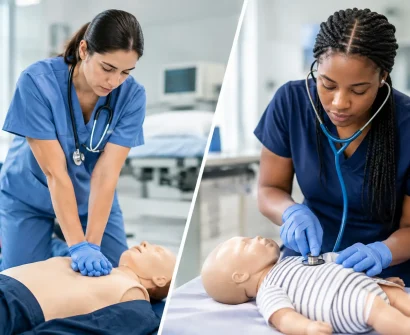
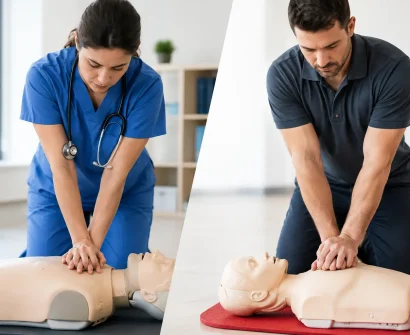
Basic Life Support, commonly called BLS, is designed for healthcare providers and people working in clinical environments. It focuses on high-quality CPR, effective team response, use of an AED, relief of choking, and skills that support a coordinated resuscitation effort.
BLS is commonly needed by nurses, physicians, paramedics, respiratory therapists, dental professionals, medical students, pharmacists, personal support workers, and other allied healthcare providers. It is also often required before a clinical placement. BLS moves at a more clinical pace than a public CPR course, so it is a strong fit when your role may involve responding alongside other trained professionals.
Heartsaver CPR AED for everyday responders
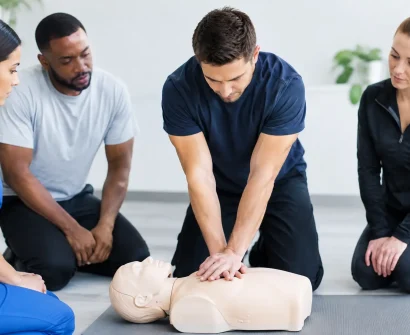
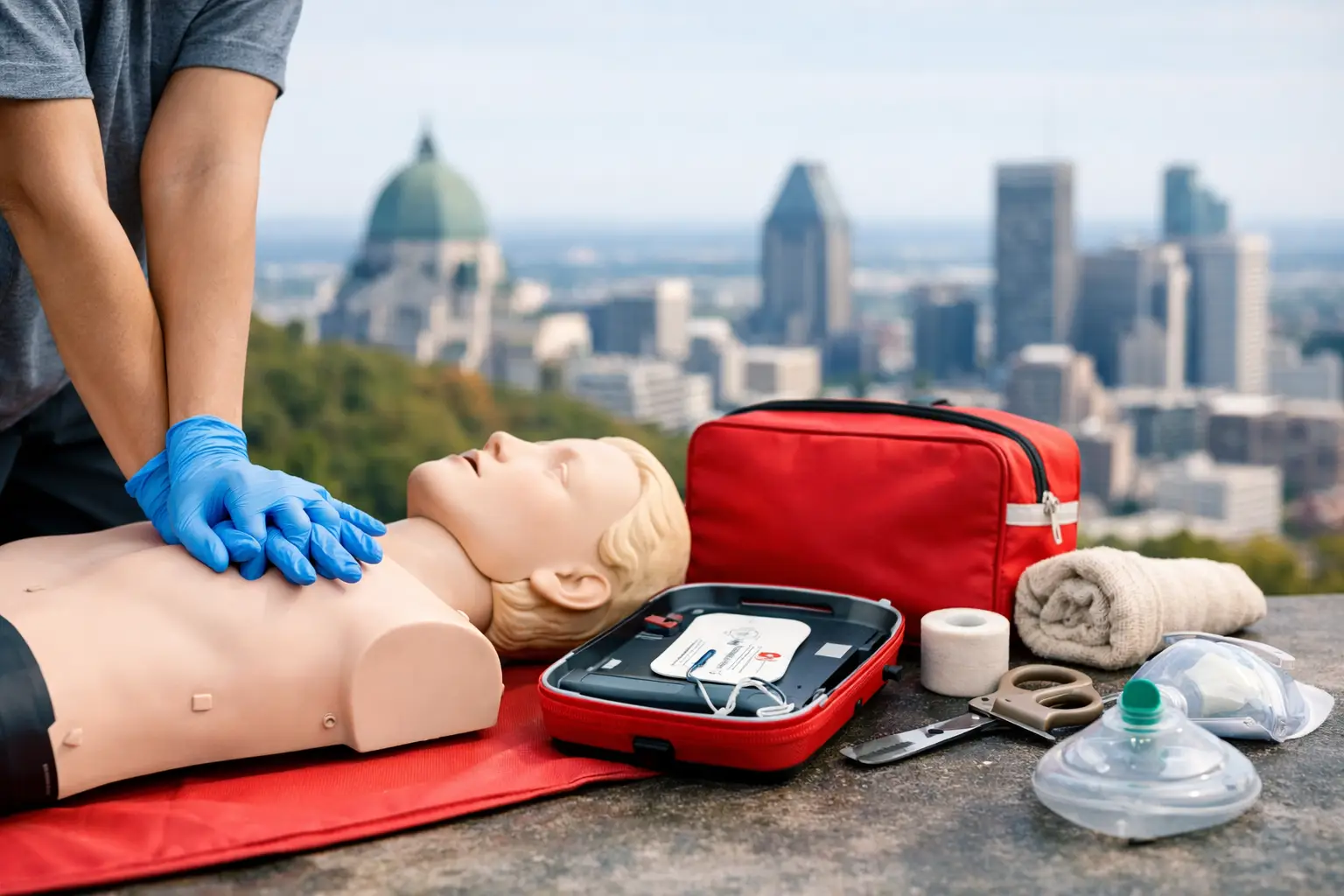
Heartsaver CPR AED is often a practical choice for members of the public, workplace staff, fitness instructors, teachers, coaches, volunteers, and family caregivers. Participants learn how to recognize a cardiac emergency, provide CPR, use an automated external defibrillator, and respond to choking.
This course is appropriate when the goal is confidence in a public, workplace, school, or home emergency. It is not automatically interchangeable with BLS, however. If an employer specifically asks for BLS, choose BLS rather than assuming a general CPR and AED course will meet the requirement.
Emergency First Aid when time is limited
Emergency First Aid is a shorter, focused course for people who need a foundation in emergency response. It typically combines CPR and AED skills with immediate first aid priorities, such as how to assess a scene, get emergency help, manage severe bleeding, and respond to common urgent conditions.
This option can work well for individuals and workplaces that need an accessible introduction to first aid. The trade-off is depth. If your role involves greater responsibility for an injured or ill person, or if an employer requires a more comprehensive certificate, Standard First Aid may be the better choice.
Standard First Aid for broader preparedness
Standard First Aid offers more time to build a practical response plan for medical emergencies and injuries. In addition to CPR and AED use, it generally addresses a wider range of first aid situations, including bleeding, shock, burns, fractures, allergic reactions, seizures, poisoning, and environmental emergencies.
It is a strong choice for workplace first aid teams, educators, coaches, community groups, caregivers, and people who want broader readiness rather than CPR skills alone. For many non-clinical workplaces, this is the course employers request because it prepares designated responders for more than a cardiac event.
Daycare Emergency First Aid for child care settings
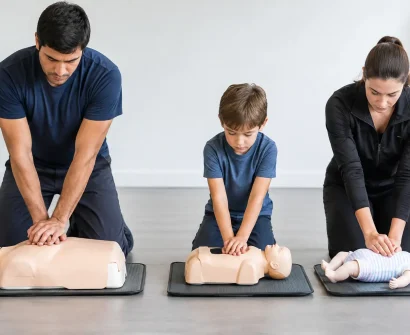
Child care providers must be prepared for the reality that young children do not experience emergencies in the same way as adults. Choking, breathing problems, fever, falls, allergic reactions, and injuries require calm, age-appropriate care.
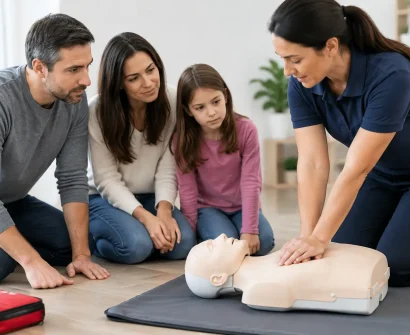
Daycare Emergency First Aid is designed for daycare educators, babysitters, and caregivers who need child- and infant-focused emergency skills. If you work in a licensed setting, verify the exact course and certification requirements with your employer or licensing authority. Choosing a child care-specific course can prevent an avoidable problem when it is time to submit proof of training.
ACLS, PALS, and PEARS for advanced clinical roles
Advanced Cardiac Life Support, or ACLS, is intended for qualified healthcare professionals who manage or assist with complex adult cardiovascular emergencies. It builds on BLS and includes structured approaches to cardiac arrest, arrhythmias, airway management, medications, and team dynamics.
Pediatric Advanced Life Support, or PALS, focuses on critically ill or injured infants and children. It is commonly relevant to healthcare providers who work in pediatric, emergency, critical care, or related settings. PEARS is another pediatric-focused option that supports early recognition and response to respiratory and circulatory emergencies in children.
These are not entry-level public courses. They require a solid foundation in BLS and are best chosen when your profession, department, or educational program specifically calls for them.
Initial Certification, Renewal, or Recertification?
Your previous training matters. If you are taking a course for the first time or your certificate has expired, you may need a full initial course. If your current credential is still valid, a renewal or recertification course may be available.
Renewal courses can save time, but they are not always appropriate for everyone. A participant who has been away from hands-on practice for several years may benefit from the fuller pace of an initial course, even if they technically qualify for renewal. Skills such as chest compressions, rescue breaths, AED pad placement, and choking response improve with guided practice, not just familiarity with the material.
For advanced courses such as BLS, ACLS, or PALS, confirm the eligibility rules before booking. Requirements can vary based on the course provider and the credential you hold.
Choose a Format That Includes Hands-On Practice
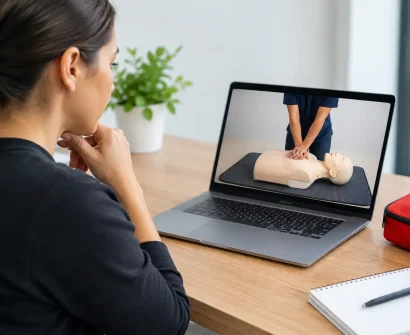
Convenience matters, especially for busy healthcare workers, parents, and workplace teams. Blended learning can be an excellent option when it combines online coursework with an in-person skills session. The online portion lets you complete knowledge-based material on your schedule, while the classroom session gives you instructor feedback and realistic practice.
For CPR and first aid, the hands-on component is essential. Reading about chest compressions is not the same as practicing correct depth, rate, body position, and recoil on a manikin. The same is true for AED use, choking response, and first aid scenarios. Look for training that gives you time to ask questions, make mistakes safely, and repeat skills until they feel more natural.
Save a Life First Aid & CPR Training in Laval provides instructor-led and blended options for learners throughout Greater Montreal, including healthcare professionals, workplaces, families, and child care providers. A nearby classroom can make it easier to complete the practical component without turning certification into an all-day commute.
Ask These Questions Before You Register
A course description can sound similar to another course while serving a very different purpose. Before committing, make sure you can answer four questions:
- What exact certificate does my employer, school, licensing body, or daycare require?
- Do I need adult-only skills, or do I need child and infant CPR and first aid as well?
- Is this an initial course, a renewal, or an advanced certification?
- Does the training include an in-person, hands-on skills assessment?
Also consider the certification timeline. If your employment start date or placement is approaching, allow time for the course, assessment, and receipt of your certification. Waiting until the last minute can limit your scheduling choices.
Preparedness Is a Skill You Build
The most valuable course is not necessarily the most advanced one. It is the one that fits your responsibilities and leaves you able to recognize an emergency, call for help, and take the next right action. Whether you are protecting patients, students, coworkers, clients, or the people at your kitchen table, quality CPR and first aid training gives you a practical way to protect lives when every minute matters.