
Currently Empty: $0.00
A BLS course is not simply a CPR class with a certificate at the end. It prepares you to recognize cardiac arrest, begin high-quality CPR, use an AED, and work effectively with others when seconds matter. If you are looking for BLS certification in Laval, here’s what to expect: practical instruction, hands-on skill practice, and an assessment designed to confirm that you can respond with confidence.
For many healthcare students and professionals, BLS is an employment, placement, or licensing requirement. For others, it is a meaningful way to be prepared for an emergency at work, in a fitness setting, at a school, or at home. The right course should meet the standard you need while giving you more than a box to check.
What BLS Certification Covers
Basic Life Support, or BLS, focuses on the immediate care provided during life-threatening cardiac and breathing emergencies. The course is built around clear priorities: recognize the emergency, call for help, begin effective chest compressions, provide ventilations when required, and use an automated external defibrillator as soon as it is available.
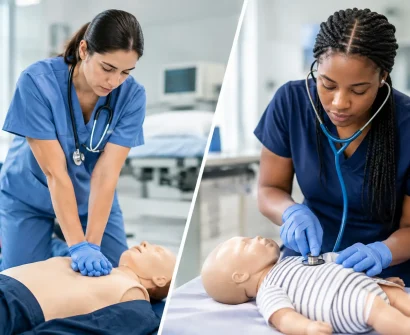
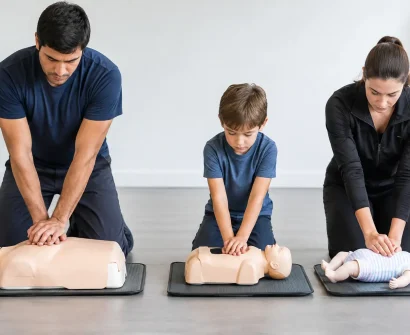
Expect to practice care for adults, children, and infants. While the core principles are consistent, the techniques, compression depth, and equipment considerations change by age group. You will also learn how to respond to choking and how to manage a person who is unresponsive but still breathing.
BLS training goes beyond individual CPR. In many real emergencies, more than one responder is present. A strong course teaches team dynamics: dividing tasks, communicating clearly, switching compressors before fatigue affects quality, and minimizing interruptions in chest compressions. These are essential skills for clinical environments, but they are useful anywhere people need to act together under pressure.
Expect Hands-On Practice, Not Just Lecture
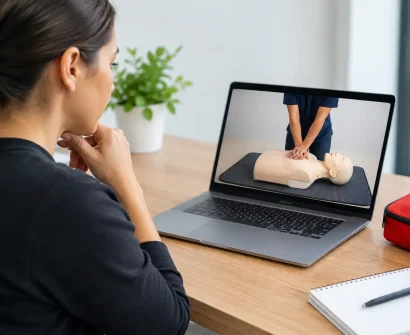
Watching a video or reading a guide can introduce the steps of CPR, but it cannot show whether your compressions are deep enough, whether your hand placement is correct, or whether you can operate an AED promptly. That is why in-person skills practice is central to quality BLS training.
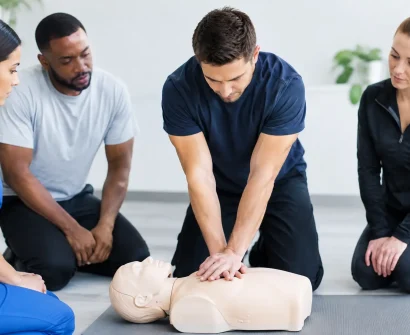
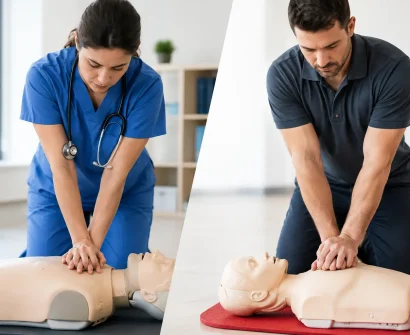
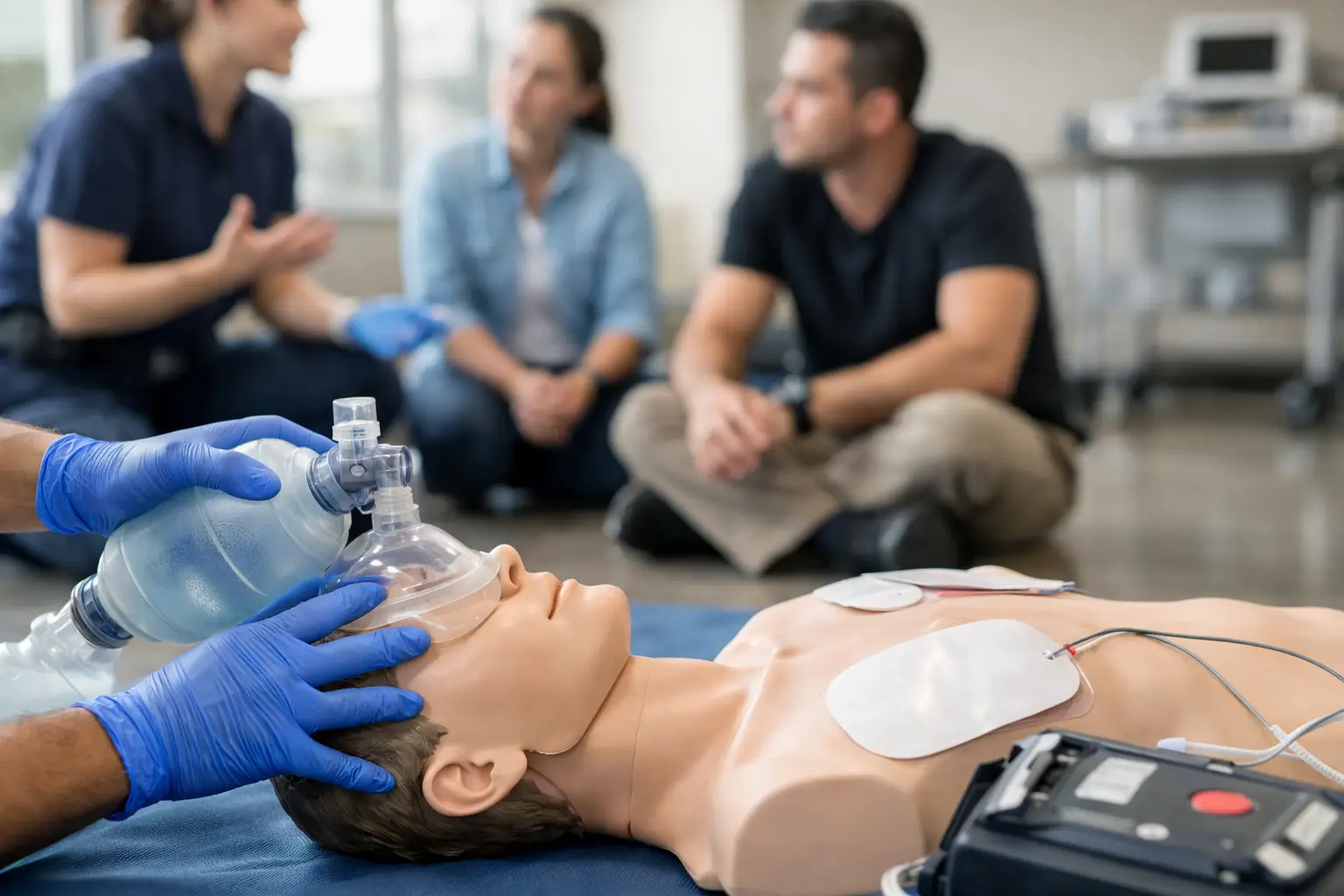
During class, participants typically work with manikins and training AEDs while an instructor provides coaching. You may practice opening an airway, delivering breaths with a barrier device or bag-mask equipment where appropriate, recognizing choking, and responding as part of a two-person team. Repetition matters. The goal is to make the sequence feel more familiar before a real emergency demands a fast response.
You should expect an encouraging learning environment, especially if this is your first certification. BLS can feel technical at first, particularly for learners who have not worked in healthcare. A qualified instructor should correct technique directly and respectfully, giving you time to improve rather than expecting perfection on the first attempt.
Course Format: Classroom, Blended, or Renewal
The best format depends on your deadline, prior experience, and certification requirement. A fully instructor-led classroom course gives you guided learning and hands-on practice in one session. It can be a good fit if you prefer asking questions in real time or are new to emergency response training.
Blended learning combines self-paced online coursework with a scheduled in-person skills session. This format can be helpful for busy professionals, students, and workplaces because it offers greater flexibility. The online portion still requires focused attention, and the in-person session is not optional. Your practical skills must be demonstrated and evaluated face to face.
If you already hold a current credential, a renewal or recertification course may be available. These options are often shorter because they assume you have learned the foundational material before. Still, do not choose a renewal course solely because it is faster. Check eligibility requirements and confirm that your certification has not expired if the provider requires a current card.
Choosing the Right BLS Certification in Laval
Not every CPR course is the same. Before registering, start with the requirement behind your training. A hospital, clinic, professional school, employer, or regulatory body may specify the type of BLS credential it accepts. Ask whether a particular issuing organization, course level, or delivery format is required.
This step prevents a common and costly mistake: completing a general CPR course when your program requires healthcare-provider BLS. General CPR training is valuable for many people, but it may not include the same clinical team-response content or meet a healthcare employer’s stated standard.
When comparing providers, consider the following:
- Whether the course is recognized by your employer, school, or professional program
- Whether hands-on practice and skills evaluation are included
- Whether the schedule allows enough time to complete any online prerequisite work
- When you will receive proof of completion or your certification credential
- Whether the course is appropriate for first-time learners, renewals, or healthcare teams
Location and scheduling can also make a difference when you are balancing shifts, classes, or family responsibilities. Save a Life First Aid & CPR Training in Laval offers training options designed to make recognized emergency education more accessible without reducing the value of practical instruction.
What the Skills Assessment Feels Like
Many participants worry most about the assessment, especially if they have not taken CPR training before. In a well-run BLS course, assessment should reflect the skills you have practiced throughout the session. You may be asked to demonstrate a sequence such as recognizing cardiac arrest, starting compressions, using an AED, or responding to choking.
There may also be a written or online knowledge component, depending on the program. It checks your understanding of critical decisions, such as when to activate emergency response, how to reduce pauses in CPR, and how to work with another rescuer.
The purpose is not to create unnecessary stress. It is to ensure that a certification represents real readiness. If you need additional coaching, ask for it. Taking a few more minutes to correct a technique is far better than leaving uncertain about what to do in an emergency.
How to Prepare Before Your Class
Bring any documentation requested by the training provider, especially if you are completing a renewal course. If your class includes online learning, finish it before the in-person session and save any required completion record. Arriving without the prerequisite completed can delay your certification.
Wear comfortable clothing. CPR practice involves kneeling, leaning over a manikin, and repeated chest compressions, so restrictive clothing can make the session harder than it needs to be. Plan to participate actively rather than observe from the side.
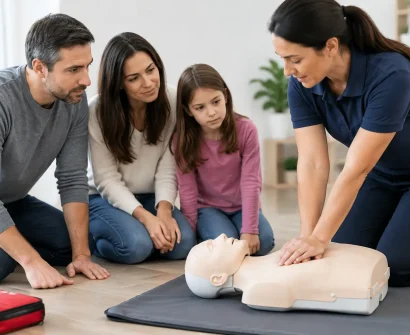
It also helps to arrive with questions. Healthcare learners may want clarification on team roles, bag-mask ventilation, or workplace protocols. Parents, teachers, and caregivers may want to understand how pediatric response differs from adult care. Good training makes room for both the required curriculum and the practical situations you may encounter.
After You Are Certified
Receiving a credential is an achievement, but BLS is a perishable skill. Compression quality, AED confidence, and team communication improve with practice and can fade when they are not used. Keep your certification record where you can find it, note its expiration date, and schedule renewal before your requirement lapses.
If you work in healthcare, use opportunities such as simulations, drills, and team training to keep your response skills active. If you are a parent, coach, teacher, or workplace responder, review your emergency plan and identify where the nearest AED is located. Certification becomes more valuable when it is connected to a real plan for action.
The most useful BLS course is one that leaves you ready to step forward, call for help, start care, and support the people around you. Choose training that meets your requirement, practice with purpose, and carry that confidence into the places where others may one day need you.