
Currently Empty: $0.00
A workplace emergency rarely arrives with a warning. A fall, severe allergic reaction, cardiac arrest, crushing injury, or heat illness can turn a normal shift into a medical crisis within seconds. That is why employers often ask, does OSHA require CPR and first aid training? The short answer is: OSHA may require trained first-aid personnel, but it does not impose a universal CPR certification requirement on every employee or every workplace.
The exact obligation depends on the work being performed, the hazards present, how quickly professional medical care can reach an injured worker, and whether a more specific OSHA standard applies to the industry. Understanding that distinction helps employers build a safety program that is both compliant and genuinely prepared to protect lives.
What OSHA Requires for First Aid
For general industry, OSHA’s first-aid rule is found in 29 CFR 1910.151. For construction, the comparable requirement appears in 29 CFR 1926.50. In practical terms, these rules require employers to ensure that medical advice and consultation are available for workplace injuries.
When there is no infirmary, clinic, or hospital in near proximity to the workplace that can be used to treat injured employees, the employer must have one or more people adequately trained to render first aid. OSHA also requires readily available first-aid supplies that are appropriate for the hazards of the workplace.
“Near proximity” is not a fixed number of minutes in the regulation. It is a real-world question: Can emergency medical services reach and treat an injured worker quickly enough for the likely hazards on site? A low-risk office in an urban area may have very different needs from a remote construction project, warehouse, manufacturing floor, utility crew, or landscaping operation.
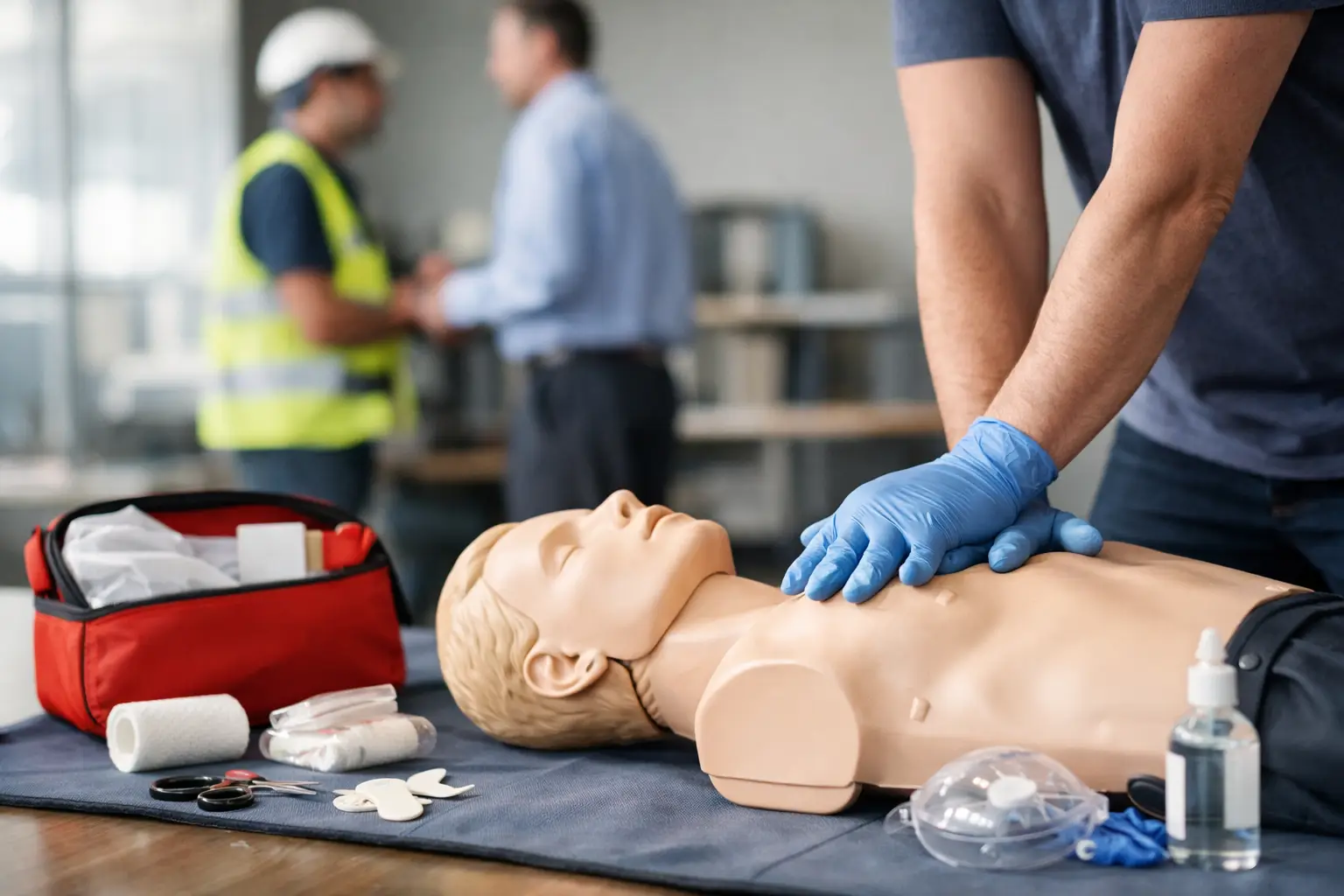
This is why a workplace should not treat a stocked first-aid kit as the entire solution. Supplies matter, but they are most effective when a trained person can recognize the emergency, call for help, control bleeding, provide basic care, and communicate clearly with emergency responders.
Does OSHA Require CPR and First Aid Training in Every Workplace?
OSHA does not have one blanket rule stating that every worker must hold a CPR certificate. Its general first-aid standards focus on ensuring that trained first-aid assistance is available when prompt medical treatment is not nearby.
CPR can be part of a well-designed first-aid training program, and it is strongly recommended for many teams. However, whether it is specifically required depends on the workplace and the applicable standard. Some OSHA standards for higher-risk operations include more detailed training expectations that can include CPR, first aid, or both.
For example, specialized requirements may apply to certain electrical work, logging operations, commercial diving, confined-space rescue arrangements, maritime work, and other high-hazard activities. Employers must review the standards that apply to their industry rather than relying only on the general first-aid rule.
There is also a practical reason to include CPR training even when it is not explicitly mandated. Cardiac arrest can occur in any setting, including offices, schools, recreation centers, retail stores, and job sites. High-quality CPR delivered early, combined with rapid use of an automated external defibrillator (AED) when available, can make a critical difference before paramedics arrive.
OSHA Compliance Is Not the Same as Being Prepared
Meeting the minimum legal requirement is a starting point, not necessarily a complete emergency-response plan. OSHA standards establish a floor for workplace safety. Your organization may need more training based on its people, setting, and day-to-day risks.
A thoughtful assessment considers the size of the workforce, shift schedules, number of locations, distance from emergency services, injury history, and the tasks employees perform. It should also consider who may need help on site, including visitors, contractors, clients, students, or members of the public.
A distribution center with powered equipment and loading docks may benefit from several trained responders on every shift. A daycare needs staff who can respond to choking, breathing emergencies, allergic reactions, and childhood injuries. A dental office may require CPR credentials because of professional standards, insurance expectations, or employer policy, even if OSHA’s general rule does not require every team member to be CPR certified.
The goal is not to overtrain people for the sake of checking a box. It is to make sure that someone capable is present when the emergency occurs, including during evenings, weekends, breaks, and periods when the usual safety lead is away.
Training Requirements Can Come From More Than OSHA
Employers sometimes assume OSHA is the only authority that matters. In reality, CPR and first-aid training may be required by state or local rules, licensing boards, contracts, insurers, accreditation bodies, school or childcare regulations, or company policies.
Healthcare professionals may need Basic Life Support credentials as a condition of employment or clinical practice. Childcare providers may need pediatric-focused first aid and CPR training. Security teams, fitness professionals, camp staff, coaches, and public-facing employees can face requirements that go beyond OSHA.
This is also why course selection matters. A short awareness session may help employees understand emergency procedures, but it may not meet a licensing requirement or provide the hands-on practice needed for a workplace responder role. Employers should confirm the training standard required by their regulator, employer, or professional organization before enrolling staff.
Choosing the Right First Aid and CPR Course
The best course reflects the hazards and responsibilities of the people being trained. For many workplaces, a standard first aid course with CPR and AED training gives designated responders a strong foundation. Participants learn how to assess an emergency, activate the emergency response system, manage choking, respond to cardiac arrest, control bleeding, recognize shock, and provide care until professional help takes over.
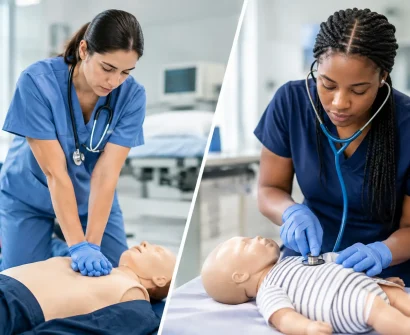
Higher-risk teams may need additional content. Employees exposed to blood or other potentially infectious materials need training and protective measures under OSHA’s Bloodborne Pathogens Standard. Teams working with children benefit from pediatric-focused scenarios. Healthcare personnel often require Basic Life Support training that emphasizes team-based resuscitation, high-performance CPR, and clinical response expectations.
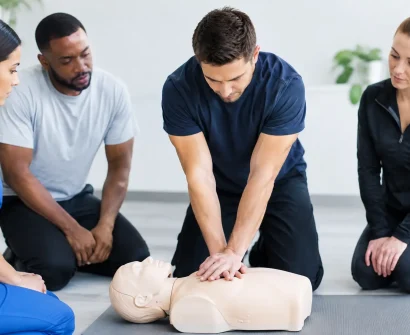
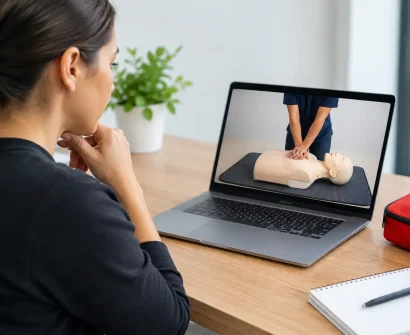
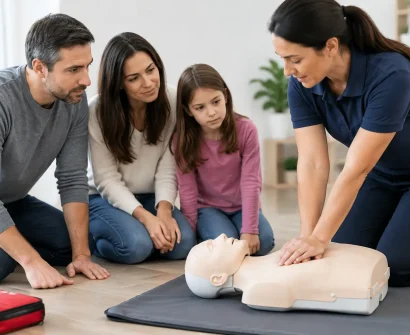
Hands-on practice is essential. During a real emergency, a person must be able to position their hands correctly for compressions, use an AED promptly, apply pressure to serious bleeding, and communicate under stress. Online learning can be useful for knowledge review, but practical skills should be taught and evaluated in person when the course or credential requires it.
Build a Response Plan Around the Training
Training is far more effective when employees know how it fits into the workplace emergency plan. Designated responders should know where first-aid kits and AEDs are located, how to call 911 or the site emergency number, who directs emergency responders to the scene, and how incidents are documented afterward.
Employers should also plan for coverage. One trained person may not be enough if that employee works only one shift, travels between sites, takes vacation, or becomes the person who needs help. Train enough people to ensure reasonable coverage, then schedule recertification before credentials expire.
First-aid supplies should match the work being done. A small administrative office and a fabrication shop do not face the same risks. Review kits regularly, replace expired or used items, and make sure equipment is visible and accessible rather than locked away in a supervisor’s office.
A Better Question for Employers to Ask
Rather than asking only whether OSHA requires CPR certification, ask this: If someone stops breathing, suffers a severe bleed, or collapses at our workplace, who can help in the first critical minutes?
That question moves the conversation from minimum compliance to confident action. Save a Life First Aid & CPR Training helps workplaces build practical skills through instructor-led first aid, CPR, and AED training designed for real emergency response. The right training gives employees more than a certificate – it gives them the ability to stay calm, act quickly, and protect a coworker when every moment matters.