
Currently Empty: $0.00

A meal, staff lunch, family gathering, or break room conversation can turn urgent in seconds when someone cannot breathe. Knowing how to respond when choking adults need help gives you a clear role in a frightening moment: recognize the emergency, call for help, and provide first aid without delay.
Choking first aid is straightforward to learn, but it must be practiced. The right response depends on whether the person can still move air and whether they are conscious. Stay focused, speak calmly, and act on what you see.
Recognize a severe choking emergency
A person who is coughing forcefully and can speak or breathe has a partial airway blockage. Encourage them to keep coughing. Do not slap their back, give them water, or try to remove an object from their mouth unless you can clearly see and easily remove it. Coughing is the body’s best way to clear a partial obstruction.
A severe airway blockage is different. The person may clutch their throat, look panicked, make little or no sound, or be unable to cough, speak, or breathe. Their lips or skin may begin to look blue or gray. A person does not need to make the universal choking sign for you to act. In fact, they may be too distressed or weak to do it.
Ask directly, “Are you choking?” If they cannot answer verbally, nod yes, or show clear signs that they cannot breathe, treat it as a severe choking emergency.
Call 911 while first aid begins
If other people are nearby, point to one person and say, “Call 911 and come back.” Directing a specific person avoids the common problem of everyone assuming somebody else has called.
If you are alone with the choking adult, call 911 on speakerphone if you can do so quickly. The dispatcher can provide instructions while you continue care. Do not leave a person with severe choking to search for help unless there is no other option.
For a conscious adult with a severe airway blockage, begin cycles of back blows and abdominal thrusts. Continue until the object comes out, the person can breathe or cough effectively, or they become unresponsive.
Give five back blows
Stand slightly behind and to one side of the person. Support their chest with one hand and lean them forward so the object is more likely to come out of the mouth rather than move deeper into the airway.
Using the heel of your other hand, deliver five firm blows between the shoulder blades. Each blow should be separate and deliberate. After every blow, check whether the blockage has cleared. The goal is not simply to complete a count of five, but to dislodge the object.
Give five abdominal thrusts
If the back blows do not clear the airway, stand behind the person and place your arms around their waist. Make a fist and position the thumb side just above the belly button and well below the breastbone. Grasp your fist with your other hand.
Deliver five quick inward-and-upward thrusts. Think of each thrust as an attempt to force air out of the lungs and expel the obstruction. Check after each thrust for signs the person can breathe, speak, or cough.
Repeat five back blows followed by five abdominal thrusts until the obstruction is relieved or the person becomes unresponsive. Stay calm and use a firm, controlled motion. Hesitating because you are worried about doing it perfectly can cost valuable time.
Use chest thrusts when abdominal thrusts are not appropriate
Do not perform abdominal thrusts on a person who is pregnant or whose body size makes it difficult to safely reach around the abdomen. Use chest thrusts instead.
Stand behind the person and place your hands on the center of the breastbone, at the same general location used for chest compressions. Deliver quick inward thrusts to the chest. Alternate five back blows and five chest thrusts until the object is expelled or the person becomes unresponsive.
This adjustment matters because abdominal thrusts can place pressure on the abdomen and are not the right technique in every situation. Training gives responders the chance to practice safe hand placement and body mechanics before they are needed.
If the adult becomes unresponsive, start CPR
A person with a blocked airway can lose consciousness quickly. If they become unresponsive, carefully lower them to the floor. If you have not already called 911, do so now or send someone to call. Get an AED if one is available.
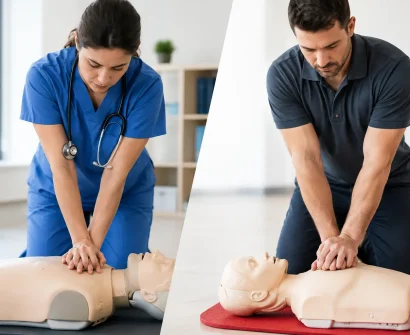
Begin CPR with 30 chest compressions. Place the heel of one hand in the center of the chest, place your other hand on top, and push hard and fast. For most adults, compress at a rate of 100 to 120 compressions per minute and allow the chest to fully rise after each compression.
After 30 compressions, open the airway and look in the mouth. If you see an object that is clearly visible and easy to remove, take it out. Never perform a blind finger sweep. Sweeping a finger through the mouth when you cannot see the object can push it farther into the airway or cause injury.
Attempt two rescue breaths. If the chest does not rise, reposition the head and try again. Then resume compressions. Continue CPR, checking for a visible object each time you open the airway for breaths, until the person begins to breathe, emergency responders take over, or you are unable to continue.
Apply and use an AED as soon as it arrives. Choking may be the original cause of collapse, but an AED can analyze the heart rhythm and provide prompts that guide you through care. Follow its voice instructions immediately.
Common mistakes to avoid during adult choking first aid
When a situation is stressful, well-meaning actions can make the blockage worse. Avoid giving a choking person food, water, or medication. Do not encourage them to lie down while they are conscious and unable to breathe.
Do not delay calling 911 while waiting to see if the person improves. Even when an object is expelled, emergency evaluation may be needed, especially if the person has persistent coughing, wheezing, trouble swallowing, chest or abdominal pain, or any difficulty breathing. Abdominal or chest thrusts can occasionally cause injury, and a remaining piece of food or another object can still affect breathing.
It is also wise to take any sudden choking episode seriously when there was no obvious food or object involved. Breathing trouble can resemble choking but may be caused by an allergic reaction, asthma, swelling, or another medical emergency. If the person cannot breathe normally, call 911 and follow the dispatcher’s guidance.
What to do if you are choking and alone
If you are alone and cannot breathe, call 911 immediately if possible, ideally using speakerphone. Then perform abdominal thrusts on yourself by placing a fist above your belly button and pulling inward and upward with your other hand.
You may also press your upper abdomen forcefully over the back of a sturdy chair or a firm counter edge. Do not use a soft surface. Continue until the object is expelled or help arrives. If you can still cough, keep coughing as forcefully as possible.
Practice before an emergency happens
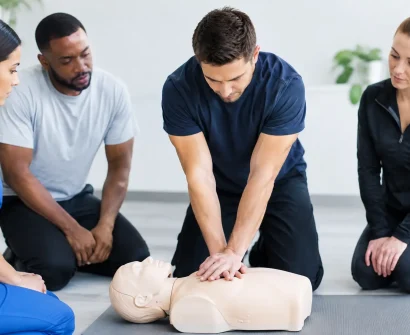
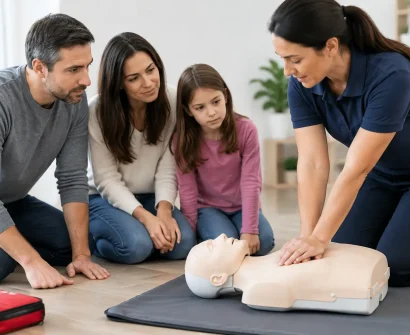
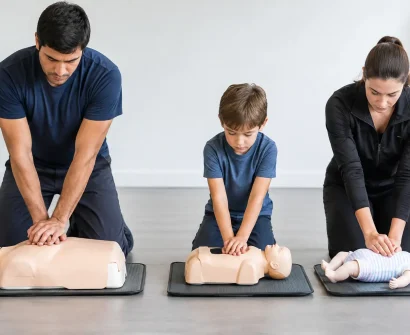
Reading the steps is a valuable start, but choking response is a hands-on skill. A quality first aid and CPR course allows you to practice back blows, abdominal thrusts, chest thrusts, CPR, and AED use with an instructor who can correct hand placement and answer real-world questions.
For parents, teachers, workplace teams, caregivers, and healthcare professionals, that practice can replace panic with purposeful action. Save a Life First Aid & CPR Training helps learners build the confidence to respond quickly when every breath matters. The best time to prepare is before someone at your table, in your classroom, or beside you at work needs help.