
Currently Empty: $0.00
When a person suddenly collapses, the first few minutes can feel overwhelming. The life-saving benefits of hands-on CPR training come down to a simple but powerful difference: instead of only knowing what to do, you have physically practiced how to do it. That practice can help you recognize an emergency, begin effective chest compressions, use an AED, and stay focused until emergency responders arrive.
Cardiac arrest can happen at home, at work, during a sporting event, or in a public place. Many people who experience it are not in a hospital when it begins. A trained bystander may be the person who keeps blood moving to the brain and other vital organs while professional help is on the way.
Why Hands-On CPR Training Can Save More Lives
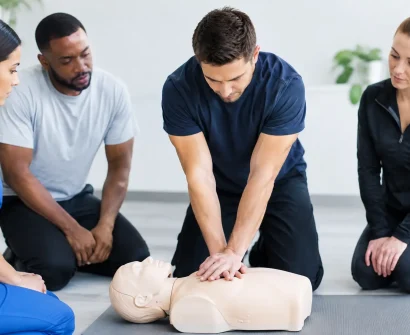
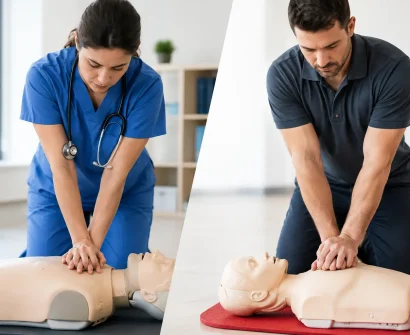
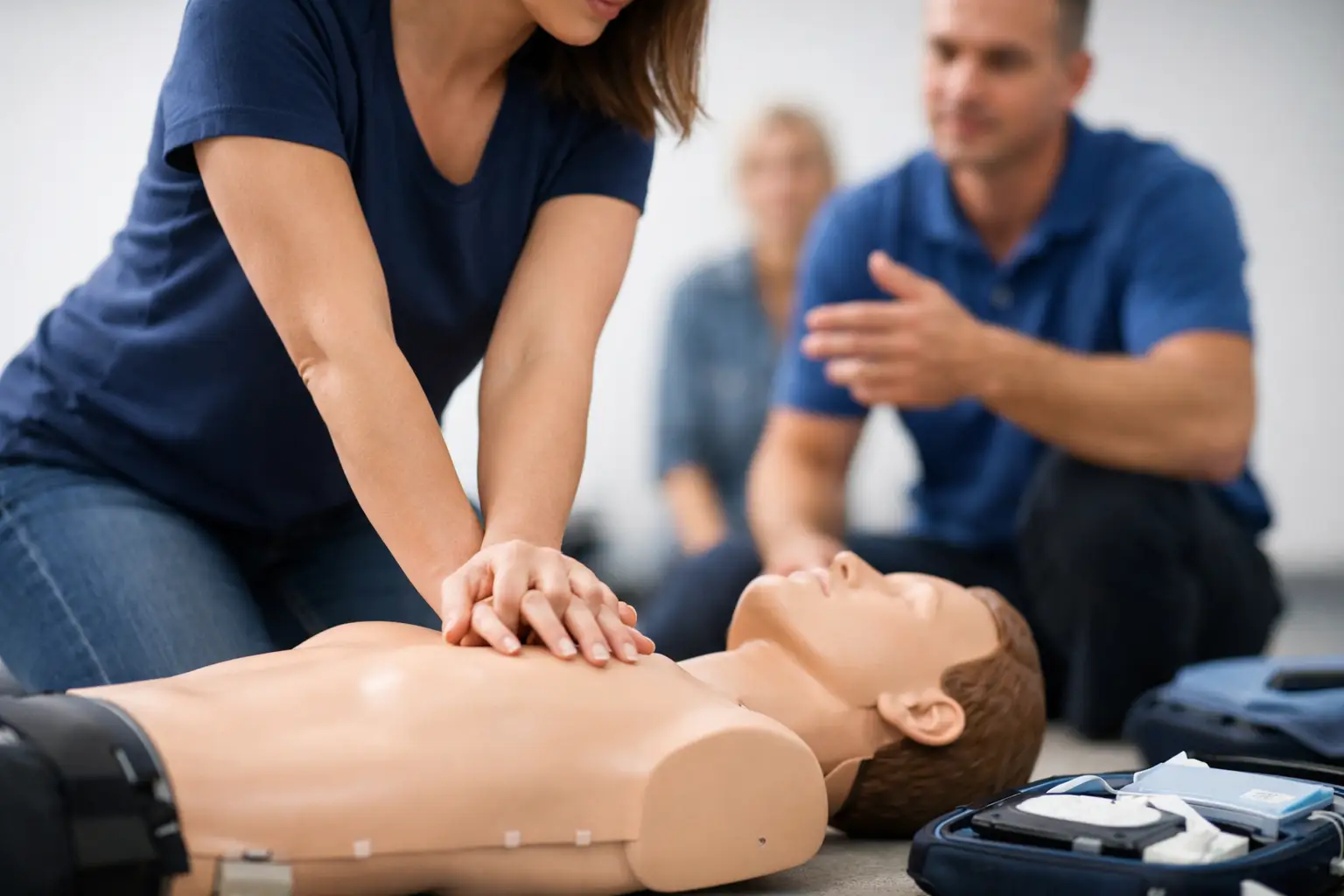
Watching a CPR video or reading instructions can introduce the basics, but it cannot fully prepare someone for the physical and emotional reality of an emergency. Hands-on training gives participants a chance to work with a manikin, practice the proper compression position, and receive guidance from an instructor in a supportive setting.
This matters because high-quality CPR is physically specific. Compressions need to be delivered in the center of the chest, at an appropriate depth and rate, with full chest recoil between compressions. Those details are easier to understand when you can feel the movement, make adjustments, and practice again.
Practice builds muscle memory
In a real emergency, people do not usually have time to search for instructions or debate every next step. They need to assess the scene, check responsiveness, call 911 or direct someone else to call, get an AED if one is available, and begin CPR. Rehearsing that sequence makes it more familiar.
Muscle memory does not remove the stress of an emergency, but it can reduce hesitation. Participants who have practiced compressions often remember where to place their hands and how to position their body over the person. They are less likely to stop because they are unsure whether they are doing enough.
Feedback improves technique
One of the clearest benefits of an instructor-led course is immediate feedback. An instructor can correct hand placement, body alignment, compression depth, and speed before those habits become ingrained. Many modern training manikins also provide visual or audible feedback, showing whether compressions are reaching an effective depth and rhythm.
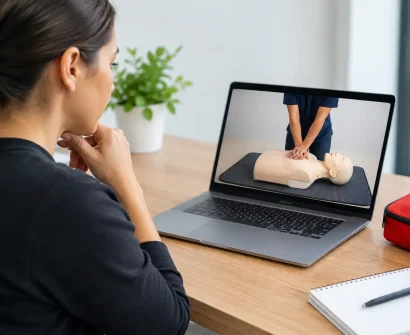
That feedback is difficult to replicate through online learning alone. Blended learning can be a flexible option for completing knowledge-based material, but the in-person skills session is where learners demonstrate CPR techniques and build practical confidence.
Training prepares you to use an AED
An automated external defibrillator, or AED, is designed to guide a bystander through the steps of delivering a shock when appropriate. Still, seeing an AED cabinet in a workplace or arena is different from opening the device, applying pads, and following its prompts during a practice scenario.
Hands-on CPR training helps remove the fear around AED use. Participants learn that the device analyzes the heart rhythm and tells the rescuer whether a shock is advised. They also practice safely clearing the person before analysis or a shock and returning promptly to chest compressions.
The Life-Saving Benefits of Hands-On CPR Training Extend Beyond Technique
CPR training is not only about the mechanics of compressions. It also teaches people how to make sound decisions under pressure and how to work with others when an emergency draws a crowd.
A trained responder learns to look for danger before approaching, check whether the person is responsive, and identify abnormal breathing. Gasping or irregular breathing can be a sign of cardiac arrest, not a sign that someone is breathing normally. Recognizing that distinction can prevent a dangerous delay.
Training also encourages clear communication. One person can call 911, another can locate an AED, and another can take over compressions when the first rescuer becomes tired. In a workplace, school, daycare, or sports setting, that coordination can make the response more organized and effective.
There is also a human benefit that is harder to measure. CPR courses help participants replace the thought, “I would not know what to do,” with “I know how to start.” Nobody can guarantee an outcome in a medical emergency, and CPR is not a substitute for emergency medical care. However, immediate action can give a person a better chance while advanced care is on the way.
CPR Skills Matter in Homes, Workplaces, and Public Spaces
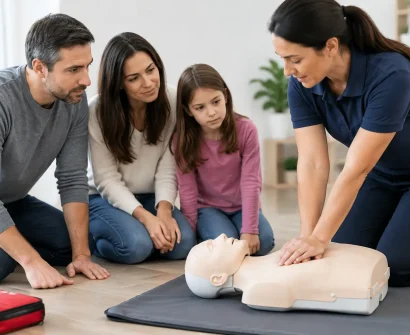
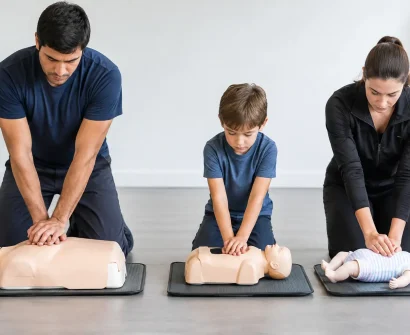
The people most likely to need help are often the people closest to us. Parents and grandparents may want training because children can choke, adults can experience sudden cardiac events, and everyday accidents happen without warning. Caregivers, babysitters, teachers, and daycare educators may need age-appropriate skills for infants and children as well as adults.
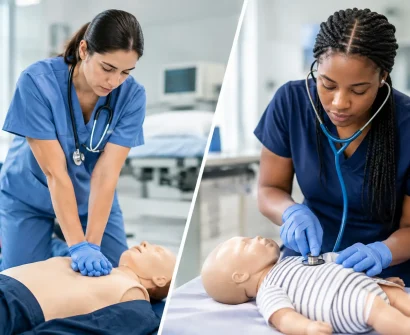
For workplaces, CPR training supports a safer culture. Employees who know how to respond can act quickly if a colleague, client, or visitor has a medical emergency. The right course depends on the setting, workplace requirements, and the level of responsibility participants hold. Some teams need emergency first aid and CPR, while healthcare professionals may require Basic Life Support or more advanced credentials such as ACLS, PALS, or PEARS.
Coaches, fitness instructors, and community volunteers also benefit from practical training. Athletic facilities, community centers, and events can be busy, fast-moving environments. Knowing where the AED is located, who calls 911, and how to begin CPR can turn a moment of confusion into a coordinated response.
Choosing Training That Matches Your Responsibilities
Not every CPR course serves the same purpose. A general public course may focus on adult, child, and infant CPR, choking response, and AED use. A healthcare-level course may place greater emphasis on team-based resuscitation, clinical scenarios, and professional standards.
The best choice depends on who you are preparing to help and whether your employer, regulator, school, or licensing body has a specific certification requirement. Parents may prioritize infant and child CPR. A dental office may need training suited to its staff and clinical setting. Healthcare providers typically need a recognized course that reflects their scope of practice.
Look for training that includes meaningful skills practice, not just a certificate at the end of a presentation. Save a Life First Aid & CPR Training offers instructor-led and blended options so participants can pair flexible learning with the hands-on practice that makes the material usable when it matters.
Keep Your Confidence Current
CPR knowledge can fade when it is not used. Even after certification, it is helpful to review the emergency response steps, notice AED locations in the places you visit, and renew training before credentials expire. Recertification provides a chance to refresh technique, learn updated guidance, and correct habits that may have slipped over time.
If you supervise a workplace or community organization, consider more than the minimum certification requirement. Ask whether staff know where first aid supplies and AEDs are located, whether emergency roles are clear, and whether new team members receive the same preparation. Equipment and policies are valuable, but they work best when people are ready to use them.
The most meaningful time to take a hands-on CPR course is before there is a reason to need it. Make space to practice, ask questions, and leave knowing that if someone’s life depends on a bystander stepping forward, you can be ready to help.