
Currently Empty: $0.00
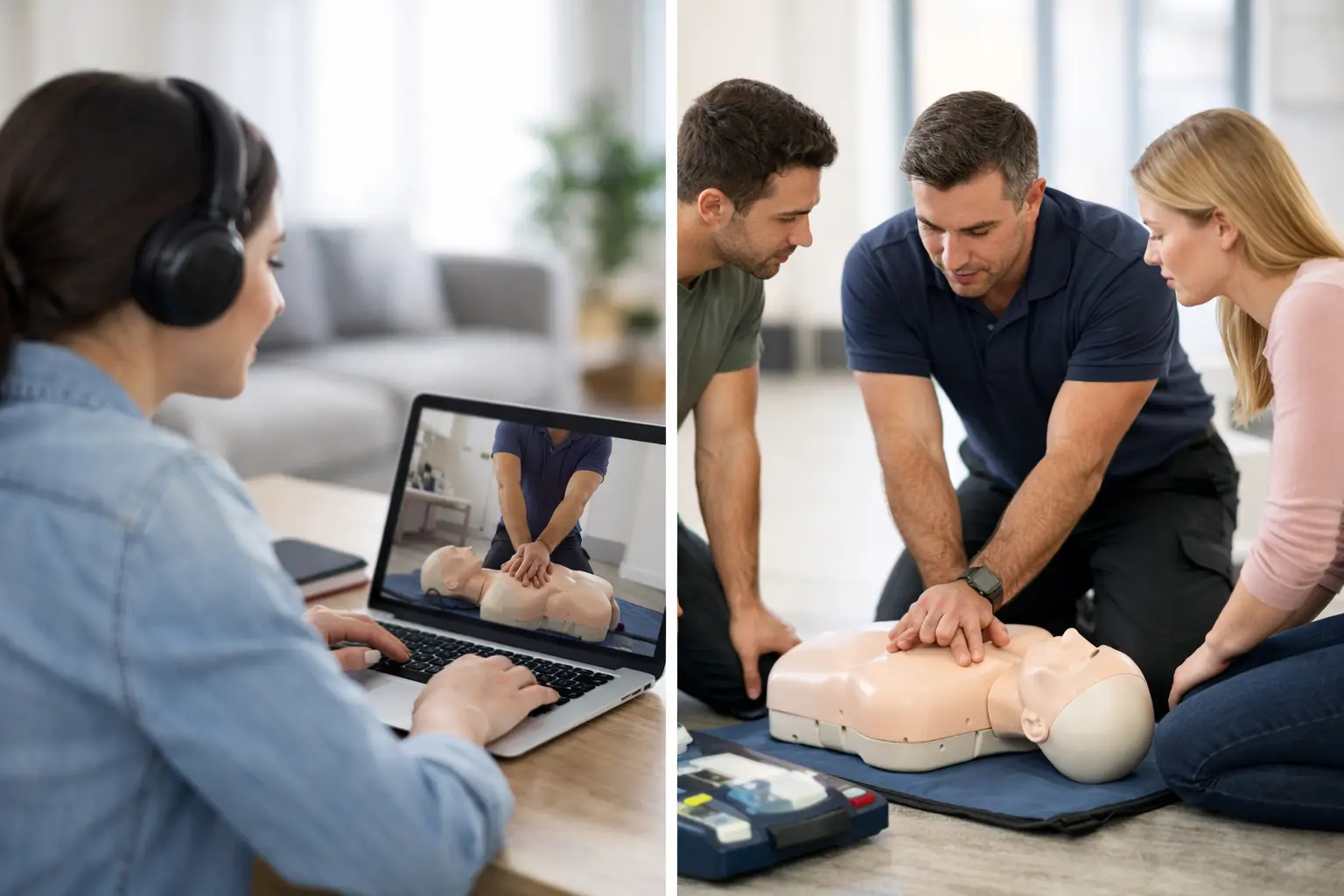
A CPR course can be completed from a laptop, but a cardiac arrest will never happen on a laptop. That is the central question in online vs in person CPR training: not simply which format is more convenient, but which one prepares you to recognize an emergency, begin care, and use the right technique when seconds matter.
For some learners, online education is a useful starting point. For others, especially healthcare professionals and people who need recognized workplace certification, hands-on instruction is essential. The right choice depends on the credential you need, your current skill level, and whether the course includes an in-person skills assessment.
Online vs In Person CPR Training: The Key Difference
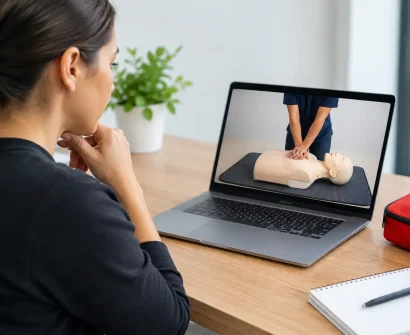
Online CPR training usually delivers lessons through videos, reading material, demonstrations, and knowledge checks. You can often work at your own pace, pause a lesson, and return to it when your schedule allows. This flexibility can be valuable for busy parents, employees, caregivers, and students who want to learn the basics of emergency response.
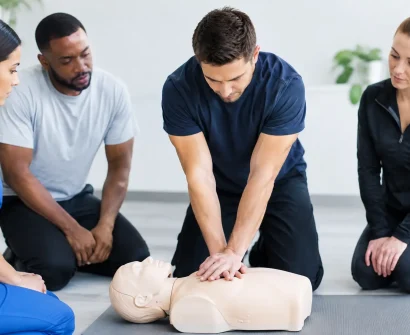
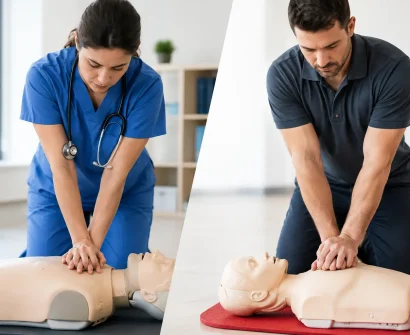
In-person CPR training places you in a classroom with an instructor, a manikin, an AED trainer, and other participants. You practice chest compressions, rescue breaths when included in the course, AED use, choking response, and scene assessment. An instructor can see what you are doing, correct your position, and help you understand what effective CPR feels like.
Blended learning combines both approaches. Participants complete the knowledge portion online, then attend an instructor-led session to practice and demonstrate their skills. For many people, this is the most practical balance between scheduling flexibility and meaningful hands-on learning.
What Online CPR Training Does Well
A quality online course can make CPR education more accessible. It gives learners time to absorb concepts such as checking for responsiveness, calling emergency services, sending someone for an AED, and recognizing when CPR is needed. Learners can replay demonstrations, review unfamiliar terminology, and complete lessons outside normal classroom hours.
Online modules can also be helpful before a renewal or skills session. A healthcare professional renewing BLS, for example, may appreciate reviewing current guidelines and AED steps in advance. Parents and caregivers may feel more comfortable arriving at a class after first seeing how an emergency response sequence works.
There is another benefit: online learning can reduce the barrier to getting started. Someone who is nervous about CPR or unsure whether they can perform it may be more willing to begin with a private, self-paced lesson. That first step matters because hesitation is often the reason people postpone training.
Still, watching CPR and performing CPR are very different experiences. A video cannot tell you whether your hands are centered correctly, whether you are compressing deeply enough, or whether you are allowing the chest to recoil between compressions.
Why Hands-On CPR Practice Matters
Effective CPR is physical. It requires proper hand placement, a steady rhythm, adequate compression depth, full chest recoil, and the ability to continue when you are tired or distracted. These are skills developed through practice, not memorization alone.
During in-person instruction, participants receive immediate feedback. If your shoulders are too far forward, your elbows are bent, or your compressions are too shallow, an instructor can help you adjust. Many training manikins also provide feedback on compression rate and depth, giving you a clearer sense of whether your technique meets the standard.
In-person training also creates realistic decision-making practice. You may work through scenarios involving an unresponsive adult, a child who is choking, or a workplace emergency where several people need to coordinate. Learning to direct a bystander to call 911, retrieve an AED, or meet emergency responders can make a major difference in a real event.
Confidence is another practical advantage. Most people do not want to be tested for the first time during an actual emergency. Practicing on a manikin, using an AED trainer, and speaking the response steps out loud can reduce panic and help the sequence feel more familiar.
Will an Online CPR Course Meet Certification Requirements?
This is the question to answer before registering. A fully online CPR certificate may be useful for personal education, but it may not meet the requirements of an employer, licensing body, school, daycare, healthcare setting, or professional association.
Many recognized CPR and first aid certifications require participants to demonstrate their skills in person with a qualified instructor. This is particularly common for BLS, workplace first aid, childcare requirements, and advanced courses such as ACLS and PALS. These programs assess more than your ability to answer questions. They assess whether you can perform skills correctly and respond appropriately as part of a team.
Requirements vary by role and organization. A fitness instructor may need a specific CPR and AED credential. A daycare educator may require a course that includes pediatric content and emergency first aid. Nurses, physicians, paramedics, and other healthcare professionals may need BLS or advanced certification accepted by their employer or licensing authority.
Before choosing an online option, ask three direct questions: Does my employer or regulator accept this certificate? Does the course include a live, hands-on skills session? Who issues the certification, and how will my skills be evaluated? Getting clear answers before you register prevents disappointment later.
When a Fully Online Course May Be Appropriate
Fully online CPR education can be a reasonable choice when your goal is awareness rather than formal certification. It may suit someone who wants to understand the basics before attending an in-person class, refresh their knowledge between certifications, or teach family members how to recognize a cardiac emergency and activate emergency services.
It can also help organizations introduce emergency preparedness concepts to large groups before scheduling practical training. Employees can complete foundational material independently, then arrive at a skills session ready to practice. This often makes classroom time more focused and efficient.
However, convenience should not be mistaken for equivalence. If you are expected to act in a professional role, supervise children, satisfy a workplace requirement, or maintain a healthcare credential, a course with hands-on assessment is usually the safer choice.
Who Benefits Most From In-Person or Blended Learning?
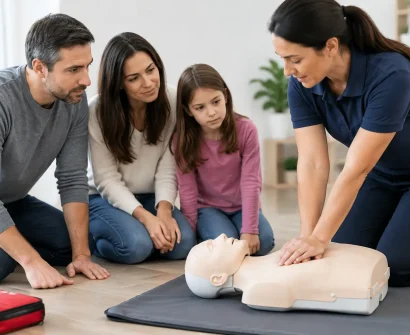
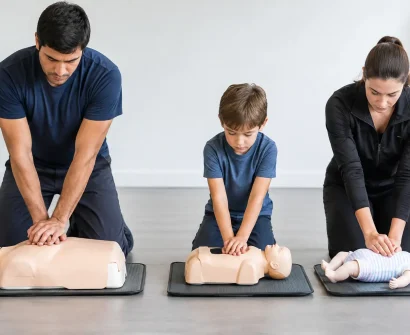
First-time learners often gain the most from direct instructor support. CPR can feel unfamiliar at first, and being able to ask questions in the moment helps turn information into action. Parents, grandparents, babysitters, teachers, coaches, and caregivers also benefit from practicing scenarios that reflect the people they are most likely to assist.
Workplace teams need more than individual knowledge. They need to know how to respond together. In-person or blended training gives colleagues an opportunity to practice communication, assign roles, and use the available emergency equipment appropriately.
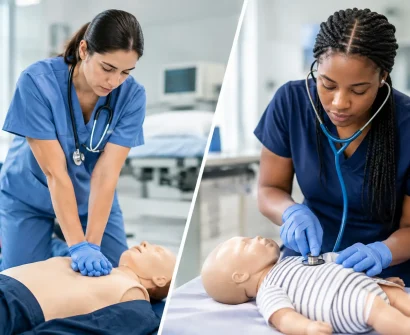
For healthcare professionals, practical training is especially important. BLS, ACLS, PALS, and PEARS courses involve structured algorithms, team dynamics, and hands-on assessments that support clinical readiness. A self-paced online module can support preparation, but it cannot replace a properly conducted skills evaluation when one is required.
Blended training is often ideal for people who need both convenience and recognized certification. The online portion allows participants to complete theoretical content on a flexible schedule. The classroom portion protects the part of training that cannot be replicated by a screen: performing the skill, receiving feedback, and showing that you can do it.
Choosing the Right CPR Course for Your Situation
Start with the reason you are taking the course. If you need a certificate for work, school, professional licensing, childcare, or volunteer responsibilities, confirm the exact course standard before enrolling. Do not assume that any CPR certificate will be accepted.
Next, consider the people you may need to help. A parent or daycare provider may need infant and child CPR content. A healthcare worker may need BLS or an advanced course. A workplace safety team may need CPR, AED, and first aid training that reflects job-site risks.
Finally, think honestly about how you learn. If you retain information best through demonstrations and practice, an in-person class is likely worth the time. If your schedule is demanding, blended learning may offer the flexibility you need without giving up instructor-led skill development.
Save a Life First Aid & CPR Training helps learners across Laval and the Greater Montreal area find practical, recognized training that fits their role and responsibilities. The goal is not just to earn a card. It is to leave prepared to protect a life.
The best CPR course is the one that meets your requirements and gives you the confidence to act. Choose a format that lets you practice the skills, ask questions, and walk into an emergency with a clear next step: call for help, start CPR, and use an AED as soon as it is available.