
Currently Empty: $0.00
A job posting asks for current CPR. Your childcare role requires first aid. Or maybe you watched an emergency unfold and realized that calling 911 is only part of the response. If you are wondering how to get CPR and first aid certified, the process is more straightforward than many people expect, but choosing the right course matters.
Certification is not one-size-fits-all. A parent, teacher, nurse, coach, and dental assistant may all need life-saving training, but they do not all need the same credential. The fastest way to get the right result is to start with your purpose, then match it to a recognized course and format that gives you both valid certification and practical, hands-on readiness.
How to get CPR and first aid certified for your needs
The first step is identifying why you need certification. For some people, it is a workplace requirement. For others, it is about being prepared at home, in the community, or while caring for children or older adults. That distinction matters because course names can sound similar while serving very different needs.
If you work in healthcare or a clinical setting, Basic Life Support, often called BLS, is usually the starting point. It is designed for healthcare providers and focuses on high-performance CPR, team response, AED use, and airway skills in professional environments. If you are a parent, teacher, fitness instructor, camp counselor, or general workplace learner, a community-based CPR AED or standard first aid course is often the better fit.
Some learners need more advanced training. ACLS and PALS are meant for professionals with clinical responsibilities, not first-time general learners. On the other hand, someone working in a school or daycare may need pediatric-focused content rather than an adult-centered course. Before you register, check the exact wording from your employer, licensing body, school, or regulatory organization. “CPR required” is not always specific enough.
Choose a recognized course, not just the cheapest option
Once you know what type of training you need, the next step is making sure the provider offers recognized certification. This is where many people go wrong. A low-cost online course may look convenient, but if it is not accepted by your employer or professional body, you may have to retake the training and pay again.
A credible training provider should clearly state the course type, intended audience, delivery format, certification outcome, and whether the course meets common workplace or licensing expectations. You should also be able to tell whether the course includes a skills assessment. For CPR and first aid, practical performance matters. Reading material alone does not prepare you to respond under pressure.
This is especially important for healthcare workers and regulated professionals. If your role involves patient care, clinical response, or formal compliance standards, hands-on evaluation is usually non-negotiable. Even for non-clinical learners, in-person skill practice can make a major difference in confidence and retention.
In-person, blended, or online-only?
One of the biggest decisions in how to get CPR and first aid certified is choosing the format. Each option has benefits, but the right choice depends on your deadline, learning style, and certification requirements.
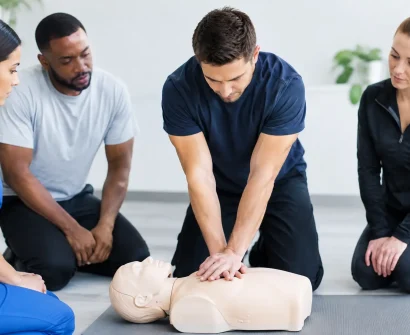
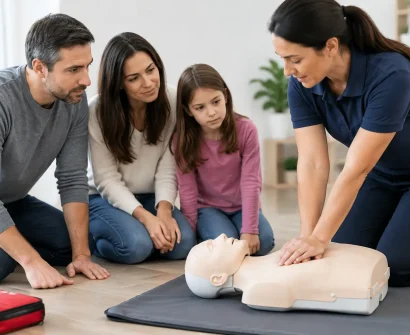
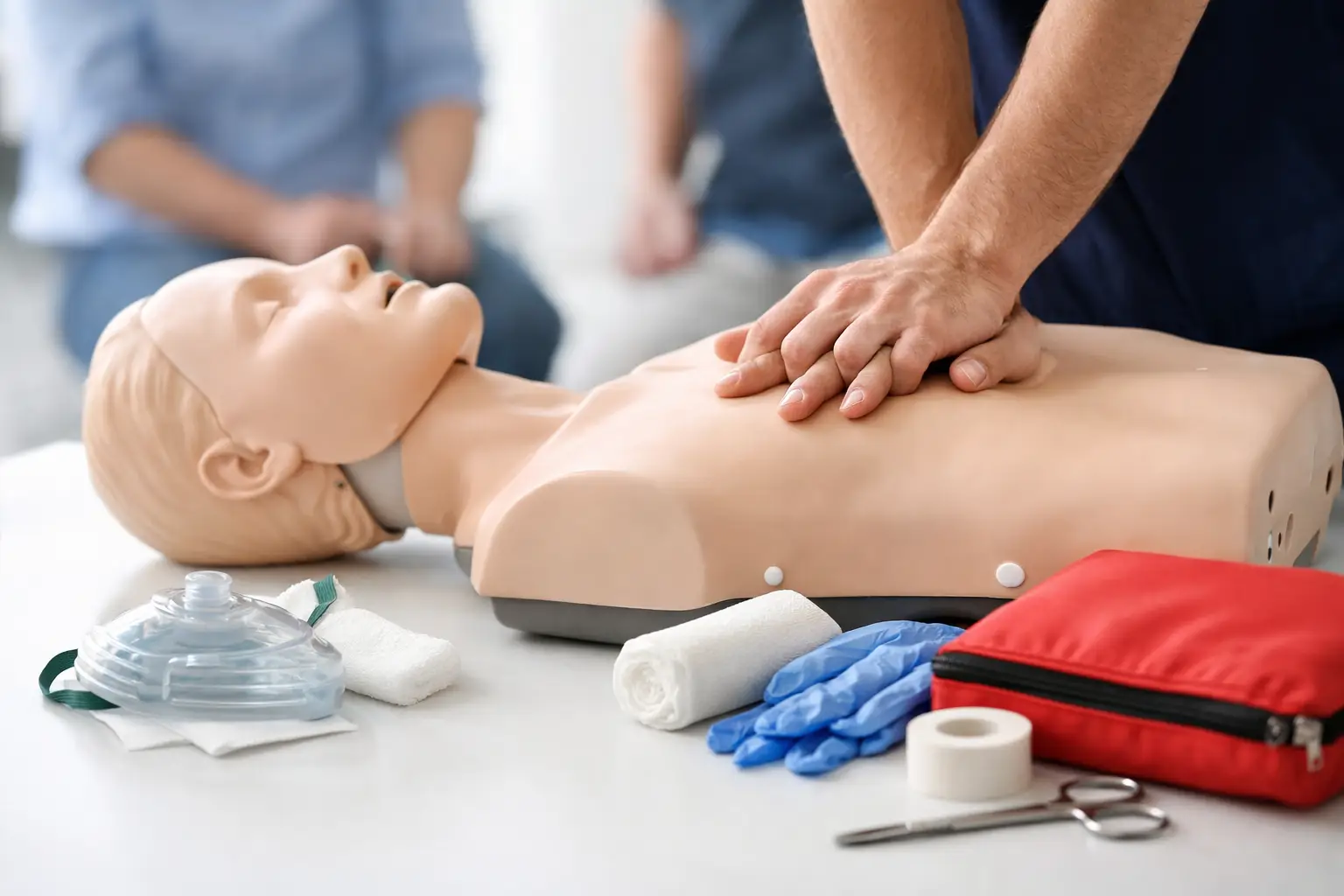
In-person training gives you direct instruction, live feedback, and hands-on practice from start to finish. For many learners, especially beginners, this is the strongest option. You can ask questions in real time, practice compressions, bandaging, and response sequences, and leave with a clearer sense of what an emergency actually feels like.
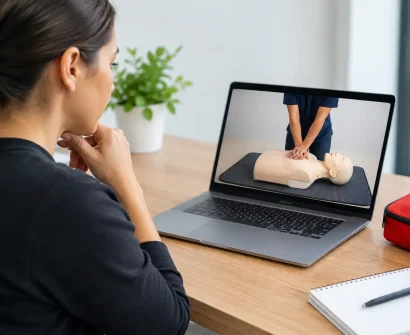
Blended learning combines online coursework with an in-person skills session. This format works well for busy professionals and returning learners because it reduces classroom time while keeping the practical assessment intact. If you are comfortable learning concepts independently but still want supervised skills testing, blended learning is often a smart middle ground.
Online-only courses can be useful in limited situations, but they are not always accepted for employment or licensing. They may also leave learners less prepared for the physical and timing-based realities of CPR. Convenience is real, but so is the trade-off. If your certification has to stand up to employer scrutiny or if you want to feel ready in a real emergency, hands-on components are worth prioritizing.
What happens during CPR and first aid certification
Many first-time learners hesitate because they are unsure what the class will involve. In most cases, CPR and first aid certification is practical, structured, and approachable. You do not need prior medical experience.
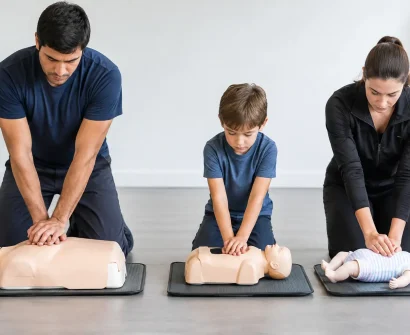
A standard course usually covers scene safety, emergency assessment, when to call for help, adult CPR, child CPR, infant CPR, AED use, choking response, and core first aid topics such as bleeding, burns, shock, fractures, and sudden medical conditions. Depending on the course, you may also learn how to respond to allergic reactions, seizures, diabetic emergencies, and environmental injuries.
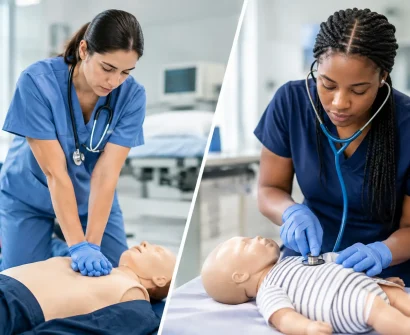
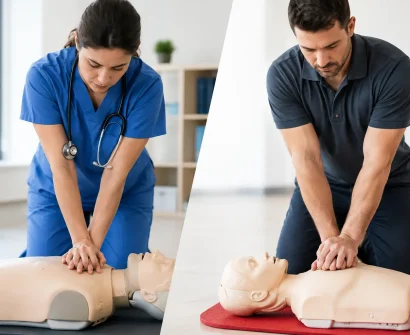
You will typically practice skills on training manikins and work through response scenarios. The goal is not just to memorize steps. It is to build enough repetition that you can act quickly and calmly if something happens. That practical focus is where good instruction makes a difference.
For healthcare-level courses like BLS, ACLS, or PALS, expectations are higher. Learners may be tested on team dynamics, ventilation techniques, rhythm recognition, and algorithm-based responses. These courses are designed for clinical environments and often assume a professional scope of practice.
How long certification takes and how long it lasts
For most general learners, CPR and first aid certification can often be completed in a single day or over a short blended schedule. The exact length depends on whether you are taking CPR only, CPR AED, emergency first aid, or standard first aid with CPR.
Healthcare courses may require more time, especially advanced programs or provider-level renewals with skills evaluation. The good news is that there is usually a clear path whether you are certifying for the first time or returning for recertification.
Most certifications are valid for a limited term, often two years, though the exact period depends on the issuing organization and course type. If your credential is tied to employment, do not wait until it expires. Booking renewal training early gives you better schedule options and helps avoid lapses that can affect work eligibility.
What to bring and how to prepare
You do not need to study like you are preparing for a licensing exam, but showing up ready helps. Wear comfortable clothing since CPR practice is physical. Arrive with any pre-course material completed if you chose a blended format. Bring photo identification if the provider requires it, and double-check your confirmation for start times and attendance policies.
If you are nervous, that is normal. Many people taking these courses have never done chest compressions, used an AED trainer, or practiced first aid in front of others. Good instruction should make the environment supportive while still holding learners to a meaningful standard.
It also helps to think about your real-world setting before class. A parent may focus on infant choking scenarios. A construction worker may pay close attention to trauma and bleeding control. A nurse may be thinking about team response and recertification requirements. The same course can feel more relevant when you connect it to the situations you are most likely to face.
How to know you are choosing the right provider
A strong provider does more than issue a certificate. They help you find the correct course, explain formats clearly, and deliver training that builds usable confidence. Look for transparent scheduling, clearly named programs, and a direct path to registration. If the site or course listing makes it hard to tell whether a class is for healthcare providers, workplace compliance, or the general public, that is a warning sign.
You should also expect practical instruction, not just passive content. In emergency response, confidence comes from doing. A provider like Save a Life stands out by serving both healthcare professionals and everyday learners with certification-based courses that are structured for real response, not just box-checking.
That matters because the best course is not simply the one that fits your calendar. It is the one that gives you a credential that will be accepted and skills you can actually use.
The smartest next step
If you need certification soon, resist the urge to register for the first course you see. Start by confirming the exact requirement, then choose the course level that matches your role, and finally pick a format that includes the right amount of hands-on learning. That extra five minutes of checking can save you from taking the wrong class.
Learning CPR and first aid is one of the few trainings that can matter at work, at home, and in public all at once. The certificate is important, but the real value is knowing what to do when someone needs help and every second counts.