
Currently Empty: $0.00
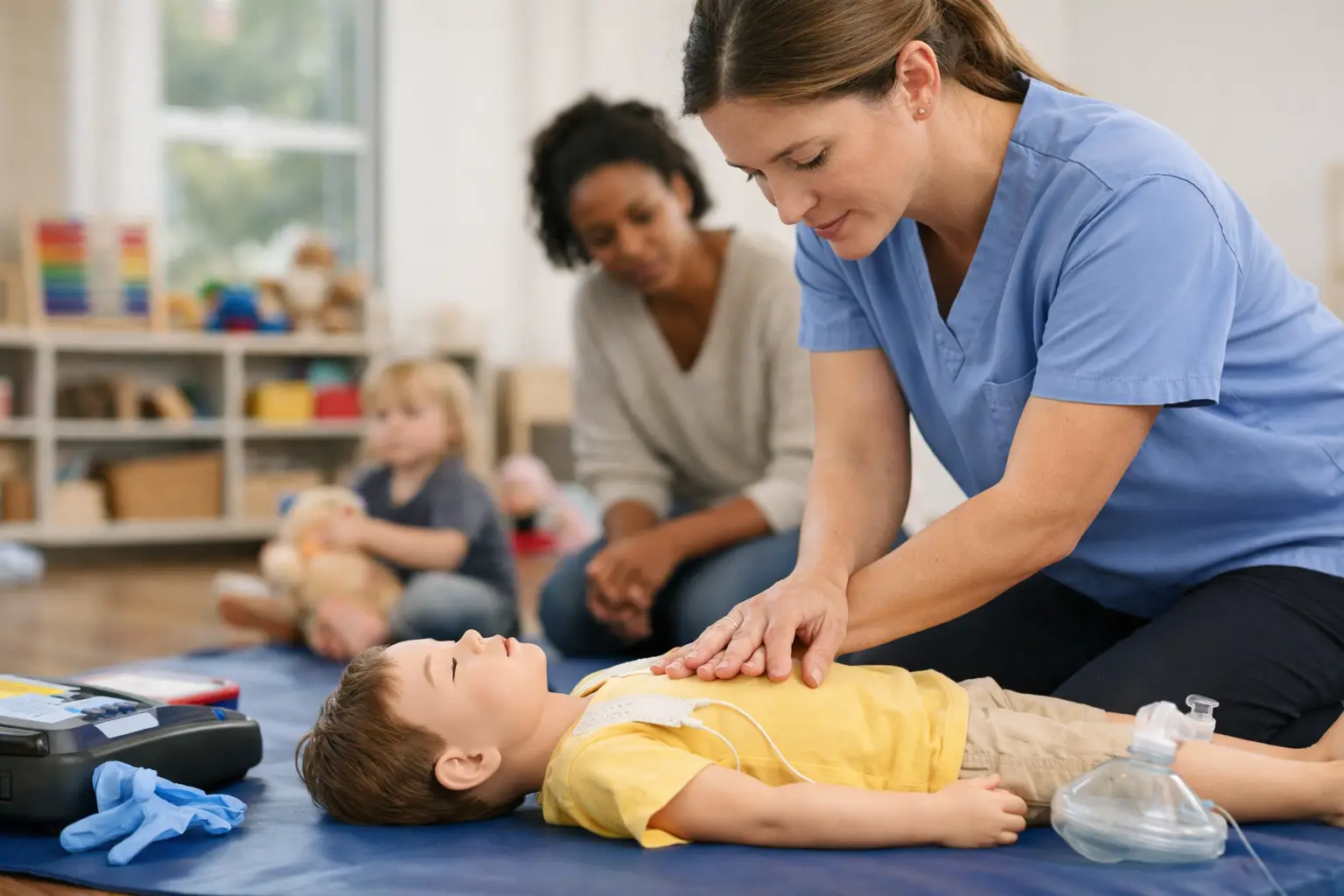
A child who suddenly becomes unresponsive, chokes during snack time, or has trouble breathing needs more than a quick call for help. They need a calm adult who knows what to do in the first critical minutes. CPR certification for childcare workers provides the practical skills to recognize an emergency, begin care safely, and respond with confidence until emergency medical services arrive.
For childcare professionals, CPR training is not simply a requirement to check off during onboarding. It is part of protecting the children entrusted to your care. The right course helps staff move from uncertainty to purposeful action when a child’s condition changes without warning.
Why CPR Certification Matters in Childcare Settings
Young children are not small adults. Their airways are smaller, their medical conditions can change quickly, and they may not be able to clearly explain what they feel. Infants and children also face age-specific risks, including choking, drowning, asthma emergencies, allergic reactions, and sudden illness.
A CPR-certified childcare worker is trained to recognize when a child needs immediate help and when a situation requires monitoring, first aid, or emergency services. Training also reinforces the value of early action: checking for responsiveness, calling 911 or directing another adult to call, retrieving an AED when available, and starting CPR when indicated.
That readiness benefits more than the child in crisis. It gives the entire team a clearer response plan. In a busy classroom, one staff member can begin care while another contacts emergency services, supervises the other children, meets responders, or contacts a parent according to center policy.
Many states, licensing agencies, employers, and childcare programs require current CPR and first aid credentials. Requirements vary by location and role, so workers and program directors should confirm which course type, provider, and renewal schedule their licensing authority accepts. A course that meets one employer’s requirements may not meet another program’s standards.
What CPR Certification for Childcare Workers Should Cover
A suitable childcare CPR course should focus on the people you care for most often: infants and children. Many programs also include adult CPR because staff, parents, visitors, and coworkers can experience emergencies on site.
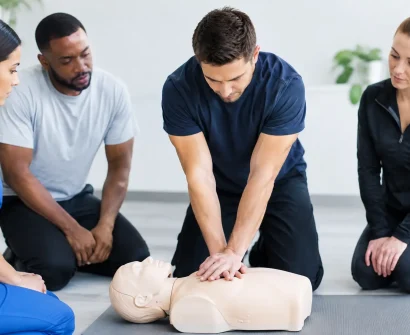
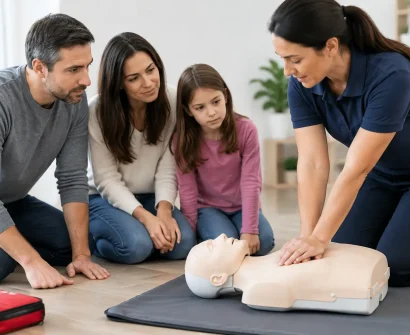
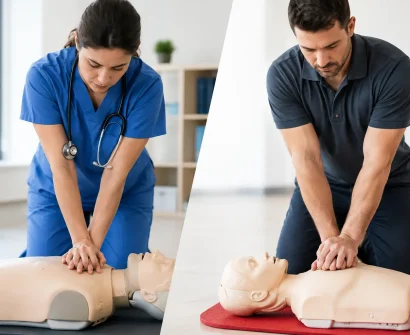
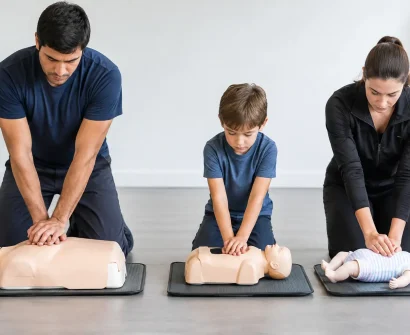
The strongest learning experience combines clear instruction with hands-on practice. Watching a video can introduce the steps, but practicing compressions on a manikin, using training AED equipment, and responding to realistic scenarios helps learners build the physical skills and decision-making habits that emergencies demand.
Pediatric CPR and choking response
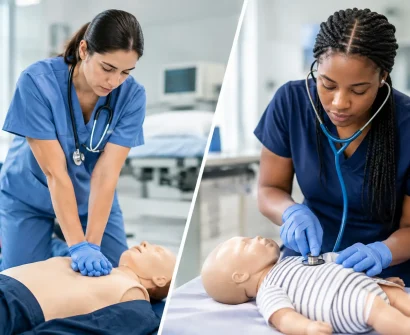
Childcare workers should learn how to assess an unresponsive infant or child, perform age-appropriate CPR, and provide care for severe choking. Infant techniques differ from child and adult techniques, including hand placement, compression approach, and the way rescuers provide breaths. Those differences matter.
Training should also address how to respond when a child is conscious but cannot cough, cry, speak, or breathe effectively because of an airway obstruction. In childcare environments, choking response is especially relevant because meals, snacks, small toys, and developmental curiosity can create frequent hazards.
AED awareness and use
An automated external defibrillator, or AED, can help restore a shockable heart rhythm during sudden cardiac arrest. Modern AEDs provide voice prompts, but staff still need to know when to get the device, how to place pads correctly, and how to keep everyone clear while it analyzes or delivers a shock.
Some facilities have pediatric pads or a pediatric setting available. Workers should know where the AED is located, who is expected to retrieve it, and how it fits into the center’s emergency response plan.
First aid skills that support early care
CPR training is often paired with first aid because childcare emergencies are not limited to cardiac arrest. First aid education may address bleeding, burns, seizures, allergic reactions, diabetic emergencies, fever-related concerns, poison exposure, and injuries from falls or playground incidents.
The exact content depends on the course and local requirements. For childcare staff, a combined CPR, AED, and first aid certification is often the most practical choice because it prepares workers for a wider range of situations they may encounter during a normal day.
Choosing the Right Course Format
Childcare workers need training that is recognized, current, and practical. Start by checking your employer’s policy and your state or local childcare licensing requirements. Ask whether the required credential must include infant, child, and adult CPR; AED training; first aid; and an in-person skills evaluation.
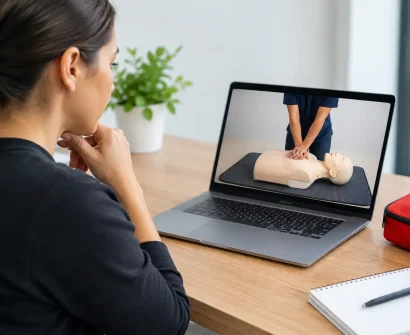
Course format matters. An in-person class offers direct instructor feedback and hands-on practice throughout the session. Blended learning can be a good fit for busy professionals because it allows learners to complete online coursework before attending an in-person skills session. Fully online courses may be convenient, but they are not accepted by every licensing body or employer, particularly when hands-on demonstration is required.
Before registering, confirm the certification’s validity period and renewal expectations. CPR credentials commonly require renewal on a regular schedule, often every two years, but local rules can differ. Waiting until a card has expired may create staffing or compliance problems, so it is wise to plan renewal training well before the deadline.
For directors and owners, consistency is just as valuable as compliance. Scheduling staff through the same recognized training pathway can make it easier to track expiration dates, maintain personnel files, and ensure everyone follows the same emergency response principles.
Turning a Certification Card Into Real Readiness
A certification card is evidence of completed training. Readiness comes from keeping those skills active. CPR is physically demanding, and the correct sequence can be hard to recall under stress if it is never reviewed after class.
Childcare programs can strengthen preparedness by discussing emergency roles during staff meetings and practicing simple response scenarios. For example, the team can walk through what happens if an infant becomes unresponsive in the nursery, a child has a severe allergic reaction at lunch, or a staff member collapses during pickup. These conversations reveal practical gaps, such as an AED that is hard to access, outdated emergency contacts, or uncertainty about who will supervise other children.
Staff should also know where first aid supplies, emergency action plans, medication records, and child-specific care plans are kept. Training supports good judgment, but it works best alongside a well-organized environment and clear center procedures.
Common Questions Childcare Workers Should Ask
Before choosing a course, ask whether it includes infant and child CPR, choking response, AED skills, and hands-on practice. If your workplace requires first aid as well, confirm that it is included rather than assuming every CPR course covers it.
It is also reasonable to ask how long the course takes, whether a skills session is required, when the certification card will be issued, and what documentation you should provide to your employer. New childcare workers may need certification before their first day, while experienced staff may only need a renewal course. The right option depends on current credentials, workplace rules, and whether prior certification is still valid.
Do not treat recertification as a lesser version of the responsibility. Renewal is an opportunity to correct habits, practice updates, and regain the confidence that can fade between emergencies.
Build Confidence Before an Emergency Happens
Children depend on adults to notice, respond, and act without delay. CPR certification gives childcare workers a practical foundation for that responsibility, while regular practice and clear workplace procedures help turn training into coordinated care.
The best time to build emergency confidence is during a calm training session, with an instructor nearby and time to ask questions. When the unexpected happens, those practiced skills can help a childcare worker protect a child when every moment counts.