
Currently Empty: $0.00
A medical emergency rarely announces itself. It can happen during a child’s sports practice, at a family gathering, in a classroom, or beside a coworker who suddenly collapses. That reality helps explain why more Laval residents are learning CPR and first aid. People are looking beyond the certificate itself and choosing practical skills that may help them protect a child, support a colleague, or respond calmly until professional help arrives.
For many learners, the motivation is personal. A new baby, an aging parent, a job requirement, or a recent emergency in the community can turn first aid training from something to do someday into a priority now. Quality training gives people a structured way to prepare, practice, and make decisions under pressure.
Why More Laval Residents Are Learning CPR and First Aid
CPR and first aid training is becoming part of how families, workplaces, and community organizations think about safety. The goal is not to turn every participant into a paramedic. It is to help ordinary people recognize a serious problem, call 911, begin appropriate care, and use available tools such as an automated external defibrillator, or AED, when needed.
That first response matters. In a cardiac emergency, a person may become unresponsive and stop breathing normally within seconds. Bystanders who know how to assess the scene, activate emergency services, start CPR, and follow an AED’s prompts can provide essential support while waiting for first responders. Training replaces hesitation with a clear sequence of actions.
The same is true for choking, severe bleeding, allergic reactions, seizures, burns, diabetic emergencies, and injuries. Not every incident requires the same response, and first aid education teaches participants how to identify when a situation is urgent, when it is safe to help, and when professional medical care is required.
Families Want More Than Good Intentions
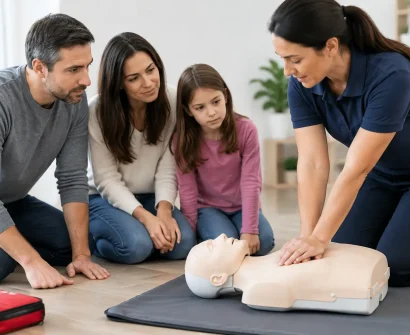
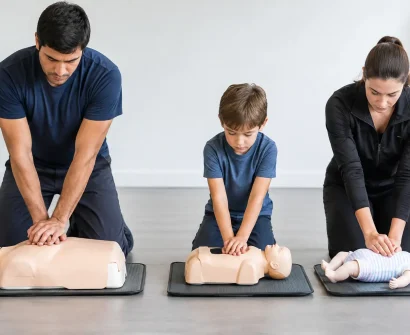
Parents and grandparents often enroll because children are naturally active, curious, and unpredictable. A choking incident during a meal or an injury at the park can feel overwhelming, especially when a child is involved. Pediatric-focused first aid and CPR education helps caregivers learn techniques that are appropriate for infants and children rather than assuming adult procedures apply to everyone.
This does not mean families should live in fear. It means they can be prepared without panic. Participants learn how to check responsiveness and breathing, manage common injuries, call for help effectively, and stay focused during the first critical minutes.
For families caring for older adults, training can be equally valuable. Falls, sudden illness, medication-related concerns, and cardiac symptoms may occur at home. CPR and first aid courses cannot prevent every emergency, but they can help relatives recognize warning signs and respond with greater confidence while waiting for emergency services.
Workplaces Are Building Stronger Safety Cultures
Many Laval businesses require designated employees to hold current first aid and CPR certification. This may be driven by workplace safety policies, job responsibilities, licensing requirements, or the nature of the work. Yet the value reaches beyond compliance.
A trained team can respond more effectively when a coworker is injured, experiences chest discomfort, has a severe allergic reaction, or becomes unresponsive. Employees also bring those skills home, to community events, and into public spaces. One workplace course can improve readiness far beyond the office, warehouse, clinic, school, or recreation facility where it was completed.
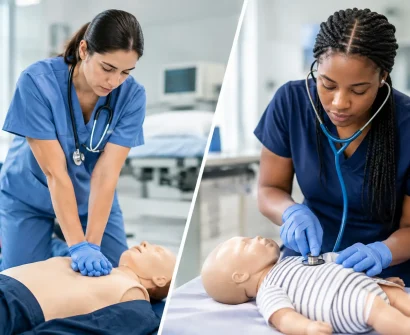
The right course depends on the setting. A healthcare professional may need Basic Life Support, ACLS, PALS, or another advanced credential tied to clinical practice. A workplace team may need Emergency First Aid or Standard First Aid with CPR and AED training. Childcare providers need education that reflects the risks and responsibilities of caring for young children.
Choosing a course simply because it is short or inexpensive can create a gap between the training received and the skills actually needed. Employers and individual learners should consider certification requirements, the people they serve, the hazards they may encounter, and renewal timelines before registering.
Hands-On Practice Builds Confidence
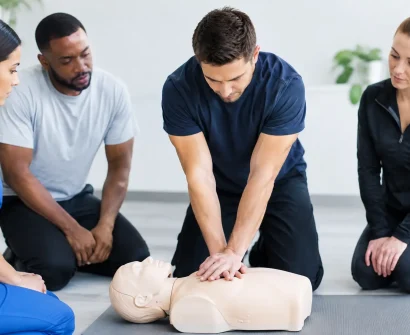
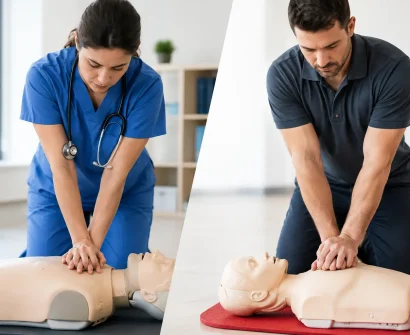
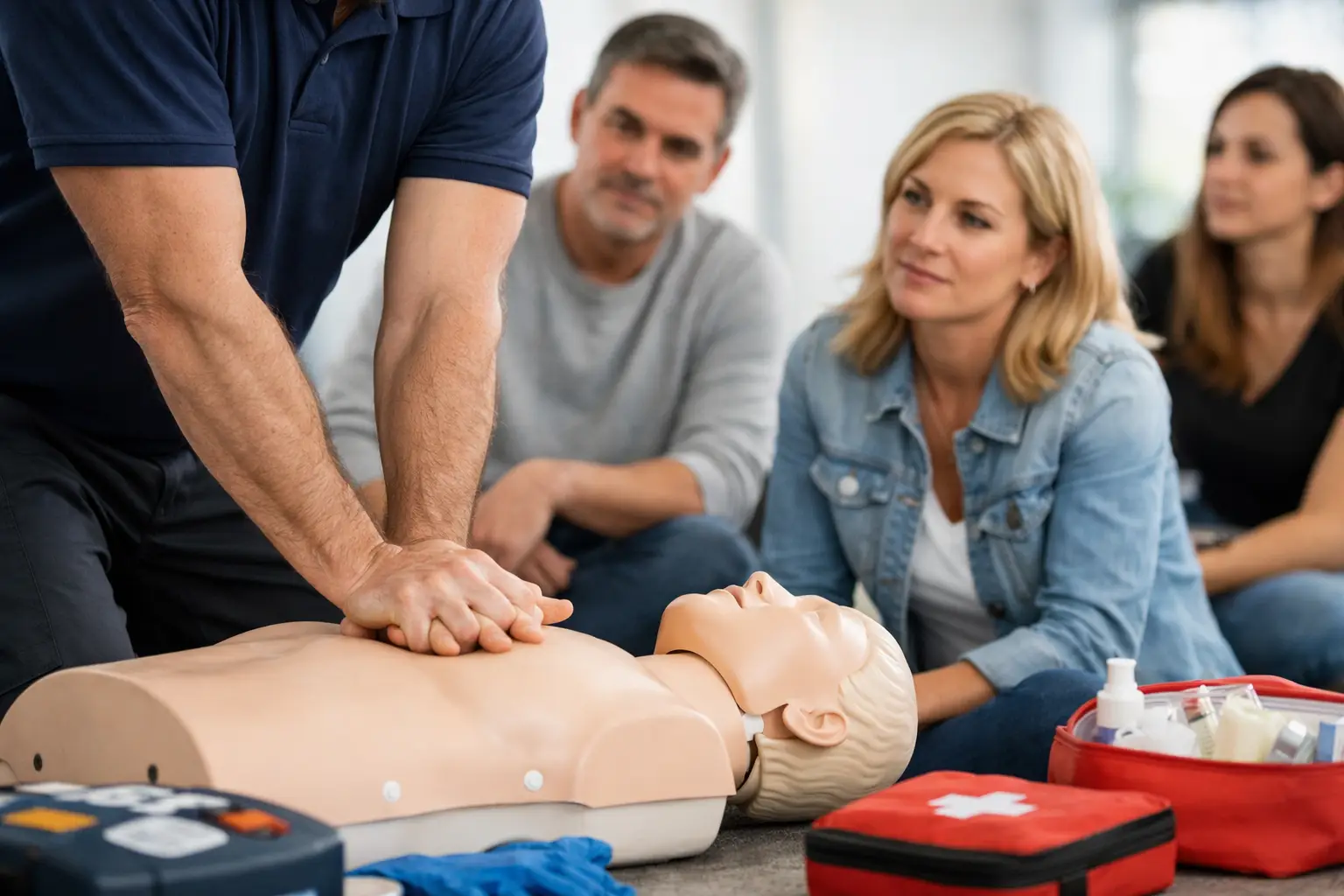
Watching a video about CPR is not the same as kneeling beside a manikin, finding the correct hand position, practicing chest compressions, and receiving instructor feedback. In an emergency, people rely on both knowledge and muscle memory. That is why hands-on learning remains central to effective CPR and first aid education.
Participants benefit from practicing realistic scenarios: responding to an unresponsive adult, helping a choking child, applying pressure to severe bleeding, or using an AED. These exercises give learners a chance to ask questions, make mistakes in a safe setting, and repeat essential steps until they feel more familiar.
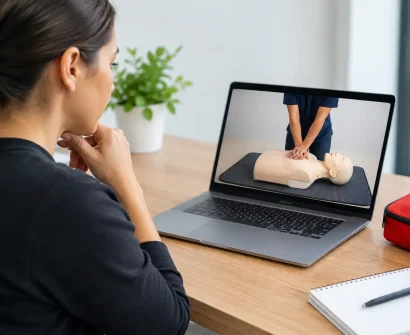
Blended learning can be a practical option for busy professionals and families. Online coursework allows participants to complete the knowledge portion on a flexible schedule, while an in-person session focuses on skills practice and assessment. The trade-off is that learners still need to set aside time for the hands-on component. For life-saving skills, that face-to-face practice is not an optional detail.
AED Awareness Is Changing the Conversation
AEDs are increasingly visible in gyms, schools, community facilities, offices, and public buildings. Still, many people are unsure whether they are allowed to use one or worry that they will do something wrong. CPR and AED training addresses that uncertainty directly.
Modern AEDs are designed to provide clear voice or visual prompts. They analyze the person’s heart rhythm and advise whether a shock is needed. A responder does not need to diagnose the rhythm independently. The most important steps are to call 911, begin CPR when appropriate, retrieve the AED quickly, and follow its instructions.
Training also reinforces a key point: an AED is most useful when someone is willing to act. Knowing where an AED is located at work, at a child’s school, or in a recreation center is a simple preparedness habit that can save valuable time.
People Want Skills They Can Use Anywhere
One reason CPR and first aid training appeals to such a broad range of Laval residents is that the skills travel well. A nurse renewing BLS, a coach supervising a weekend game, a student preparing for a healthcare program, and a parent caring for an infant may have different reasons for enrolling. All benefit from knowing how to respond in the moments before emergency professionals arrive.
The confidence gained in class should be realistic, not overconfident. First aid training teaches people to work within their level of training, protect themselves from hazards, use personal protective equipment when available, and seek emergency assistance promptly. It also teaches that staying calm is an action. A calm responder can gather information, direct others to call 911 or find an AED, and provide care more effectively.
Certification Is a Starting Point, Not a Finish Line
Skills can fade when they are not used. That is why certification renewal and recertification matter, particularly for healthcare workers, childcare professionals, and employees with formal workplace responsibilities. Refresher training helps participants revisit changes in guidelines, correct habits that may have drifted over time, and regain confidence through practice.
Between courses, residents can keep preparedness active in simple ways. Families can save emergency contacts, identify meeting points, keep a well-stocked first aid kit, and learn where nearby AEDs are located. Workplaces can review their emergency response plan and make sure employees know who is trained and where supplies are stored.
Save a Life First Aid & CPR Training supports learners in Laval with instructor-led and blended options designed for real-world response, from foundational first aid to advanced healthcare certifications. The right program should match the learner’s responsibilities, experience, and required credential.
The most meaningful reason to learn CPR and first aid is not the card placed in a wallet after class. It is the possibility that, when someone nearby needs help, you can recognize the emergency, take the first step, and help create a safer outcome while professional care is on the way.