
Currently Empty: $0.00

A medical emergency rarely happens at a convenient time. It may be a colleague collapsing at work, a child choking during dinner, a parent feeling sudden chest pain, or an athlete becoming unresponsive at practice. The top reasons to take a CPR course in Laval this year come down to one meaningful advantage: when seconds matter, you can recognize what is happening and take purposeful action rather than wait helplessly.
CPR training is not about expecting the worst. It is about being prepared for real life. A quality course gives healthcare professionals, caregivers, parents, educators, and everyday community members practical skills that can make a critical difference before emergency services arrive.
CPR Training Turns Panic Into Action
During a cardiac arrest or choking emergency, people often freeze because they are unsure what to do, afraid of causing harm, or unable to remember information they once read online. Hands-on CPR training replaces uncertainty with a clear sequence of actions.
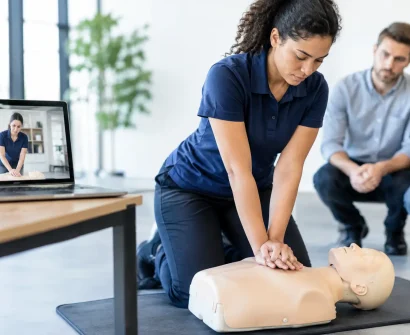
You learn how to assess the scene, check responsiveness, call for emergency help, begin chest compressions, and use an automated external defibrillator (AED) when one is available. You also practice the skills on training equipment under instructor guidance. That practice matters. Knowing that CPR involves compressions is different from understanding the correct hand placement, rate, depth, and technique needed to deliver effective care.
Confidence does not mean believing every emergency will feel easy. It means having a trained response to fall back on when stress is high. You can focus on the next right step: call for help, start care, and continue until help takes over or the person begins to respond.
Cardiac Emergencies Can Happen Anywhere
Cardiac arrest is not limited to hospitals or older adults. It can occur at home, in a workplace, at a gym, in a school, or during a community event. Some people have known heart conditions, while others show no warning signs beforehand.
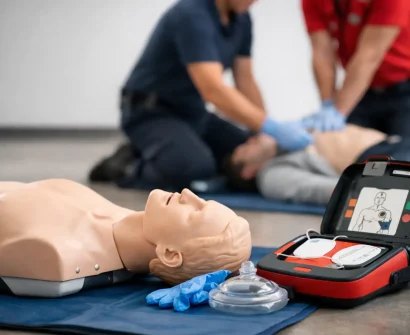
Early CPR helps maintain blood flow to the brain and other vital organs. When an AED is used quickly alongside CPR, it can improve the person’s chance of survival in certain cardiac rhythms. This is why CPR and AED training are taught together in many courses: the skills work as part of a coordinated response.
For families, this preparation can be especially personal. Many emergencies happen in the home, where family members are often the first people present. Taking a course is a practical way to protect the people you care about without assuming someone else will know what to do.
Choking Skills Are Useful Across Every Age Group
CPR courses often cover choking response as well as cardiac arrest care. This is a valuable skill for anyone, but it is particularly relevant for parents, grandparents, babysitters, daycare staff, teachers, and caregivers.
Infants and young children need different techniques than adults. Their airways are smaller, and their signs of distress may be less obvious. A hands-on course helps participants understand how to recognize severe choking, when to intervene, and how to adjust their response for infants, children, and adults.
The same knowledge is useful for older adults and people with swallowing difficulties. A choking emergency can escalate quickly, so recognizing the difference between someone who is coughing effectively and someone who cannot breathe or speak is essential.
Professional Requirements Are Only Part of the Value
For many healthcare professionals and healthcare students, current certification is required for employment, clinical placement, licensing, or access to specific work settings. Depending on the role, this may include Basic Life Support (BLS), Advanced Cardiac Life Support (ACLS), Pediatric Advanced Life Support (PALS), PEARS, or another recognized program.
Meeting a requirement is important, but the practical value goes further. Skills can fade when they are not used regularly. Renewal courses help experienced providers review current guidelines, strengthen team response skills, and correct habits that may have developed over time.
Non-medical professionals may also need CPR and first aid certification. Workplace safety teams, fitness instructors, coaches, childcare professionals, teachers, security personnel, and volunteers often have responsibilities that place them near people who may need immediate assistance. The right course should match both the certification requirement and the situations participants are most likely to face.
A Safer Workplace Starts With Prepared People
Every workplace has different risks. An office may have fewer physical hazards than a construction site, but medical emergencies can happen in either environment. Staff may experience cardiac symptoms, diabetic emergencies, allergic reactions, seizures, fainting, or choking during a meal or event.
Training more than one employee is usually a stronger approach than relying on a single designated first aider. Schedules, vacations, hybrid work arrangements, and large facilities can all affect who is available when an emergency occurs. A workplace with several trained responders is better positioned to act quickly and support one another.
For employers, CPR and first aid education can also support a culture of care. Employees notice when their organization invests in their safety. The goal is not to turn staff into medical professionals. It is to ensure that someone nearby can provide immediate, appropriate assistance while emergency services are on the way.
Hands-On Practice Makes Learning Stick
Videos and online resources can introduce CPR concepts, but they cannot fully replace guided, in-person skill practice. A qualified instructor can observe technique, answer questions, offer corrections, and help participants become comfortable using an AED trainer.
Blended learning can be a good option for busy professionals and learners who prefer to complete theory at their own pace before attending a practical session. However, the hands-on component remains essential. It is where participants apply what they learned, practice under realistic time pressure, and receive feedback.
The best format depends on your needs. Someone renewing a familiar certification may value a streamlined recertification course. A first-time learner may benefit from more time to ask questions and repeat the skills. Healthcare providers should choose a course aligned with their workplace or school requirements, while families may prefer a program focused on CPR, AED use, choking, and everyday first aid situations.
CPR Courses Build Stronger Communities
A community becomes safer when more people are willing and able to help. CPR training extends beyond the classroom because the skills travel with you – to your home, workplace, school, sports facility, and public spaces throughout Laval and the Greater Montreal area.
You may never need to perform CPR. That is the outcome everyone hopes for. But if an emergency happens nearby, training allows you to become part of the response rather than a bystander waiting for someone else to step forward.
This shared readiness is especially meaningful in schools, daycares, community organizations, and sports programs. Children and families benefit when the adults responsible for them know how to respond to a sudden emergency. Teams and organizations also benefit from having a common understanding of who calls 911, retrieves the AED, begins care, and directs others away from the scene.
Taking a CPR Course This Year Is a Practical Choice
There is rarely a perfect time to schedule training. Work gets busy, family calendars fill up, and certification deadlines can seem far away until they are not. Choosing a course now gives you time to learn without the pressure of an expired credential or an urgent workplace request.
Save a Life First Aid & CPR Training offers practical, instructor-led courses for first-time learners, workplaces, caregivers, and healthcare professionals seeking initial certification or renewal. Selecting the right level of training helps ensure that what you learn fits your responsibilities and your everyday environment.
Preparedness is built before the emergency, not during it. A few hours spent learning CPR can give you the knowledge to recognize a crisis, the skills to respond, and the confidence to protect a life when someone needs help most.