
Currently Empty: $0.00

A cardiac emergency does not wait for a convenient moment. Whether you work in healthcare, support a workplace safety team, or care for children or aging family members, BLS training needs to prepare you to recognize an emergency and respond with purpose. So, blended learning vs. classroom BLS: which is better? The right answer depends on your certification requirements, learning preferences, schedule, and experience level.
Both formats can build life-saving knowledge and practical skill when they include the required hands-on assessment. The difference is not simply online versus in person. It is how you learn the material, practice the techniques, and receive feedback before you are expected to act in a real emergency.
What Blended BLS Learning Looks Like
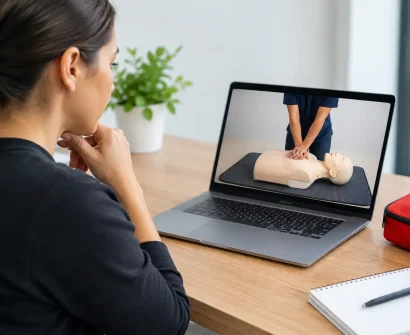
Blended BLS learning divides the course into two parts. You complete the knowledge portion online at your own pace, then attend an instructor-led skills session. During that in-person session, you practice and demonstrate core BLS skills, such as high-quality CPR, use of an AED, rescue breathing, and team-based response techniques when applicable.
The online portion usually covers the science and decision-making behind BLS. You can pause, replay, and review sections that require extra attention. That flexibility is especially valuable for busy nurses, students, parents, and professionals whose work schedules make a full-day classroom course difficult to attend.
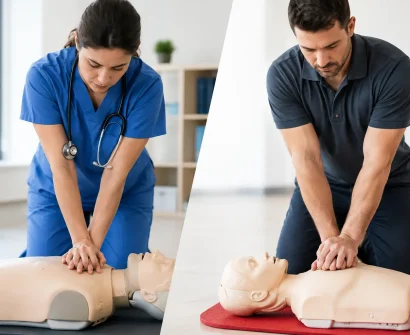
The in-person component remains essential. CPR is physical. You need to feel the correct hand position, compression depth and recoil, pace your compressions properly, and learn how to use an AED with confidence. A qualified instructor can observe your technique and correct details that a screen cannot fully assess.
Where Blended Learning Works Best
Blended learning is often a strong option for participants who are comfortable completing independent coursework and can reserve time for focused study. It also suits experienced learners renewing a certification, provided their employer or licensing body accepts the specific blended format.
It is not a shortcut. The online module requires concentration, and participants still need to arrive prepared to practice. Learners who skip through the academic portion or leave it until the last minute may feel less confident during the skills session.
What a Traditional Classroom BLS Course Offers
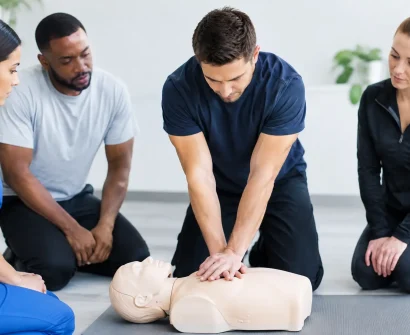
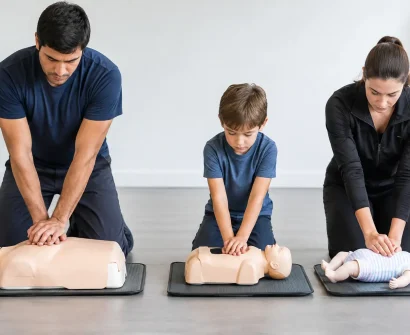
A classroom BLS course delivers the academic and hands-on portions in the same instructor-led setting. Participants learn the concepts, ask questions in real time, watch demonstrations, practice with equipment, and complete evaluations under the guidance of an instructor.
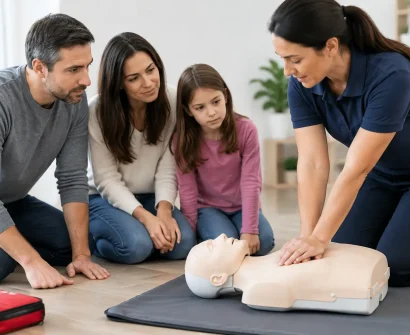
For many first-time learners, this structure is reassuring. Instead of interpreting a scenario alone, they can hear why a particular action matters and immediately apply it. The instructor can slow down, repeat a demonstration, and help participants connect the steps of BLS to the realities of an emergency scene.
Classroom learning also creates a shared training environment. Practicing alongside other participants can make team roles clearer, especially for healthcare professionals who may need to coordinate compressions, ventilation, AED use, and communication during a resuscitation response.
Where Classroom Learning Works Best
A full classroom course is often the best fit for people who learn through direct conversation, live demonstrations, and repeated guided practice. It can be particularly helpful for first-time BLS participants, anyone returning to training after a long gap, and learners who feel anxious about performing CPR correctly.
It may also be the simpler choice for an organization training a group of employees. Everyone receives the same instruction at the same time, which supports consistent workplace expectations and gives the instructor an opportunity to address job-specific questions.
Blended Learning vs. Classroom BLS: Which Is Better for Skill Confidence?
Skill confidence comes from more than watching a video or passing a written test. It grows when you practice the right actions, receive specific feedback, correct mistakes, and repeat the skill until the sequence feels familiar.
Classroom instruction has an advantage when a learner needs more coaching throughout the entire course. An instructor can notice uncertainty early, clarify concepts before practice begins, and adapt explanations based on the group. This can reduce hesitation for participants who are new to emergency response.
Blended learning has a different advantage: control over the knowledge portion. Some learners retain information better when they can review a rhythm, protocol, or response sequence more than once without feeling rushed. When the online work is completed carefully, the in-person skills session can be highly focused and productive.
The deciding factor is not the format alone. It is the quality of the hands-on training and the learner’s engagement. A motivated participant in a blended course can become very confident. A participant in a classroom course who does not pay attention or practice fully may not. Choose a course that includes meaningful skills practice, instructor evaluation, and a recognized certification that meets your needs.
Check Your Certification Requirement First
Before choosing a format, confirm what your employer, school, professional association, or licensing body requires. Some organizations specify a particular BLS provider, course level, or training format. Others accept either classroom or blended learning as long as the final certification includes an in-person skills evaluation.
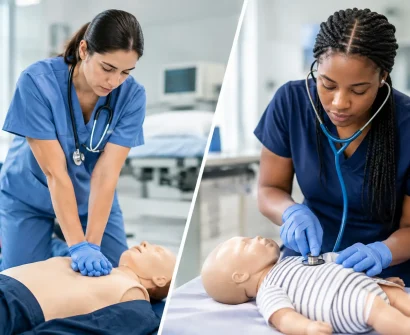
Healthcare professionals should be especially careful. Hospitals, clinics, long-term care settings, dental offices, and educational programs may have detailed requirements for certification acceptance and renewal dates. Do not assume that every online CPR course satisfies a professional BLS requirement. A course that provides only online instruction without a hands-on skills component may not be accepted.
If you are taking BLS for personal preparedness rather than employment, your choice may be more flexible. Still, practical instruction is worth prioritizing. In an emergency, knowing the steps matters, but being able to perform them matters more.
Consider Your Schedule, Experience, and Learning Style
Blended learning is useful when your schedule changes from week to week. You can complete the online section during quieter hours, then attend a scheduled skills session. This can reduce time away from work, school, or family responsibilities.
Classroom learning may be better if you prefer completing everything in one organized session. There is no separate online module to manage, and you can leave with the academic content and practical assessment completed together. For some people, that clear beginning-to-end structure makes training easier to retain.
Experience also matters. An experienced healthcare worker renewing BLS may appreciate the efficiency of blended learning. A new childcare provider, student, or family caregiver may prefer the added guidance of a classroom setting. Neither choice reflects how seriously you take preparedness. It reflects how you learn best.
Questions to Ask Before You Register
A course description should make the format and certification path clear. Before registering, ask whether the course includes an instructor-led skills session, whether it meets your workplace or licensing requirement, and how long the certification remains valid. Also confirm the time needed for online work and the expected length of the in-person session.
If you are registering a group, consider the practical needs of your team. A blended format may reduce time spent away from regular duties, while an in-person class may create a stronger shared learning experience. For workplaces, schools, and care settings, the best option is the one employees will complete successfully and remember when it counts.
Save a Life First Aid & CPR Training offers flexible BLS options designed to pair recognized instruction with the practical coaching participants need to respond effectively.
Choose the Format That Helps You Act
There is no universal winner between blended and classroom BLS. Blended learning offers flexibility and review time, while classroom learning provides continuous live guidance and a structured group experience. Both can be effective when the course includes credible instruction, hands-on practice, and an in-person skills assessment.
Choose the format that fits your requirement and gives you the strongest chance of learning well. When someone collapses, confidence comes from preparation: recognizing the emergency, calling for help, starting quality CPR, and using an AED without losing valuable time.