
Currently Empty: $0.00
A student falls hard on the playground, a colleague suddenly feels faint, or a child begins having trouble breathing during a class activity. In those first moments, a teacher’s calm actions can protect a life while emergency services are on the way. First aid certification for teachers provides practical skills for responding with confidence, not guesswork.
Teachers are responsible for far more than instruction. They supervise classrooms, hallways, field trips, sports activities, lunch periods, and school events where injuries and medical emergencies can happen without warning. The right training helps educators recognize a serious problem, provide appropriate early care, and communicate clearly with emergency responders, school staff, and families.
Why Teachers Need First Aid Training
Schools bring together children with different ages, medical histories, abilities, and levels of independence. Some students may have asthma, severe allergies, diabetes, seizure disorders, heart conditions, or individualized health plans. Others may experience an emergency for the first time at school, with no known risk factors at all.
A first aid course does not turn a teacher into a paramedic. It gives them a defined, practical role: assess the scene for safety, identify urgent warning signs, call for help, provide care within their training, and continue supporting the student until the next level of care arrives. That distinction matters. Effective first aid is not about doing everything. It is about doing the right things promptly and safely.
Training also strengthens a school’s broader emergency response plan. When teachers understand how to use personal protective equipment, direct another adult to call 911, retrieve an AED, or meet emergency responders at the entrance, the response becomes more organized. Those small actions can save critical minutes.
What First Aid Certification for Teachers Should Cover
The best course depends on the age group a teacher serves, their school’s policies, and any provincial, licensing, or school board requirements. Still, a comprehensive program for educators should address the emergencies most likely to arise in a school or child-care setting.
CPR and AED skills
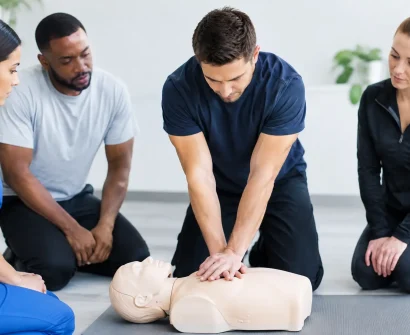
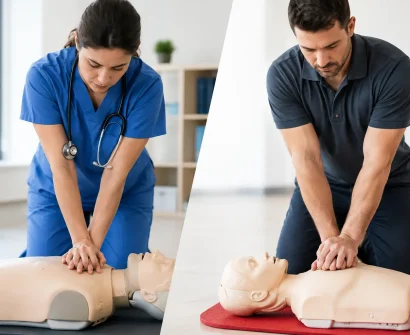
Cardiac arrest can occur in children and adults, including staff members, visitors, and parents. Teachers should know how to recognize unresponsiveness and abnormal breathing, activate emergency services, perform CPR, and use an automated external defibrillator. AEDs are designed to guide the rescuer through each step, but hands-on practice helps remove hesitation when a real emergency occurs.
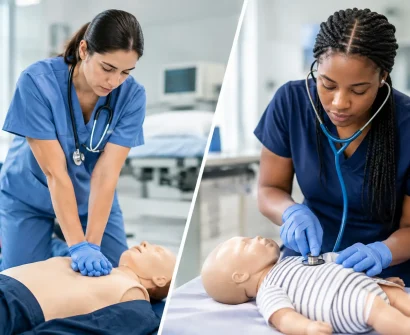
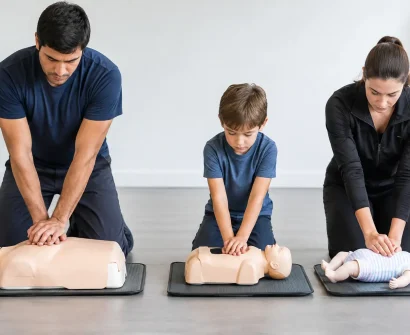
For educators working with young children, training should include age-appropriate CPR techniques for infants and children as well as adults. The correct method and force differ by age, so pediatric instruction is more than a minor add-on.
Choking, breathing, and allergy emergencies
Choking is a particular concern during meals, snacks, and early childhood programs. Teachers should practice recognizing whether a person has an effective cough or a complete airway blockage and know how to respond for an infant, child, or adult.
Training should also address breathing emergencies, including asthma symptoms and severe allergic reactions. In a suspected anaphylactic reaction, prompt use of an epinephrine auto-injector according to school policy and immediate activation of emergency services can be lifesaving. Staff need to understand that a person may appear to improve after epinephrine but still requires urgent medical assessment.
Common school injuries and medical events
Cuts, nosebleeds, burns, sprains, suspected fractures, head injuries, heat illness, seizures, fainting, and diabetic emergencies all require thoughtful first aid decisions. A strong course teaches participants how to assess the person, control bleeding, reduce further injury, monitor changes, and recognize when symptoms require urgent medical attention.
Head injuries deserve special attention in schools and sports settings. A student who seems fine immediately after a fall may later develop worsening headache, repeated vomiting, confusion, unusual behavior, or increasing drowsiness. First aid training helps teachers identify those red flags, follow school procedures, and avoid allowing a student to return to activity when a concussion is suspected.
Infection prevention and incident communication
First aid often involves body fluids, so teachers need straightforward infection-control habits: use gloves when available, wash hands, safely manage contaminated materials, and avoid direct contact when a barrier can be used. These practices protect both the injured person and the responder.
Equally useful is learning how to document what occurred. Accurate notes about the time, observed symptoms, care provided, and people notified support continuity of care and help schools follow their reporting procedures. Documentation should be factual, clear, and completed as soon as practical after the incident.
Choosing the Right Course for Your Role
Not every first aid course offers the same depth or meets the same requirements. Before registering, teachers should first confirm what their employer, school board, child-care licensing authority, or professional role requires. Some positions require emergency first aid, while others need standard first aid with CPR and AED training. Daycare educators may need a course specifically designed to meet child-care regulations.
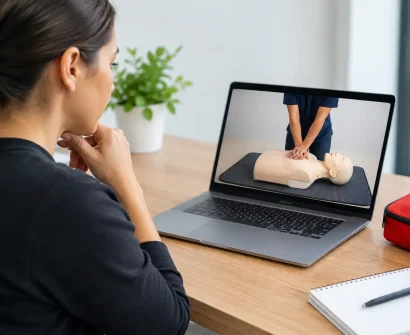
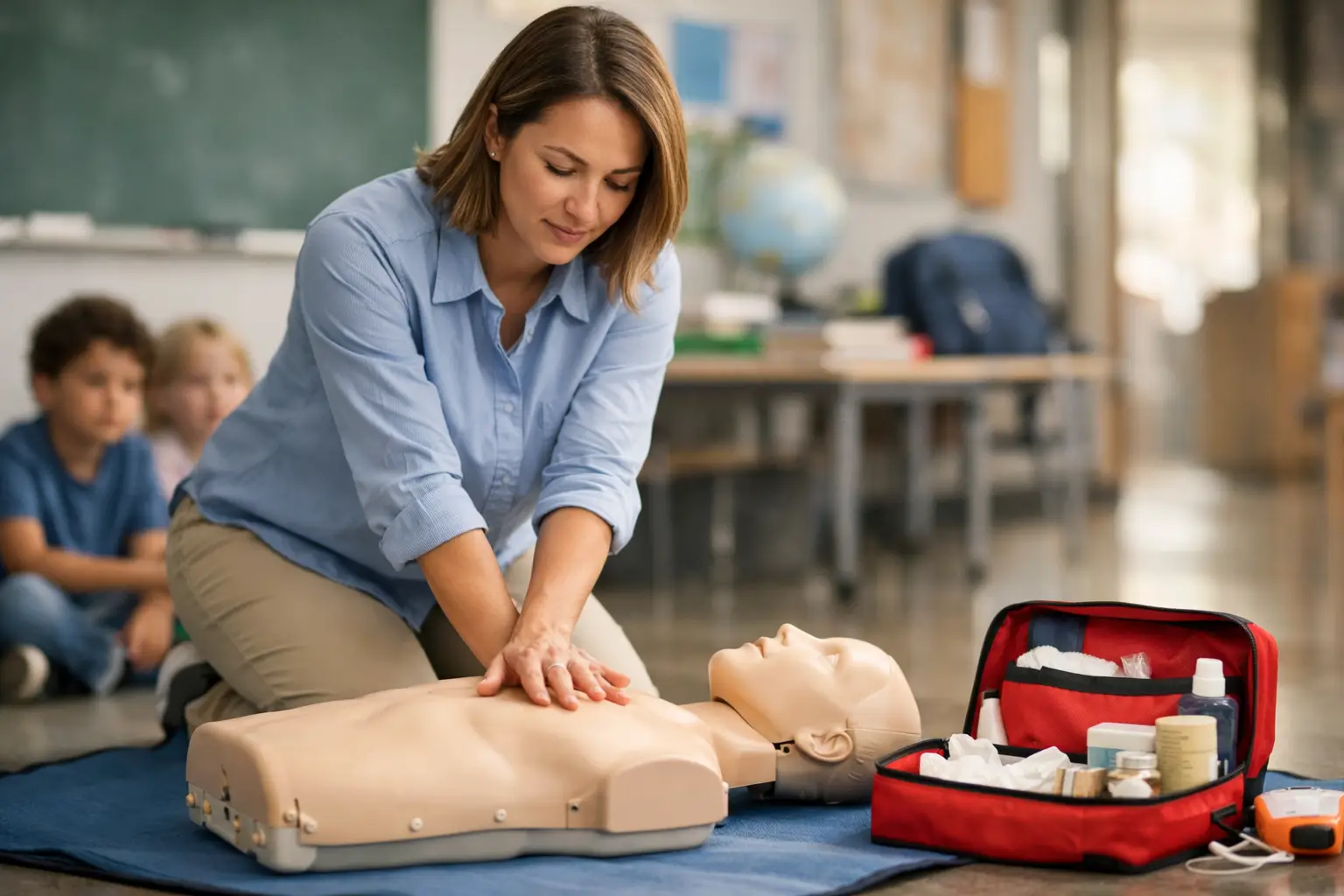
The course format matters, too. Online modules can be useful for learning foundational concepts and reviewing procedures at a convenient pace. But first aid and CPR are physical skills. Participants benefit from instructor feedback while practicing compressions, AED use, choking response, recovery position, and bleeding control. A blended course that pairs online learning with an in-person skills session can be a practical option, provided it meets the required certification standard.
When comparing programs, look for recognized certification, clear course duration, pediatric content when relevant, and an instructor-led skills component. Ask whether the course includes CPR and AED training, whether the certificate is accepted by your employer, and how long the certification remains valid. Requirements can differ across Quebec programs and workplaces, so confirmation before enrollment prevents an avoidable mismatch.
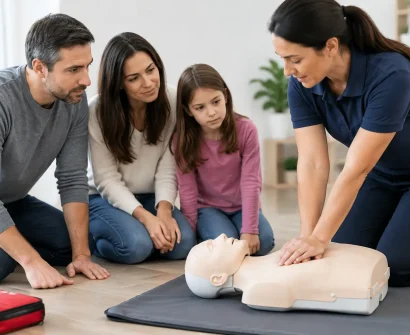
For a full school team, coordinated training has an added advantage. Teachers, administrators, educational assistants, coaches, lunch supervisors, and office staff can practice the same response sequence and learn where emergency equipment is kept. Save a Life First Aid & CPR Training offers practical, instructor-led options that can help educational teams build that shared readiness.
Certification Is the Start, Not the Finish
Skills fade when they are not used. A teacher may remember the general idea of CPR years later but hesitate over compression depth, AED pad placement, or the order of actions during a choking emergency. Renewing certification on schedule keeps skills current and gives participants a chance to practice updated guidance.
Between courses, schools can reinforce readiness without turning staff meetings into medical seminars. Review the location of first aid kits and AEDs, make sure emergency contact information is accessible, discuss how to summon help from the playground or gym, and clarify who is responsible for calling 911, supervising other students, and notifying the office. These conversations turn individual certification into a functioning team response.
Teachers should also understand the limits of their role. Follow the school’s policies, individual student care plans, and local emergency procedures. Do not delay emergency services while searching for a perfect explanation of what is happening. If a student has severe symptoms, loses consciousness, has difficulty breathing, experiences a seizure that is prolonged or unusual for them, or shows signs of a serious injury, call for emergency help promptly.
Building a Safer Learning Environment
First aid readiness changes the atmosphere of a school in a quiet but meaningful way. It reassures staff that they have a plan when something goes wrong, and it helps families know their children are surrounded by adults who can act decisively in an emergency.
The goal is not to make teachers anxious about every scraped knee or cough. It is to give them the judgment to separate minor concerns from urgent ones and the skills to respond when seconds matter. A current certification, realistic hands-on practice, and a well-organized school emergency plan give educators something every classroom needs: the confidence to protect lives when learning must pause.