
Currently Empty: $0.00

A person suddenly collapses at a family gathering, in a school hallway, at the gym, or on a busy workplace floor. They are unresponsive and not breathing normally. In that moment, knowing what is CPR and why everyone should learn it can turn uncertainty into immediate, life-saving action.
CPR is not reserved for doctors, paramedics, or hospital staff. Cardiac arrest can happen anywhere, and the people closest to the person are often family members, coworkers, teachers, coaches, or bystanders. Professional help may be on the way, but the first few minutes belong to the people already there.
What Is CPR?
CPR stands for cardiopulmonary resuscitation. It is an emergency procedure used when a person is unresponsive and not breathing normally, or is only gasping. CPR combines chest compressions and, depending on the situation and the rescuer’s training, rescue breaths.
The purpose is straightforward: chest compressions help move a small but critical amount of oxygen-rich blood to the brain and other vital organs until advanced care arrives. CPR does not usually restart the heart on its own. Instead, it helps preserve the person’s chance of survival while someone calls emergency services, retrieves an automated external defibrillator (AED), and trained responders take over.
An AED is a portable device that analyzes the heart’s rhythm and, when appropriate, delivers a shock to help restore a rhythm that can support life. CPR and early AED use work together. One keeps blood circulating; the other may address a shockable cardiac rhythm.
Why Everyone Should Learn CPR
Cardiac arrest is not the same as a heart attack, although a heart attack can sometimes lead to cardiac arrest. During cardiac arrest, the heart suddenly stops pumping blood effectively. The person may collapse, become unresponsive, and stop breathing normally. Without rapid intervention, brain injury and death can occur within minutes.
That urgency is the strongest reason to learn CPR. Emergency medical services provide highly skilled care, but response times vary based on location, traffic, weather, building access, and the number of calls happening at once. A bystander who starts CPR immediately can provide meaningful help before responders arrive.
Learning CPR also changes how people respond emotionally. Many untrained bystanders hesitate because they are afraid of hurting the person, doing something incorrectly, or misreading the situation. A practical course replaces some of that fear with a clear sequence: check for responsiveness, call emergency services or direct someone else to call, get an AED, and begin care.
In a true cardiac arrest, doing nothing is the greater risk. Even if compressions are not perfect, taking prompt action can give the person a better chance while help is coming.
CPR Is a Community Skill, Not Just a Workplace Requirement
Some people first take CPR because their employer, licensing body, school program, or daycare role requires certification. That training matters, but its value goes far beyond a document or renewal date.
Parents and grandparents may use their skills at home. Teachers and coaches may be the first adults available during a student emergency. Coworkers may respond to a colleague in an office, warehouse, restaurant, or construction setting. Healthcare professionals rely on advanced and team-based resuscitation skills, while non-medical learners need the confidence to recognize an emergency and begin basic care.
When more people in a community know CPR, the chance that a capable bystander is nearby increases. That is how individual training creates a safer workplace, school, sports program, and neighborhood.
What CPR Training Actually Teaches
A quality CPR course is not just a presentation about emergencies. It gives participants a chance to practice the actions that are difficult to learn from a screen alone.
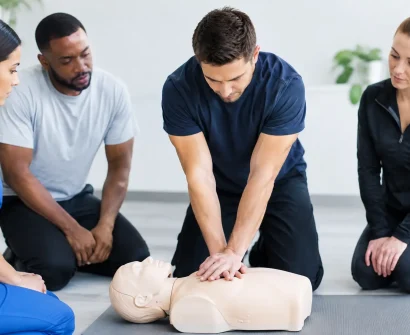
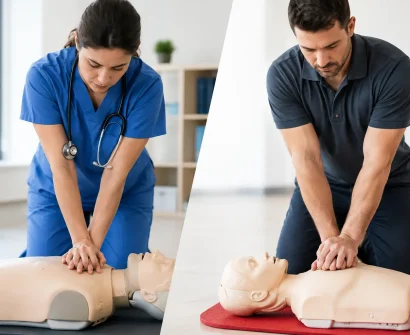
In hands-on training, learners practice locating the correct hand position, delivering chest compressions at an appropriate rate and depth, allowing the chest to recoil, and minimizing interruptions. They learn how to use an AED safely by following its voice prompts. Training also covers how to communicate clearly, assign tasks, and stay focused when other people are anxious or distressed.
For adults, hands-only CPR may be an appropriate response for many sudden witnessed collapses. It involves continuous chest compressions without rescue breaths. However, rescue breaths remain especially important in many emergencies involving children, infants, drowning, choking, overdose, or breathing-related causes of cardiac arrest. The right approach depends on the person’s age, the likely cause, the rescuer’s training, and local emergency guidance.
That is why a course should teach more than one memorized scenario. Participants need to understand how to recognize abnormal breathing, when to use an AED, and when a situation calls for different care.
CPR for Adults, Children, and Infants Is Not Identical
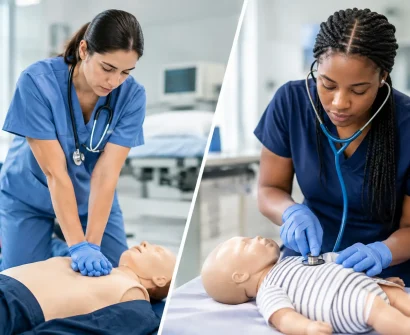
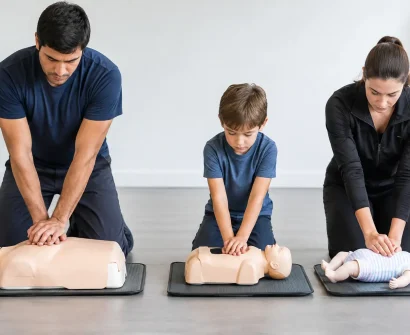
The core goal of CPR stays the same across age groups, but the technique changes. Children and infants have smaller bodies, and many pediatric emergencies begin with respiratory problems rather than a sudden primary heart rhythm issue. Training helps rescuers adjust their approach appropriately.
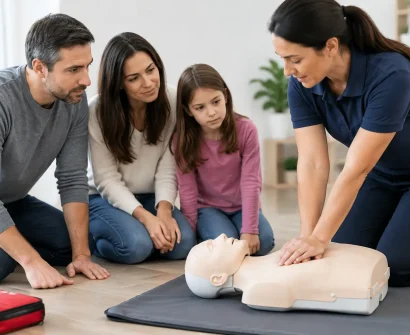
For example, infant CPR uses much gentler, more precise compression techniques than adult CPR. Pediatric rescue breathing is also particularly significant because oxygen deprivation is often part of the emergency. A parent, babysitter, daycare educator, or swim instructor benefits from learning these differences through supervised practice rather than relying on memory during a crisis.
People who work in healthcare settings may need Basic Life Support certification or advanced programs such as ACLS, PALS, or PEARS. These courses focus on clinical roles, team response, and more complex decision-making. Most community members, however, benefit from a recognized CPR and AED course that includes adult, child, and infant skills when relevant to their home or work responsibilities.
The AED Is Designed for Ordinary People to Use
A common concern is that an AED looks complicated or could be dangerous in untrained hands. In reality, modern AEDs are built to guide rescuers step by step. Once the pads are placed on the person’s bare chest, the device analyzes the rhythm and tells users whether a shock is advised.
The AED will not deliver a shock unless it detects a rhythm that may require one. The key is to turn it on quickly, follow the spoken instructions, make sure no one is touching the person during analysis or shock delivery, and resume CPR as directed.
Finding an AED quickly is easier when workplaces, schools, gyms, community facilities, and residential buildings make their devices visible and maintain them properly. Training gives people the confidence to use one rather than waiting for someone else to take charge.
Certification Builds Confidence, but Practice Keeps Skills Ready
CPR certification is valuable because it provides structured instruction, hands-on assessment, and a recognized standard for workplaces and professional requirements. Still, certification is the beginning of preparedness, not the finish line.
Skills can fade when they are not used. Reviewing the emergency response sequence, noticing where AEDs are located in places you visit, and renewing training on schedule can help keep the information accessible. For healthcare professionals and others with regulatory obligations, renewal also helps ensure their credentials remain current.
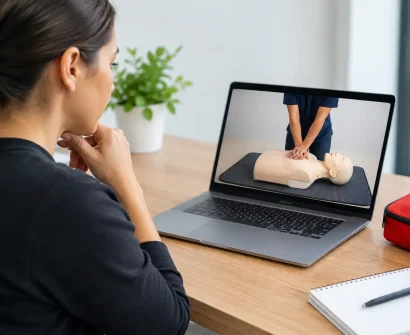
Blended learning can be a practical option for busy learners. It allows participants to complete certain knowledge components online before attending an instructor-led session for physical skills practice and evaluation. The format can save time, but the hands-on portion remains essential. CPR is physical, time-sensitive work, and correct technique is best learned with feedback.
Choosing the Right CPR Course
The best course depends on who you are and where you may need to respond. A parent may want adult, child, and infant CPR with AED training. A workplace team may need a program that meets occupational health and safety requirements. A nurse, medical student, or dental professional may need BLS or an advanced certification aligned with professional standards.
Look for instructor-led practice, current course content, realistic scenarios, and clear guidance on certification requirements. Save a Life First Aid & CPR Training offers learning options for first-time participants, renewing professionals, workplaces, and community members who want practical skills they can use when seconds matter.
A Skill You Hope Not to Use, but Will Be Grateful to Have
No one takes a CPR course expecting to face a cardiac emergency. People train because emergencies do not schedule themselves around convenient times, familiar places, or medical professionals.
Learning CPR means you can recognize a crisis, call for help, start chest compressions, use an AED, and support a person until emergency responders arrive. That preparation cannot remove the fear of an emergency, but it can give you a purposeful next step when someone’s life may depend on it.