
Currently Empty: $0.00
Most people asking if CPR and first aid training is hard are really asking something more personal: Will I be able to do this correctly when it matters? That is a fair concern. Emergency response training carries real responsibility, but for most learners, it is far more approachable than they expect.
The short answer is no, CPR and first aid training is not usually hard in the way people fear. It is structured, guided, and designed for real people, including complete beginners. What makes it feel challenging is not usually the course material itself. It is the pressure people imagine, the medical terms they do not know yet, and the idea of having to act fast in a crisis.
That distinction matters. A good course is built to take unfamiliar skills and make them practical. You are not expected to arrive already confident. The training is there to build that confidence.
Is CPR and first aid training hard for beginners?
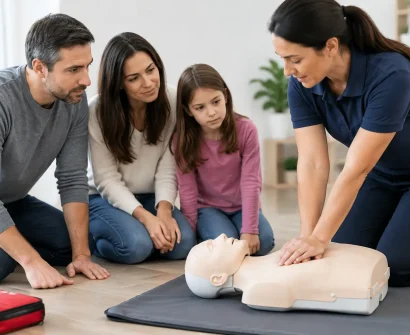
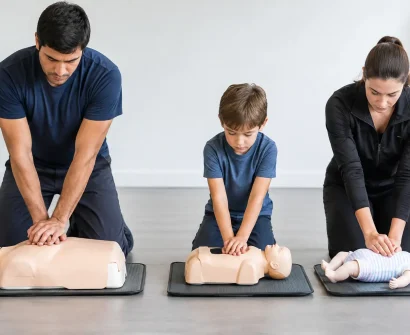
For beginners, the hardest part is often the first 20 minutes. You walk into a class or open the online portion wondering if everyone else already understands the material. In reality, many learners are starting from the same place. Parents, teachers, office staff, coaches, childcare workers, and first-time healthcare students often begin with little or no hands-on emergency response experience.
Most entry-level CPR and first aid courses are designed with that in mind. Instructors do not assume advanced medical knowledge. They teach clear response steps, explain why each action matters, and guide learners through hands-on practice before any skills evaluation happens.
That does not mean the course is effortless. Some parts require focus. You need to remember a sequence, practice proper hand placement, learn when to call for help, and understand how to respond to common emergencies like choking, bleeding, or an unresponsive person. But this is applied learning, not abstract theory. For many people, that actually makes it easier.
When you can see a skill, practice it, and repeat it, it tends to stick.
What feels hard during CPR and first aid training
The answer depends on the course level and on your own background. A basic community course will feel different from a healthcare provider course such as BLS, ACLS, or PALS. Still, a few common challenges show up across most programs.
The physical side of CPR
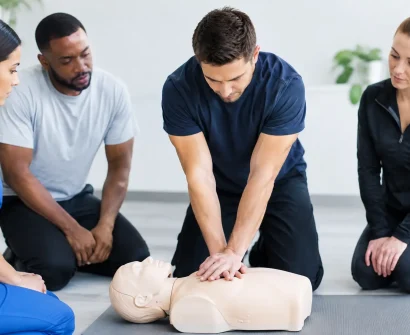
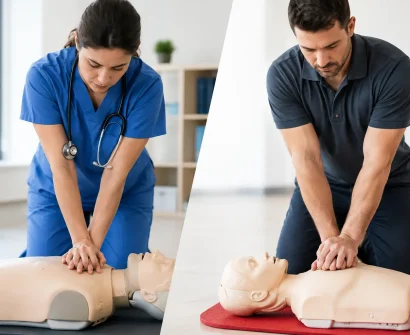
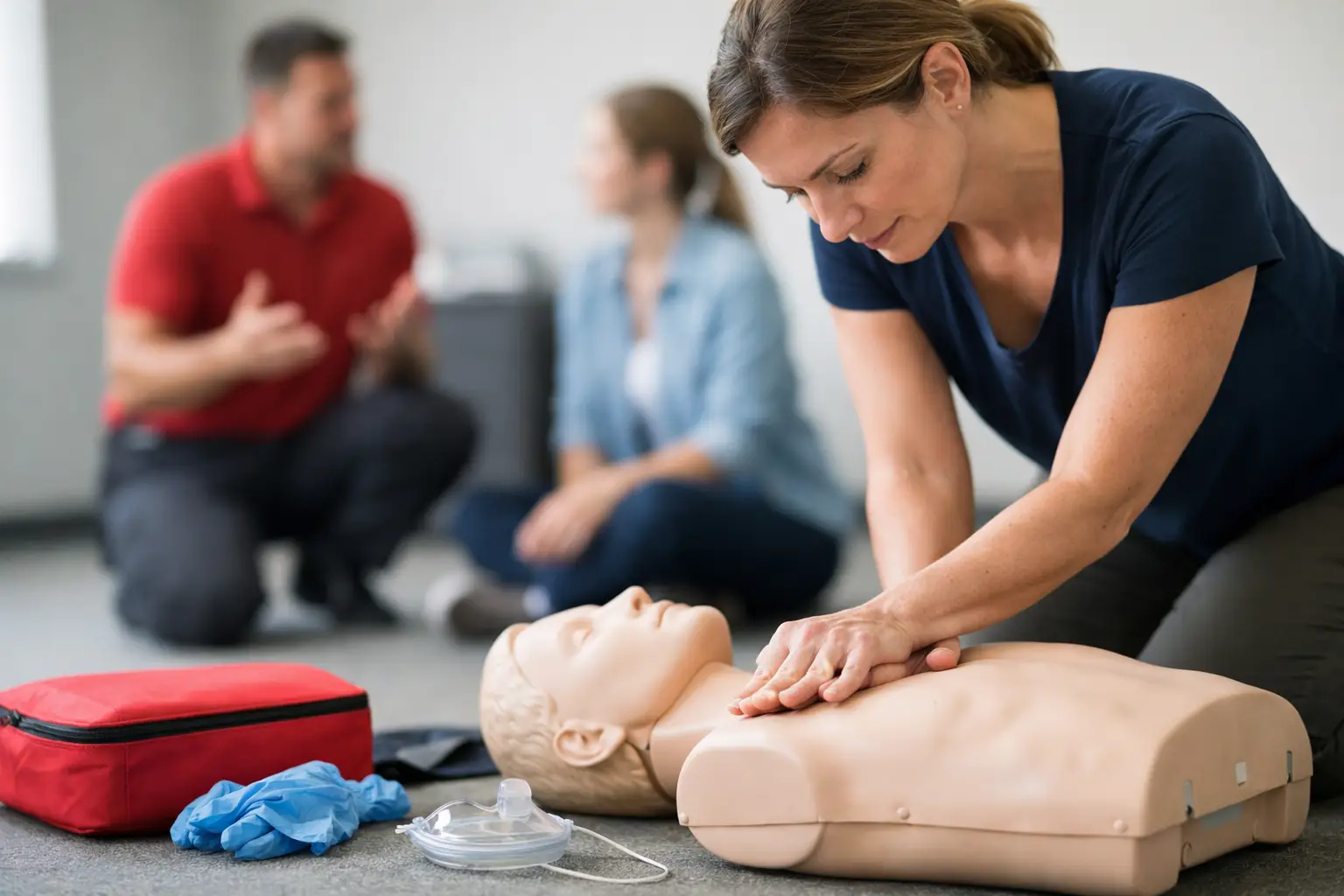
Chest compressions can be tiring. Good CPR requires depth, rhythm, and consistency, and learners are often surprised by how physical it feels. That does not mean you need to be especially strong to pass a course, but it does mean technique matters. Instructors help you adjust your body position so you can use leverage rather than just arm strength.
For some learners, this is the most demanding part of training. It is also one of the reasons hands-on practice matters so much. You learn what effective compressions actually feel like.
Remembering the steps
People sometimes worry they will have to memorize too much. There is some recall involved, especially around scene safety, emergency activation, AED use, and first aid priorities. But strong courses do not teach by dumping information on you. They teach by repeating key actions until the response flow starts to feel natural.
If you have ever learned fire drills, workplace safety procedures, or driving rules, you already understand the basic idea. Emergency training is about building a reliable response pattern, not reciting a textbook.
Managing nerves
This is the piece many people underestimate. Even in training, some learners feel anxious about being watched or tested. They do not want to make mistakes, especially with life-saving skills.
That nervousness is normal. In fact, working through it is part of the value of training. Practice in a controlled setting helps reduce hesitation later. By the end of a solid course, learners are usually calmer because the situation no longer feels completely unknown.
Why healthcare courses can feel harder
If you are taking a professional-level course, the answer to is CPR and first aid training hard may be a little different. It can be more demanding, especially when certification is tied to job requirements, licensing, or clinical performance.
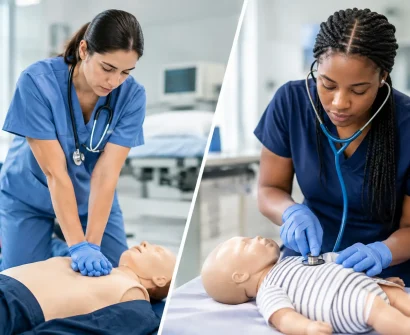
Healthcare provider courses often move faster and expect tighter performance standards. BLS, for example, includes more precise team response elements than a general public CPR class. ACLS and PALS add rhythm recognition, medication knowledge, advanced algorithms, and coordinated resuscitation decision-making. Those are not beginner courses, and they are not meant to be.
Still, harder does not mean unreachable. These programs are built for professionals and students who need structured, relevant training. If you prepare, participate, and practice, they are manageable. The challenge comes from the level of responsibility and detail, not from impossible instruction.
That is also why choosing the right course matters. A parent who wants home emergency skills does not need the same training pathway as a nurse renewing clinical credentials. Matching the course to the learner keeps the experience productive instead of overwhelming.
What makes training easier than people expect
A lot of the fear around first aid and CPR comes from imagining chaos. Actual training is the opposite. Good instruction breaks emergencies into steps you can follow.
You learn how to assess the scene, check the person, call for help, begin CPR if needed, use an AED, and provide first aid based on the injury or illness. The structure reduces confusion. Instead of wondering what to do, you start to recognize a process.
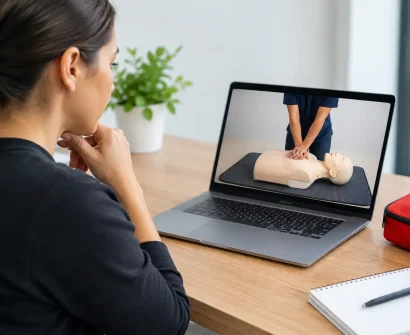
The learning environment also helps. In-person sessions give you immediate feedback. Blended formats let you work through theory at your own pace before practicing in class. Renewal and recertification learners often find that skills come back faster than expected once they start reviewing them.
This is where a strong training provider makes a real difference. Clear instruction, realistic scenarios, and supportive coaching can turn a stressful topic into one that feels practical and achievable.
How to make CPR and first aid training feel less difficult
If you are worried about the course, a little preparation goes a long way. You do not need to study like you are preparing for a major exam, but you can make the experience smoother.
Start by choosing the right level. If you only need personal preparedness or workplace basics, do not register for an advanced clinical course. If you need professional certification, make sure you know the exact requirement so you can prepare for the right standard.
Next, show up ready to participate. Wear comfortable clothes if there is an in-person skills session, since you may be kneeling and practicing compressions. If your course includes an online component, complete it carefully rather than rushing through it. That foundation helps the hands-on portion make sense.
Most importantly, give yourself permission to learn by repetition. Few people perform everything perfectly the first time. Training is the place to ask questions, correct your technique, and build confidence before a real emergency happens.
Difficulty is not the same as readiness
There is an important trade-off here. If a course felt so easy that it never challenged you at all, it probably would not prepare you very well. Some pressure in training is useful. It helps you remember what to do when stress is high.
The goal is not to make learners uncomfortable for the sake of it. The goal is to create enough realism and accountability that the skills become dependable. That is why skills checks, instructor feedback, and scenario-based practice matter. They move training from passive information to action.
At Save a Life, that practical approach is central to the learning experience. Learners do not just sit through theory. They build the ability to respond.
So, is CPR and first aid training hard?
For most people, no. It is serious training, but it is meant to be learnable. Beginners can succeed. Professionals can meet high standards. Nervous learners can become capable learners.
Some parts will challenge you. CPR takes effort. First aid scenarios require attention. Advanced courses demand more detail and sharper performance. But challenge is not the same as being too hard. In most cases, it is exactly what helps the skills stick.
If you are thinking about taking a course, do not let fear of difficulty stop you. The better question is not whether training feels hard at first. It is whether you would rather face an emergency with no preparation at all. A few hours of focused learning can change the answer you are able to give when someone needs help most.