
Currently Empty: $0.00
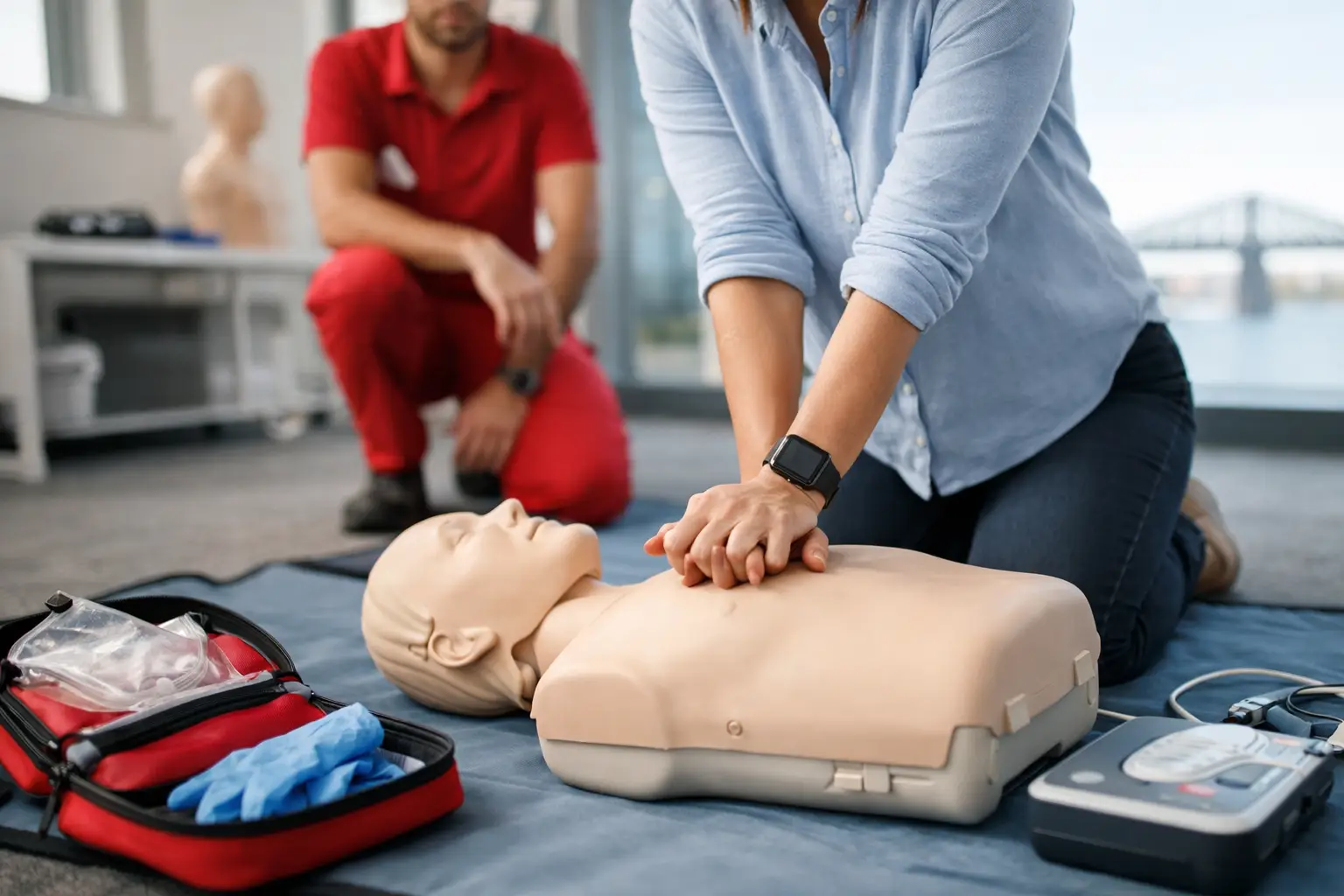
A cardiac emergency does not wait for a convenient moment. It can happen at a community rink, in a dental office, at a daycare, or around your own kitchen table. Knowing where to get CPR certification in Laval, Quebec, is about more than finding the closest class. It is about choosing training that gives you practical skills, meets the requirements that apply to you, and helps you respond with confidence when every second matters.
Laval offers options for first-time learners, parents, workplace teams, caregivers, and healthcare professionals. The right choice depends on why you need certification, what level is required, and whether the training includes meaningful hands-on practice. A course that is ideal for a grandparent may not meet the needs of a nurse renewing a clinical credential.
Where to Get CPR Certification in Laval, Quebec
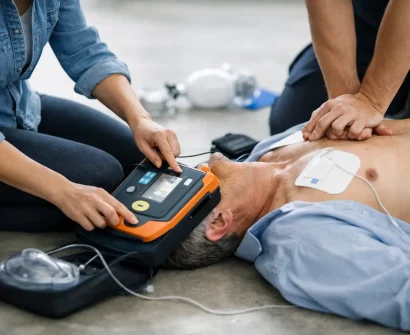
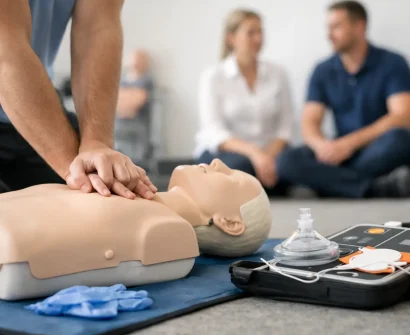
Start with a recognized first aid and CPR training provider that clearly identifies the course level, delivery format, practical components, and certificate issued upon successful completion. For many participants, a local classroom is the best setting because CPR is a physical skill. You need the opportunity to practice chest compressions, use an AED training device, work through choking scenarios, and receive feedback from a qualified instructor.
Save a Life First Aid & CPR Training offers instructor-led and blended certification courses from its Laval location at 310-400 Boulevard Saint-Martin Ouest. The program selection includes CPR and AED training, Emergency First Aid, Standard First Aid, BLS, ACLS, PALS, PEARS, and daycare-focused training. This range matters because it allows learners to select a course based on their actual role rather than trying to make one general class fit every need.
When comparing providers, look beyond the course name. Confirm that the credential is accepted by your employer, school, professional association, licensing body, or daycare organization before registering. Requirements can vary between workplaces and professions, particularly in healthcare and childcare.
Choose the certification level before choosing the date
The fastest way to narrow your search is to identify the level of training you need. If an employer gave you a specific requirement, ask whether they require a particular provider, certification standard, CPR level, first aid component, or renewal format.
For many members of the public, a Heartsaver-style CPR AED course or a combined first aid and CPR course is a sensible fit. These programs typically focus on recognizing emergencies, calling for help, providing CPR, using an automated external defibrillator, and responding to choking. They are valuable for parents, grandparents, coaches, teachers, fitness instructors, volunteers, and caregivers.
Emergency First Aid is often appropriate when a workplace or organization needs foundational emergency response skills in addition to CPR. Standard First Aid generally covers a broader range of medical emergencies and injury situations, making it a common requirement for workplaces, camps, schools, and community settings.
Healthcare providers usually need a more specific credential. Basic Life Support, often called BLS, is designed for professionals who may respond as part of a clinical team. It emphasizes high-quality CPR, team dynamics, ventilation skills, and rapid use of an AED. Nurses, physicians, dental professionals, paramedics, respiratory therapists, medical students, and allied health workers should confirm the exact BLS standard required by their organization.
Advanced courses such as ACLS, PALS, and PEARS are not substitutes for basic CPR training. They are designed for professionals whose clinical duties require advanced assessment and treatment knowledge. If you are pursuing one of these courses, check prerequisites carefully. Some advanced programs require a current BLS credential and may be most appropriate for participants with relevant clinical experience.
Daycare, school, and workplace requirements can differ
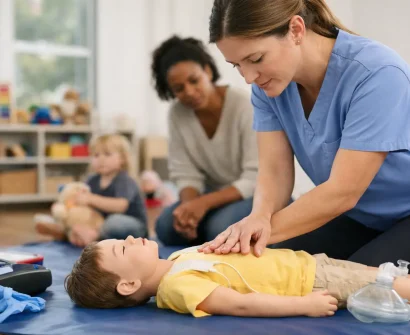
Childcare professionals should not assume that any CPR card will meet daycare requirements. Daycare Emergency First Aid courses are structured around the realities of caring for infants and children, including pediatric CPR, choking, and emergency response considerations. Before enrolling, verify the required course length and certification standard with your employer or regulatory authority.
Schools, businesses, and organizations should also think beyond individual compliance. A good workplace program should prepare staff for the kinds of incidents that could realistically occur on site. An office may prioritize sudden cardiac arrest, fainting, allergic reactions, and choking. A construction, recreation, or childcare environment may need broader first aid coverage and a larger group of trained responders.
What to Look for in a Laval CPR Course
A certificate is meaningful only when the training behind it is credible and useful. The strongest programs balance clear instruction with repeated, guided practice. You should leave knowing what to do first, not just remembering a few terms from a slide presentation.
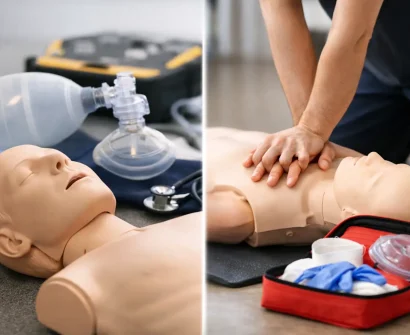
Ask whether the course includes hands-on skills assessment. A quality CPR class should give you time to practice compression depth and rate on a manikin, apply AED pads in a simulated emergency, and work through realistic response steps. Instructor feedback is especially helpful for first-time learners, because even small adjustments in hand placement, body position, or pacing can improve CPR quality.
Also consider class size and learning environment. Smaller or well-managed sessions can provide more personal coaching. This is valuable for anyone who feels nervous about practicing in front of others, as well as for participants returning after a long gap between certifications.
Language availability may be another practical consideration in Laval and the Greater Montreal area. If you are registering a team, make sure participants can fully understand the instruction and assessment process. Clear communication is essential in emergency training, where learners must absorb information quickly and act decisively.
Classroom, Blended Learning, or Private Group Training?
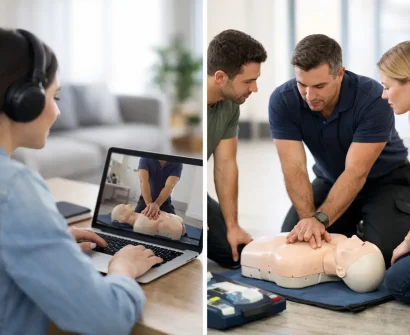
The best format depends on your schedule and the certification you need. Classroom courses provide direct instruction and hands-on practice in one session. They are often a strong option for learners who want real-time coaching or who prefer completing the course in a structured environment.
Blended learning combines online coursework with an in-person skills session. It can offer flexibility for busy professionals, parents, and workplace teams, but it still requires focused preparation. The online portion should be completed before the practical session, and the in-person component should never be treated as a formality. That is where participants demonstrate the skills that may one day protect a life.
Private group training can be especially useful for businesses, schools, daycare centers, sports organizations, and community groups. Training together can help a team establish a shared response plan: who calls 911, who retrieves the AED, who meets emergency responders, and how staff communicate during a crisis. Group training is often more effective when scenarios reflect the organization’s actual environment.
New Certification, Recertification, or Renewal?
If your certification is nearing expiration, do not automatically assume you qualify for a shorter renewal course. Eligibility can depend on the type of credential you hold, whether it is still current, and the rules of the issuing organization. Bring your existing certification details when registering, and ask which course is appropriate.
A recertification course can save time for eligible participants, but it is not always the best choice. If you have not used your skills in years, have changed roles, or feel uncertain about CPR steps, taking a full course may provide more valuable practice. CPR standards and course content can also change over time, so a thorough refresher can restore confidence.
Healthcare professionals should plan ahead rather than waiting until the final week before an employment deadline. Course availability, clinical schedules, and documentation requirements can create unnecessary pressure. Booking early gives you time to complete any required online components and resolve questions about accepted credentials.
Questions to Ask Before You Register
Before you commit to a course, confirm the basics: which certification you will receive, how long it is valid, whether hands-on skills are included, what you need to bring, and whether there are prerequisites. If the course is for employment or licensing, ask your supervisor or regulatory contact for written requirements whenever possible.
You should also ask what happens if you need to reschedule, arrive late, or do not complete a required pre-course assignment. These details may feel minor until a busy workweek, family obligation, or unexpected schedule change gets in the way.
Cost matters, but the lowest-priced option is not always the best value. A course that lacks the required credential or provides too little practical training may force you to take another class later. The better investment is training that fulfills your requirement and leaves you prepared to act.
CPR certification is not simply a box to check. It is a commitment to being ready when someone nearby needs immediate help. Choose a Laval course that fits your responsibilities, practice the skills seriously, and keep your certification current. The confidence you build in the classroom can become a life-changing response when it matters most.