
Currently Empty: $0.00
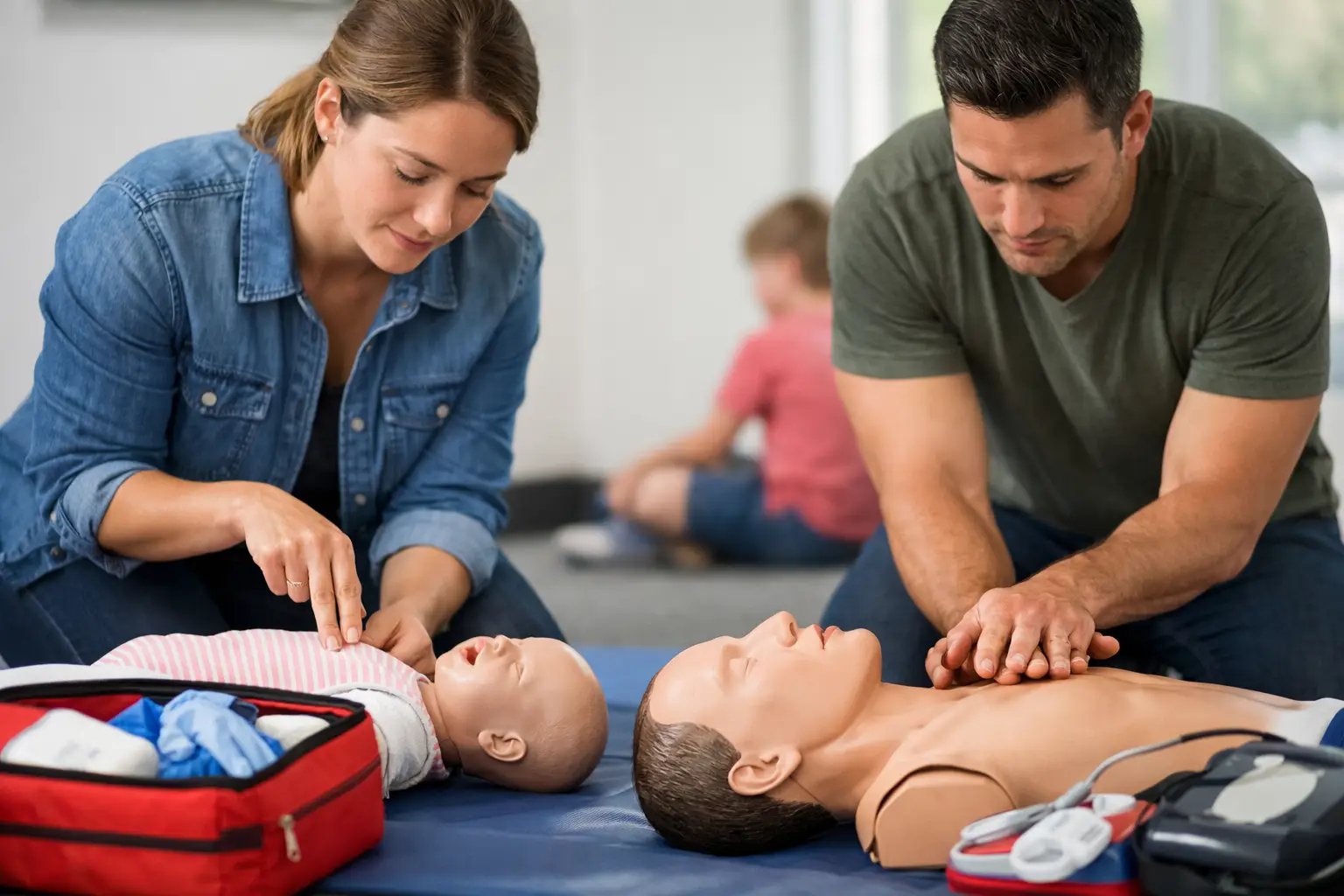
A child can go from laughing at the dinner table to choking in a matter of seconds. A fever can become frightening overnight. A fall at the playground can leave a parent trying to decide whether to comfort, call for help, or both. These are the moments that explain why every parent should take a CPR and first aid course: the first few minutes of an emergency are too important to spend guessing.
Parents do not need to become healthcare professionals. They need practical skills, a clear sequence of actions, and the confidence to use them while help is on the way. Quality training turns a frightening unknown into a situation where you can recognize what matters, act promptly, and communicate clearly with emergency services.
Why Every Parent Should Take a CPR and First Aid Course
Parenting comes with plenty of decisions, but emergency care is not something that should depend on a social media video, a vague memory from school, or a late-night internet search. CPR and first aid courses provide guided practice with an instructor, allowing parents to ask questions, correct technique, and rehearse the decisions they may need to make under pressure.
The purpose is not to promise that emergencies will feel easy. They will not. The purpose is to replace panic with an action plan. When a child is unresponsive, choking, bleeding, having a seizure, or showing signs of a severe allergic reaction, knowing what to do first can make a meaningful difference.
Training also teaches parents when not to wait. A child who is struggling to breathe, becomes suddenly unresponsive, has blue or gray lips, experiences a serious injury, or has a rapidly worsening allergic reaction needs urgent attention. Learning to identify these warning signs helps parents seek emergency care sooner rather than second-guessing themselves.
Children Are Not Simply Smaller Adults
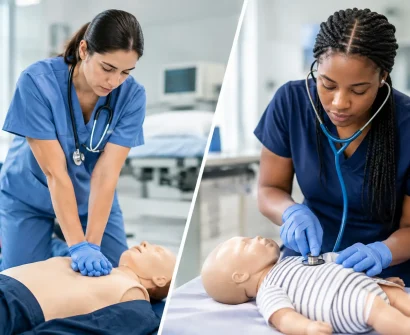
Pediatric emergencies require a different approach. An infant’s airway, body size, and likely causes of illness or injury are different from those of a teenager or adult. The technique used to help a choking infant is not the same as the technique used for a choking adult. CPR compressions, rescue breaths, and positioning must be adapted to the child’s age and size.
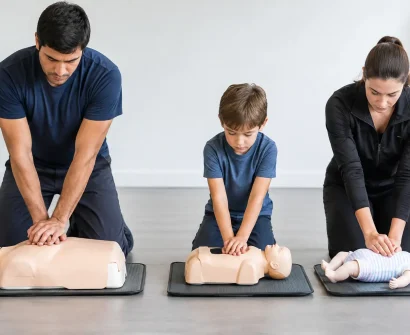
A well-designed course makes those distinctions clear. Parents should leave knowing how to respond to an infant, child, and adult, because a household may include more than one age group and an emergency can happen anywhere.
This is especially valuable for new parents, grandparents, babysitters, and caregivers who may not have handled an infant before. The first time you see a baby gag, cough, or cry after feeding can be stressful. Training helps participants understand the difference between coughing effectively and true choking, as well as when immediate action is needed.
Hands-On Practice Builds Usable Confidence
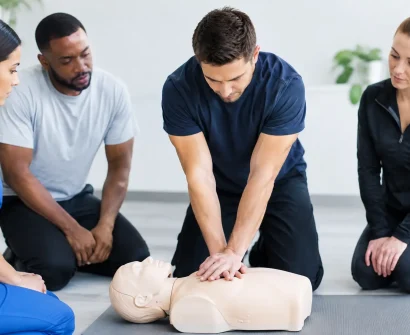
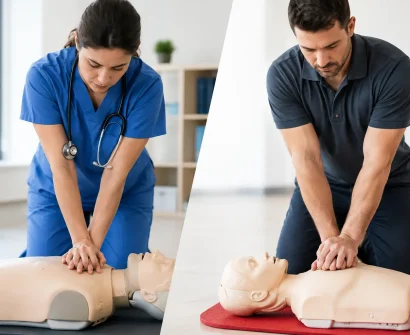
Reading about CPR is not the same as performing it. In an emergency, people must remember hand placement, compression depth and rate, how to use an AED, and how to work through a sequence of steps. These skills are easier to recall when they have been practiced on training manikins with feedback from a qualified instructor.
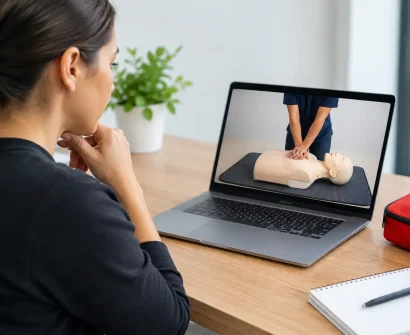
Hands-on learning is one reason an in-person component matters, even when a course includes online instruction. Blended learning can be a convenient option for busy families, but the practical session is where participants build muscle memory and receive coaching on their technique.
A good instructor also creates space for realistic questions. What if you are alone with two children? What if you are unsure whether a child is breathing normally? What if the child vomits during CPR? What should you tell the 911 dispatcher? These details are often what parents remember when stress makes it hard to think clearly.
Confidence should not be confused with overconfidence. First aid training teaches parents to assess the scene for danger, call for emergency support when needed, provide care within their training, and continue monitoring the child. It also reinforces that professional medical evaluation may still be necessary even when a child seems better after an incident.
CPR Is Only Part of Being Prepared
CPR matters when someone is unresponsive and not breathing normally, but many family emergencies involve other first aid skills. A complete course gives parents a broader foundation for common situations at home, school, sports practices, and family outings.
Depending on the course level, parents may learn how to respond to choking, severe bleeding, burns, fractures, head injuries, seizures, fainting, poisoning concerns, diabetic emergencies, heat illness, and allergic reactions. They also learn how to recognize the signs of stroke and heart attack in adults. That knowledge can protect more than children. It can help a parent respond when a grandparent, neighbor, coach, or stranger needs assistance.
First aid training also supports better preparation before an emergency occurs. Parents often come away motivated to check smoke alarms, keep medications secured, review allergy plans, update emergency contacts, and make sure caregivers know where first aid supplies are stored. These are small actions, but they reduce confusion when seconds count.
An AED Is Designed for Everyday Bystanders
Many parents worry that an automated external defibrillator, or AED, is too complicated to use. In reality, modern AEDs are designed to guide a bystander through the process with clear voice and visual prompts. The device analyzes the heart rhythm and only advises a shock when appropriate.
CPR and AED training helps parents become comfortable with the process before they encounter one in a school, recreation center, airport, workplace, or public venue. Participants learn to send someone for the AED, expose and dry the chest if necessary, apply pads correctly, and minimize interruptions to chest compressions.
No parent expects to use these skills. That is exactly why learning them ahead of time matters. In a crisis, familiarity can help overcome the hesitation that keeps people from stepping forward.
Training Helps the Whole Care Circle
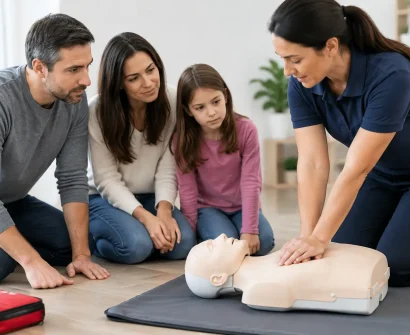
One trained parent is valuable. A network of trained caregivers is better. Children are often cared for by grandparents, relatives, babysitters, daycare educators, coaches, and friends. When the adults around them share a basic understanding of emergency response, families gain a stronger safety net.
Consider taking a course with the people who regularly look after your child. It creates a shared language for emergencies and makes it easier to discuss practical details, such as allergies, medications, emergency contacts, and when to call 911. It can also reduce conflict after an incident because everyone understands the same evidence-based approach.
For families in Laval and the Greater Montreal area, Save a Life First Aid & CPR Training offers practical, instructor-led options that make this learning accessible for parents and caregivers. The right course depends on your family’s needs. An expecting parent may prioritize infant CPR and choking skills, while a family with active school-age children may want broader first aid coverage for sports and outdoor activities.
Certification Is Valuable, but Skills Need Refreshing
A recognized certification can meet daycare, workplace, volunteer, or caregiving requirements. More importantly, it confirms that participants have completed structured training and an assessment. Still, a certificate should not be treated as a lifetime guarantee that every detail will remain fresh.
Skills fade when they are not used. Families should review what they learned, keep emergency numbers visible, and renew training according to the certification requirements or whenever they feel their confidence has slipped. Parents of infants may choose to refresh sooner because they want the techniques to feel especially familiar during those early years.
It also helps to revisit household emergency plans after major changes: a new baby, a new diagnosis, a move, a child starting a sport, or a new caregiver. Preparedness is not a single box to check. It is a practical habit that grows with a family.
Choose Training That Lets You Practice
When selecting a CPR and first aid course, look for instruction that includes pediatric content, instructor feedback, hands-on skills practice, and a recognized certification when one is needed. Ask whether the course covers infants and children, whether AED use is included, and whether the format provides enough time to practice rather than simply watch.
The best fit depends on your role. A parent who wants broad home and community readiness may benefit from a standard first aid and CPR course. A babysitter may need training that meets an employer’s requirements. A healthcare professional who is also a parent may need a higher-level credential for work but can still benefit from reviewing everyday pediatric scenarios in a family-focused setting.
Taking a course cannot prevent every emergency. What it can do is give you a calmer voice, steadier hands, and a practical next step when your child needs you most. Register before you need the skill, practice it with qualified guidance, and let that preparation become part of the protection you build around your family.