
Currently Empty: $0.00

A cardiac arrest can happen in a hospital room, dental office, long-term care home, fitness center, or family kitchen. When it does, the first minutes depend on people who can recognize the emergency, begin high-quality CPR, use an AED, and work effectively as a team. A BLS provider course online can make the knowledge portion more flexible, but it is essential to understand what online training can and cannot replace.
For healthcare professionals and anyone whose role requires Basic Life Support certification, the goal is not simply to complete a module. It is to build reliable skills that can be used under pressure. The right course format helps you prepare before class while preserving the hands-on practice and assessment that practical resuscitation skills require.
What a BLS Provider Course Online Usually Includes
Basic Life Support, commonly called BLS, is designed for healthcare providers and trained responders. It goes beyond a general introduction to CPR by focusing on high-quality performance, coordinated team response, and the clinical situations professionals may encounter.
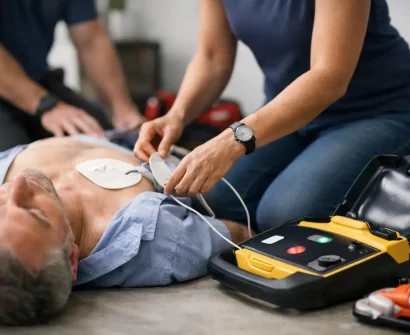
The online component commonly covers the science and decision-making behind resuscitation. Participants review how to recognize cardiac arrest, activate an emergency response system, provide effective chest compressions, deliver rescue breaths, and use an automated external defibrillator, or AED. It may also address choking response, opioid-related emergencies when applicable, special considerations for adults, children, and infants, and the roles people take during a team-based resuscitation attempt.
Many programs use videos, scenarios, knowledge checks, and self-paced lessons. This format gives learners time to pause, review an unfamiliar concept, and arrive at their practical session with a stronger foundation. It can be especially helpful for busy nurses, medical students, dental teams, personal support workers, and other professionals balancing shifts, family commitments, or clinical placements.
Still, knowing the sequence is different from performing it. Effective CPR requires the correct compression depth and rate, full chest recoil, minimal interruptions, appropriate ventilation, and safe AED use. Those details are difficult to evaluate accurately through a screen alone.
Why Hands-On BLS Skills Still Matter
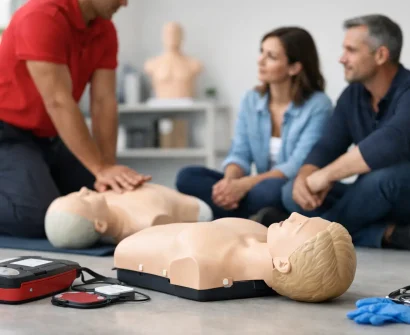
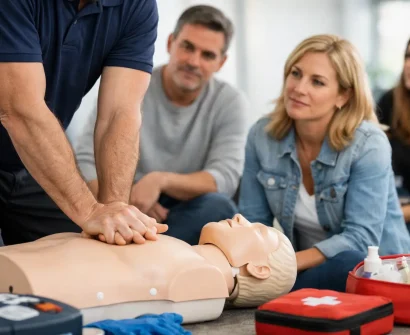
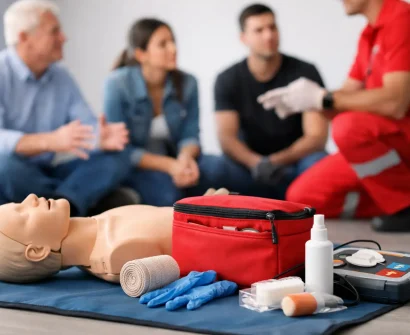
A recognized BLS credential often requires an in-person skills session, depending on the certifying organization and your employer, school, professional college, or placement site. During this session, an instructor can observe your technique, correct positioning, and assess whether you can respond safely in realistic scenarios.
That feedback matters. A learner may understand that compressions should be fast and deep but still place their hands incorrectly, lean on the chest between compressions, or pause too long while preparing the AED. These are common and fixable issues. Practicing with manikins, training AEDs, and a team gives participants the muscle memory and communication habits needed for a real emergency.
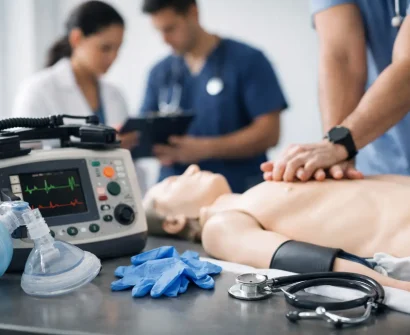
A practical session also tests skills that are harder to measure with online quizzes. Can you switch compressors efficiently when fatigue sets in? Can you clearly assign tasks? Can you keep compressions going while another responder prepares the AED? Can you adapt when the patient is an infant rather than an adult? These are the moments where BLS becomes more than a checklist.
For this reason, blended learning is often the best fit for people seeking flexibility without compromising competency. You complete the required online learning independently, then attend a scheduled in-person session for practice and evaluation. Save a Life First Aid & CPR Training offers practical, instructor-led education that helps participants turn course knowledge into confident action.
Choosing the Right Online BLS Course Format
Before registering, start with the requirement you need to meet. A healthcare employer may specify the certifying body, course name, renewal interval, or whether an instructor-led skills assessment is mandatory. Schools and clinical placements can have their own policies as well. Do not assume that any digital CPR certificate will be accepted just because it says BLS.
A good course listing should clearly state whether it is fully online, blended, or fully instructor-led. It should also explain what certification is issued, how long it is valid, whether an in-person evaluation is included, and what you must bring or complete before class. If those details are unclear, confirm them before paying or scheduling time away from work.
Consider the following practical questions when comparing options:
- Does your employer, licensing body, school, or placement accept this exact certification?
- Is the online portion paired with an in-person skills session when one is required?
- Does the course cover adult, child, and infant BLS skills appropriate to your role?
- Will you have enough time to complete the online learning before the hands-on session?
- Is the course a first-time certification, a renewal, or a recertification option?
Course names can be confusing, particularly when CPR, Heartsaver, first aid, and BLS are presented together. General CPR training may be an excellent choice for parents, coaches, teachers, and community members. BLS is usually the more appropriate level for healthcare providers and trained responders who need to perform CPR in a professional setting and work within a coordinated response team.
What to Expect During the Skills Session
The in-person portion is where online learning becomes physical practice. Participants typically work through individual and team scenarios using adult, child, and infant manikins. An instructor reviews the sequence of care and coaches the small details that improve performance.
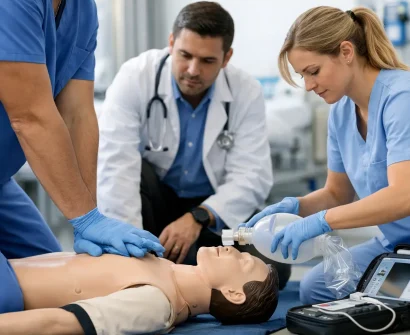
You may practice checking responsiveness and breathing, calling for help, locating and operating an AED, providing single-rescuer CPR, and participating in two-rescuer CPR. Depending on the program, you may also practice bag-mask ventilation, relief of choking, and responding to special situations. The pace is purposeful but supportive. The objective is not to catch people making mistakes. It is to help them identify and correct mistakes before a real person depends on their actions.
If you feel anxious about performing skills in front of others, you are not alone. Many first-time participants worry about remembering steps or being physically capable of providing compressions. A quality instructor creates time for repetition, questions, and coaching. Technique improves with practice, and confidence grows when you can successfully perform the sequence yourself.
Preparing for Success Before You Start
Treat the online module as preparation, not a task to rush through between meetings. Set aside uninterrupted time, use a reliable device, and take notes on any points you want to revisit during the skills session. Pay close attention to the sequence for adult, child, and infant care because the similarities can make the differences easy to overlook.
If you are renewing a credential, avoid relying only on what you remember from a previous course. Resuscitation guidelines and course requirements can change, and skills fade when they are not practiced. A renewal course is a valuable opportunity to rebuild speed, accuracy, and confidence rather than simply maintain a card.
Wear comfortable clothing for the practical portion, since you may spend time kneeling beside a manikin and performing compressions. Arrive with any required online completion record and identification. Most importantly, come prepared to participate. Questions about workplace scenarios, equipment, or responsibilities are useful because they connect the course to the emergencies you may actually encounter.
The Real Value of Flexible BLS Learning
Online learning offers convenience, but the real value of a BLS provider course is preparedness. It gives a healthcare professional the ability to recognize when a patient has deteriorated, respond without unnecessary delay, and contribute effectively until advanced care takes over. For workplaces and care settings, it strengthens the shared confidence of teams that may be called on to act together.
The best format depends on your requirements and learning needs. If you need a recognized provider credential, confirm the acceptance criteria first and choose a program that includes the appropriate practical assessment. If you are refreshing knowledge between certifications, online review can be a useful supplement, but it should not be mistaken for verified hands-on competence.
A course certificate has value because it represents learning and assessment. The greater value is simpler: when someone collapses and every second matters, you have practiced the skills needed to step forward, start care, and help protect a life.