
Currently Empty: $0.00

An expired CPR card can create a problem at exactly the wrong time: when you are applying for a healthcare role, meeting a workplace requirement, or preparing to renew a professional credential. So, how long does CPR certification last in Quebec? For many general CPR and first aid courses, certification is valid for three years. However, healthcare-level credentials, employer policies, licensing bodies, and the organization that issued your card can set a different renewal schedule.
The safest approach is to check the expiry date printed on your current certificate and confirm the requirement tied to your job, school program, daycare, or professional order. CPR is not a skill to leave until the last minute. Timely renewal keeps your credentials current and your response skills practiced.
How long does CPR certification last in Quebec?
Most CPR and first aid certifications in Quebec are valid for three years from the date of successful course completion. This commonly applies to lay responder CPR courses, CPR/AED training, Emergency First Aid, Standard First Aid, and many workplace first aid programs.
That three-year period is common, but it is not a universal rule. The course provider and issuing organization determine the certificate’s validity. A card earned through one program may have a different renewal period than a card required by a hospital, clinic, college, daycare, or employer.
For that reason, do not assume that any CPR course will meet a particular requirement. Before registering, verify the exact course name, certification provider, format, and expiry period your organization accepts.
Certification timelines vary by course type
CPR training is not one single credential. The right renewal schedule depends on the level of care you provide and the environment where you may need to respond.
General CPR, AED, and first aid courses
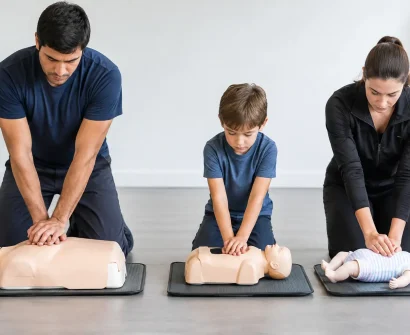
For parents, teachers, coaches, fitness instructors, volunteers, and the general public, CPR/AED and first aid certificates frequently last three years. These courses teach practical skills such as assessing an emergency, calling for help, performing CPR, using an automated external defibrillator, and responding to choking.
A three-year validity period does not mean you should wait three years to think about the skills again. CPR guidelines and best practices can change, and hands-on skills fade without use. A refresher course before expiry can be especially valuable for people caring for children, older adults, or anyone with a known medical condition.
Workplace first aid certification
Workplace requirements may be based on Quebec occupational health and safety rules, the nature of the job, and an employer’s internal policy. In many cases, first aid certificates used for workplace compliance are valid for three years.
Still, a workplace may require employees to renew sooner. High-risk settings such as construction, manufacturing, recreation, healthcare, and schools may also offer additional emergency-response training. If your employer has assigned you as a designated first aider, ask whether it requires a specific recognized program rather than a general CPR class.
BLS for healthcare professionals
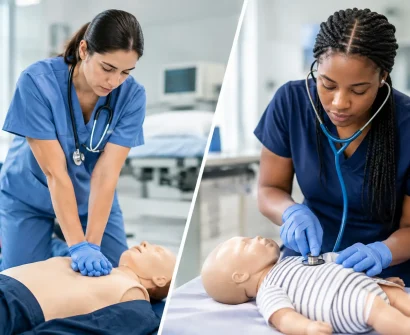
Basic Life Support, often called BLS, is designed for healthcare professionals and students entering clinical programs. It focuses on high-quality team-based CPR, ventilation, use of a bag-mask device, AED response, and care for adult, child, and infant patients.
BLS certification may be valid for one or two years, depending on the issuing organization and the policy of the hospital, clinic, educational institution, or licensing body. Because BLS is often a condition of employment or placement, healthcare professionals should plan renewal well before the printed expiry date. A lapsed BLS card can affect scheduling, onboarding, clinical placements, or eligibility to work in certain roles.
ACLS, PALS, and other advanced credentials
Advanced Cardiac Life Support (ACLS) and Pediatric Advanced Life Support (PALS) are commonly renewed every two years, although the accepted schedule depends on the certifying body and employer. These advanced programs build on strong BLS skills and prepare clinicians to recognize and manage cardiac arrest, respiratory emergencies, arrhythmias, and other critical situations.
PEARS and other pediatric emergency programs may follow their own timelines. If you work in emergency medicine, acute care, pediatrics, anesthesia, respiratory therapy, or another clinical setting, check with your department or professional program before booking a renewal. The course you need is determined by your role, not simply by the highest level of training available.
Daycare and childcare first aid
Childcare professionals in Quebec often need a specific first aid course that meets provincial childcare requirements. These certificates are generally expected to be current within the required three-year period and may need to include pediatric CPR, AED instruction, choking response, and emergency treatment for severe allergic reactions.
For daycare educators, home daycare providers, camp staff, and babysitters, the course content matters as much as the expiry date. A general adult CPR course may not satisfy a childcare employer or regulatory requirement. Confirm that your course is appropriate for the children in your care and the setting where you work.
What happens if your CPR certification expires?
Once your certificate expires, it is no longer valid proof that you meet a workplace, school, or licensing requirement. You may be asked to complete a renewal course or, in some cases, take the full course again.
Whether you can enroll in a recertification class depends on the provider’s rules and how long the certificate has been expired. Some programs require a valid, unexpired credential for renewal eligibility. If your card expired months ago, a full initial course may be the only option.
This is particularly important for healthcare workers. Waiting until the expiration date can leave little room if a class is full, a schedule changes, or you discover that your employer requires a different provider or course format. Renewing several weeks in advance helps protect your eligibility without creating a gap in certification.
When should you renew CPR certification?
A practical rule is to begin planning your renewal 60 to 90 days before your card expires. This gives you time to verify requirements, choose a course date, and complete any online learning component if you are taking a blended program.
Do not rely only on a digital reminder from your training provider. Put the expiry date in your calendar when you receive your certificate, then add a second reminder about three months before it ends. Employers and managers can also maintain a certification tracker for staff members who require first aid, CPR, BLS, ACLS, or PALS.
If you are changing jobs, starting a healthcare program, returning from leave, or applying for a daycare position, review your certification status early. An active card that expires shortly after your start date may not meet an employer’s onboarding requirement.
Renewal courses vs. full CPR courses
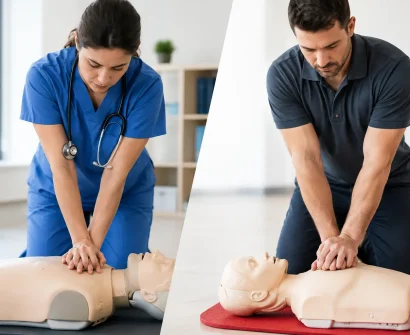
A renewal course is often shorter than an initial course because participants are expected to arrive with recent knowledge and a current credential. Even so, a quality renewal is not just a formality. It should include instructor feedback and hands-on practice so you can correct compression depth, rate, recoil, hand placement, ventilation technique, and AED use.
Blended learning can be a convenient option for busy professionals and families. The online component allows participants to complete foundational knowledge independently, while the in-person session focuses on the practical evaluation that makes CPR training meaningful. For a skill-based credential, hands-on practice is essential.
Save a Life First Aid & CPR Training helps learners in Laval and the Greater Montreal area choose training that matches their workplace, professional, or family needs. Whether you need a first certification or an advanced renewal, confirm the credential requirement first, then select the course that gives you both valid certification and confidence to act.
Your card is current, but are your skills?
Certification proves that you completed training. Confidence comes from revisiting the steps until they feel familiar under pressure. If you have not practiced since your last course, take a moment to review how you would call emergency services, locate an AED, and begin CPR while help is on the way.
The best time to renew is before a deadline forces the decision. Keep your certificate active, keep your skills fresh, and remain ready to protect a life at home, at work, or in your community.